
Original briefings. Zero spin.
Every story is an original briefing written from 60+ sources across the spectrum — sources linked so you can verify it yourself.
 economy
Major Story (7/10)
June 16, 2026 at 09:32 PM
economy
Major Story (7/10)
June 16, 2026 at 09:32 PM
Housing Starts Fell 15.4% in May, Hitting the Lowest Level Since COVID. New Data Shows Why Buyers Are Running Out of Options.
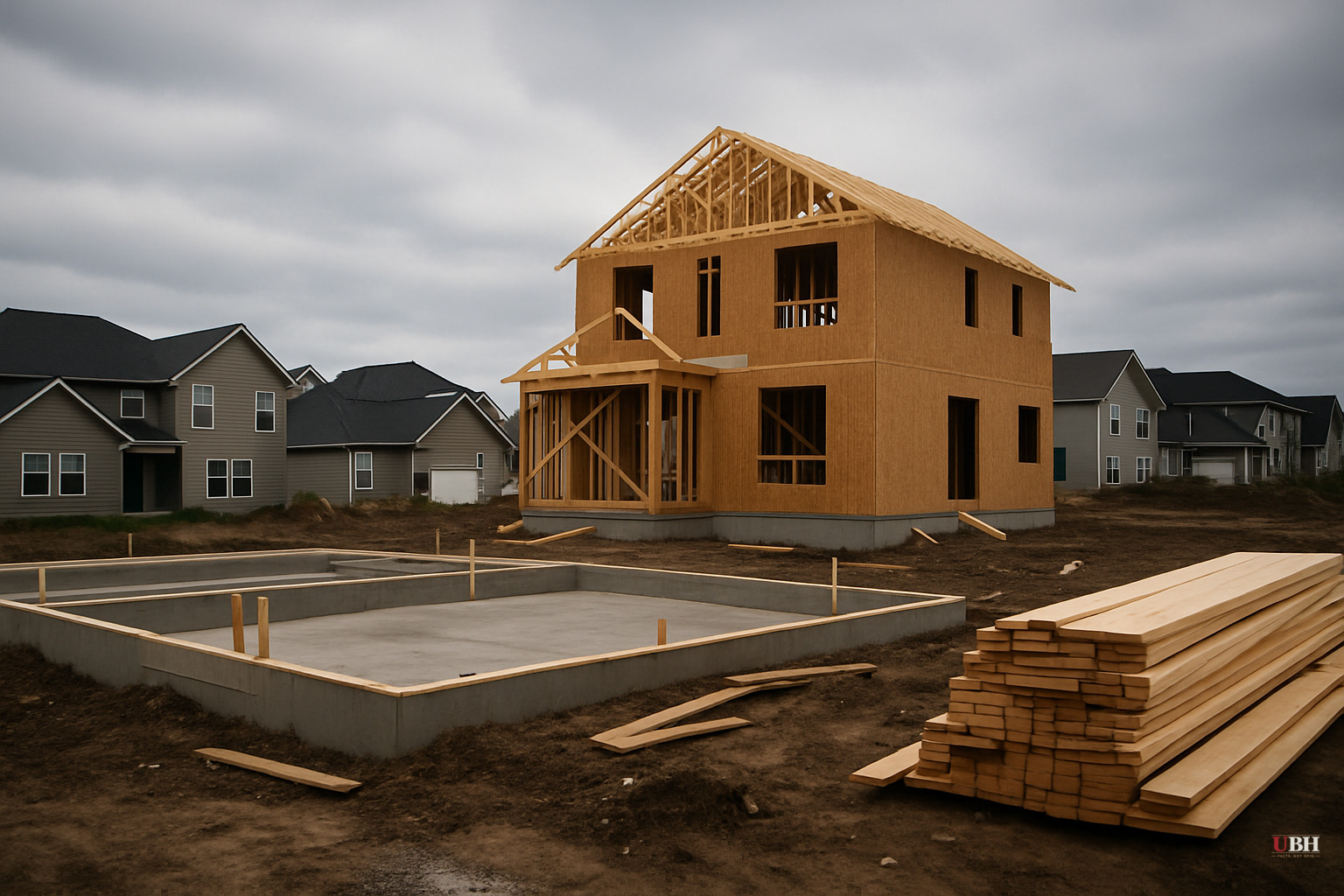
Since our June 16 coverage established that the starter home is functionally extinct below $300,000, the Census Bureau has released May housing starts data that shows hard numbers on why the supply hole keeps getting deeper.
The Construction Numbers Are Ugly
Housing starts dropped 15.4% month-over-month in May, according to data reported by ZeroHedge citing Bloomberg. That was far worse than the 2% decline economists had forecast, and it follows a revised 8.5% drop in April. The seasonally adjusted annual rate is now at its lowest since the early months of COVID.
The collapse was concentrated in multifamily — apartments and rental buildings. Multifamily starts fell from a revised 486,000 to 284,000, a drop of roughly 42% in a single month. Single-family starts also declined, from a revised 899,000 to 882,000, according to the same data.
Building permits told a more mixed story. Single-family permits ticked up slightly, from 881,000 to 886,000. Multifamily permits fell from 491,000 to 474,000. Permits are a leading indicator — they precede actual construction — so the multifamily permit drop suggests the rental pipeline is thinning further, not recovering.
What This Means for Buyers Already Locked Out
The construction slowdown lands on top of an affordability crisis that has been grinding for years. Nishu Sood, a principal at John Burns Research and Consulting, told Wired that between 2015 and 2025, inflation rose 37%, incomes rose 45%, and home purchase costs rose 115%. Renting, by comparison, rose 43% over the same period, still painful but less than buying.
The national average starter home price was $292,950 in 2024, up from $190,559 in 2019, according to realtor.com data cited by Wired. The median asking price across all homes hit $339,100 in early 2026.
Hannah Jones, senior economist at realtor.com, explained the mechanic to Wired: "When inventory levels fall, the lower price point feels more of the squeeze because it's the price point that more people can afford. Once mortgage rates rise, more buyers get funneled into that lower end." Those higher rates also trap families in their current starter homes. They can't afford to trade up, so the entry-level inventory stays frozen.
The result: from January through April 2026, homes priced at $300,000 or below accounted for just 31% of active listings, according to Jones. In 2016, that figure was nearly 61%.
What Real People Are Actually Paying
Wired surveyed more than 200 readers in late April and May 2026 about their housing costs. The findings are bleak across the board. The median monthly mortgage for people who bought in April was $2,152. The median asking rent for Q1 2026 was $1,579.
Nearly half of all renters paid more than 30% of their income on housing in 2024. A quarter of rental households paid more than half their income, according to data Wired cited from earlier this year. The 30% rule, long treated as a financial guardrail, is now closer to a historical curiosity.
The National Association of Realtors reports the average age of a first-time homebuyer has reached 40 years old, a milestone that reflects years of delay, not choice.
The Case for Patience on Supply
The strongest counterargument to full-blown pessimism is structural: housing inventory has been rising at the higher end of the market. ZeroHedge noted that inventories are at "recent highs," a fact that is accurate for the overall market even as entry-level supply remains thin. Some analysts argue that as existing homeowners eventually sell, or as builders adapt to a lower-rate environment, supply will filter down. Jones told Wired that looser zoning — allowing construction on smaller lots, increasing density — could relieve pressure over time. Zoning reform is one of the few policy levers that does not require federal spending or create new bureaucracies.
But "over time" is doing a lot of work there. Zoning reform is slow, politically contentious at the local level, and does nothing for the buyer trying to close in 2026.
The Mortgage Rate Problem Underneath Everything
The May starts collapse correlates directly with mortgage rate movement. Rates have remained elevated for roughly four years. LendingTree data from January 2026, cited by Wired, showed renting is cheaper than buying in every large urban area in the country. That tells you something about how badly the purchase math has deteriorated.
Builders are not irrational. When rates are high, demand for new construction softens, especially at the lower end where margins are thinner. The multifamily collapse in May may partly reflect oversupply in the apartment pipeline — developers who broke ground during the 2021-2022 boom are still delivering units. The permit data suggests the next wave of rental supply is already shrinking.
The unresolved question heading into the second half of 2026: if the Federal Reserve holds rates steady or cuts modestly, does homebuilder sentiment recover fast enough to prevent another year of supply deterioration, or does the May collapse signal a construction downturn that will deepen the shortage through 2027 and beyond? Homebuilder sentiment data, tracked monthly, will be the first indicator to watch.
Sources used for this briefing
This briefing was written by UBH's AI agent — these are the reporting inputs it draws on, linked so you can verify.