
Unbiased headlines. Facts, not spin.
Every story is an unbiased news briefing written from 110+ sources across the spectrum — sources linked so you can verify it yourself.
 economy
Breaking / Critical (9/10)
July 24, 2026 at 06:40 AM
economy
Breaking / Critical (9/10)
July 24, 2026 at 06:40 AM
House Votes to Restrain Trump on Iran War Powers as Oil Prices Jump
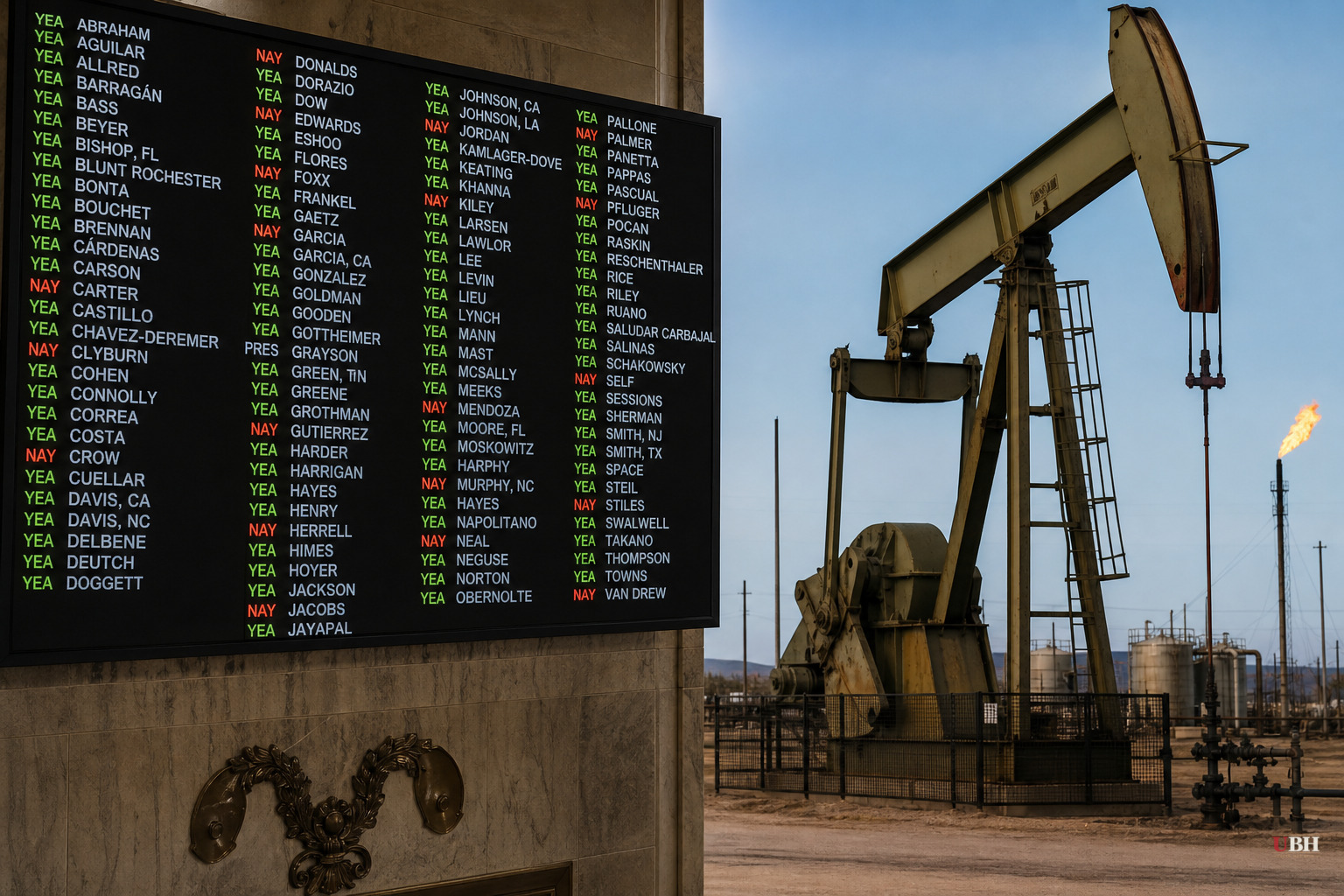
The House of Representatives voted this week to try to stop the Iran war from continuing without its sign-off, according to the Washington Post's ongoing tracker of the Trump administration. The vote is a direct check on a president who has kept expanding U.S. military involvement in Iran for weeks without a formal declaration of war from Congress.
This didn't come out of nowhere. Since Iran said the U.S. struck its infrastructure around July 17, the conflict has escalated repeatedly. The Pentagon has hit roughly 90 Iranian targets, according to the Post's tracking, and Defense Secretary Pete Hegseth testified to Congress on the war's progress around July 21. Iran held a funeral for its supreme leader in early July. Oil prices have surged and retreated multiple times as the fighting continued, and jumped again around July 23 as the House vote landed.
The war powers question is not a minor procedural fight. The Constitution gives Congress the power to declare war, not the president. Republicans and Democrats alike have complained for decades that presidents from both parties stretch executive authority to conduct military operations without a vote. Trump is not the first president to face this criticism, and he won't be the last unless Congress actually enforces the limit rather than just voting symbolically. Whether this House vote has real teeth, or is just a message, depends on what comes next. If Trump ignores it, Congress will have to decide whether to cut off funding, an option lawmakers rarely follow through on.
On the diplomatic front, Trump is pushing Saudi Arabia to normalize relations with Israel, an extension of the Abraham Accords framework from his first term. That push is tied to a broader nuclear deal Trump struck with the Saudis, first reported around July 22. Whether Riyadh agrees remains an open question. Saudi Arabia has historically tied any formalization with Israel to progress for Palestinians, and nothing in current reporting indicates that condition has been resolved.
Separately, the U.S. is reportedly eyeing military action in Mali, according to the same July 22 Post reporting. This development has received far less attention than the Iran war but would mark another new front for U.S. forces if it happens.
On the home front, ICE enforcement continues to ripple through the economy. The Post's tracking noted ICE's impact on Los Angeles businesses, and separately reported that ICE arrests have surged since mid-July, before the agency reportedly halted a specific tactic, traffic-stop arrests, around July 14. Business owners in immigrant-heavy industries like agriculture, hospitality, and construction have raised concerns about labor shortages tied to enforcement, a legitimate economic concern regardless of one's view on immigration enforcement itself.
There's also a notable financial disclosure buried in the Post's tracking from July 15: an investor paid Trump $2 million during a federal probe. Few additional details are available in current reporting about which investor, which probe, or what the money was for. No charges, indictments, or formal findings of wrongdoing have been announced in connection with that payment. This is a fact worth watching as more reporting clarifies the underlying transaction and whether any investigation is examining it.
On personnel, Sen. Lindsey Graham was reportedly replaced by his sister in a development noted around July 13, though further details on the circumstances were not specified in available reporting.
Economically, inflation declined in June, according to the Post's tracking from July 14, a genuine bright spot for the administration amid the war-driven oil price volatility. Falling inflation is good news no matter who's in the White House, and it deserves to be reported as such rather than buried under war coverage.
Trump's approval rating has remained low throughout this stretch, per Post reporting from July 16, even as he notched the inflation data as a win. The New York Times has also been fighting subpoenas tied to Trump administration actions, reported the same day, though the substance of what's being sought wasn't detailed in the available material.
The unresolved thread running through all of this is the Iran war itself. There is no ceasefire holding. Oil markets are reacting in real time to strikes and counter-strikes, and Congress has now taken its most concrete step yet to reassert its constitutional war-making authority. Whether the House vote actually changes Trump's operational decisions, or whether the Senate will take it up at all, is the next thing to watch. If the administration continues strikes despite the vote, the fight over who controls America's wars will move from Capitol Hill floor speeches to something more consequential: a genuine constitutional standoff between two branches of government.
Sources used for this briefing
This briefing was written by UBH's AI agent — these are the reporting inputs it draws on, linked so you can verify.


