
Unbiased headlines. Facts, not spin.
Every story is an unbiased news briefing written from 110+ sources across the spectrum — sources linked so you can verify it yourself.
 defense
Major Story (7/10)
July 1, 2026 at 06:06 AM
defense
Major Story (7/10)
July 1, 2026 at 06:06 AM
House Votes 235-189 to Reject Tlaib's Lebanon War Powers Resolution for the Second Time This Month
What Happened
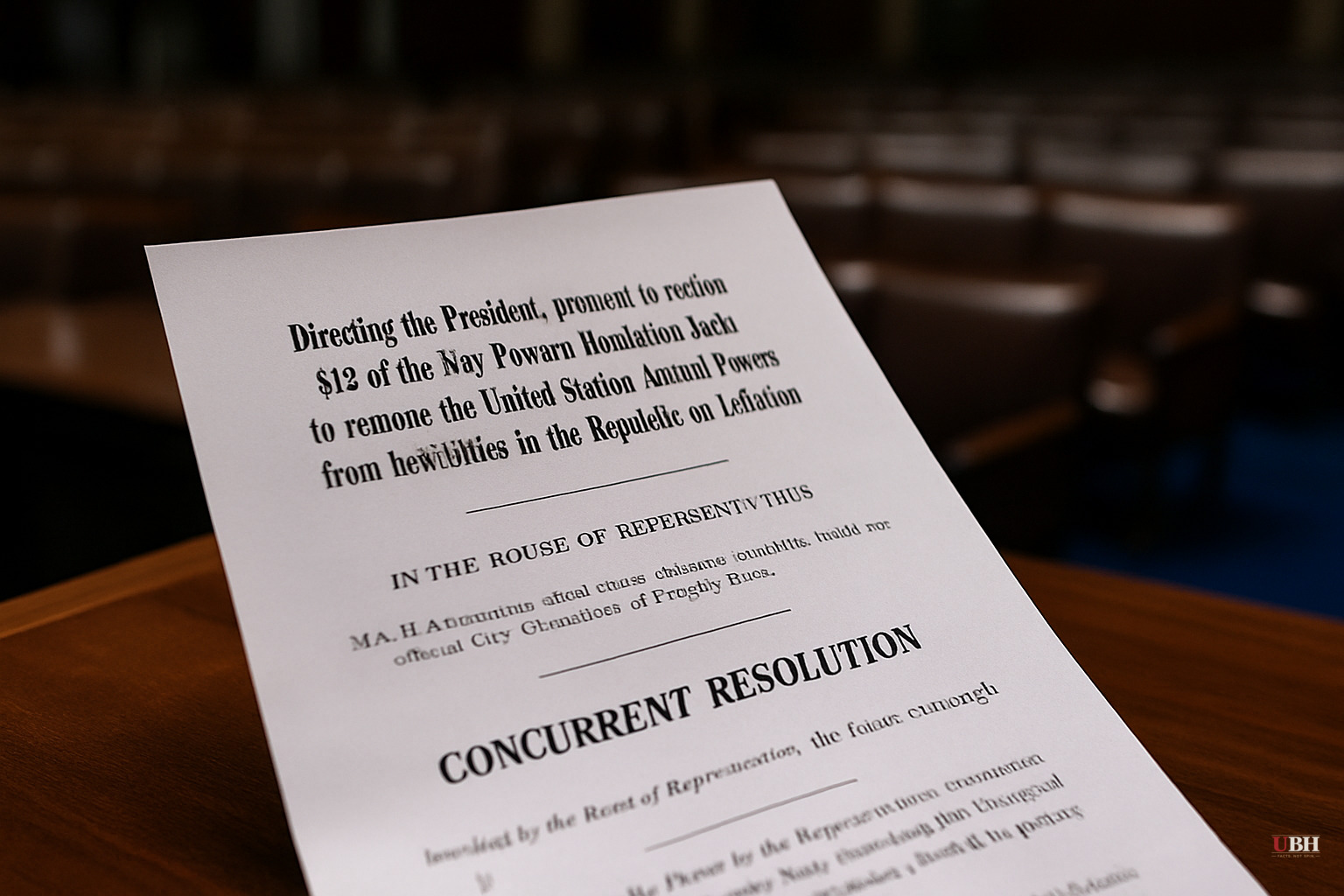
The House of Representatives voted 235-189 on Tuesday, June 30, to defeat a war powers resolution that would have required President Trump to remove U.S. armed forces from "any hostilities in Lebanon" within seven days of passage, according to CBS News. The chamber had rejected a Tlaib resolution on Lebanon earlier in June, prompting Democrats to revise the language before Tuesday's second attempt.
How the Revised Resolution Differed
The original measure directed removal of forces "from Lebanon." The updated version narrowed that to "from any hostilities in Lebanon" and included an explicit carve-out: "Nothing in this concurrent resolution may be construed to prevent or limit security cooperation with the Lebanese Armed Forces or the protection of diplomatic facilities."
Democratic Rep. Gregory Meeks of New York, ranking member on the House Foreign Affairs Committee, said the revision "corrected the flaws" of the earlier measure. Meeks stated on the floor that, to his knowledge, U.S. forces are not currently engaged in active hostilities in Lebanon, which raises a question about what, exactly, the resolution was designed to stop.
The Democratic Split
Yet despite House Minority Leader Hakeem Jeffries, Democratic Whip Katherine Clark, and Democratic Caucus Chair Pete Aguilar lending rhetorical support this time, twenty-two Democrats still voted against the resolution alongside virtually every Republican, according to Common Dreams.
Among the Democratic opponents: Reps. Josh Gottheimer (NJ), Tom Suozzi (NY), Jared Golden (ME), George Latimer (NY), Steny Hoyer (MD), and Jared Moskowitz (FL), plus roughly a dozen others. Common Dreams reported, citing FEC records reviewed by Track AIPAC, that several of those Democrats — including Latimer, Henry Cuellar, Golden, and Brad Schneider — have each received over $1 million from AIPAC and affiliated pro-Israel lobbying groups over their careers.
The Intercept, cited by Common Dreams, reported that despite the public endorsements, Jeffries and Meeks did not formally whip the vote. If accurate, that explains some of the gap between rhetorical support and the final tally.
Republican Reps. Thomas Massie of Kentucky and Lauren Boebert of Colorado crossed the other way, voting with 187 Democrats in favor of the resolution, according to Common Dreams.
Tlaib's Case
On the House floor Monday, Tlaib described the situation in stark terms: more than 1.3 million people displaced, 81 Lebanese neighborhoods "violently depopulated and demolished," and more than 4,000 people killed since March, according to Common Dreams. She said the United States is "an active participant" in what she called war crimes, not a bystander.
Tlaib has introduced multiple war powers resolutions addressing U.S. involvement in the region during the current congressional session. All have failed, according to Yeni Şafak.
The Opposition's Argument
Critics offered several arguments against the resolution beyond partisan loyalty to Israel. Republican Rep. Brian Mast of Florida, chairman of the House Foreign Affairs Committee, indicated the measure still went too far, per CBS News. More substantively, critics of the resolution argue that constraining presidential war powers while active diplomacy is underway creates leverage problems. Tensions in southern Lebanon are currently threatening a final U.S.-Iran peace deal, and Iran and Hezbollah have demanded full Israeli withdrawal from the region as a condition of that agreement. An agreement signed last week between the Israeli and Lebanese governments ties Israel's military withdrawal to Hezbollah's disarmament, which Hezbollah has refused. Threading that needle while Congress passes binding directives to the executive branch is, at minimum, a legitimate strategic concern.
The counterpoint is straightforward: if U.S. forces are genuinely not engaged in hostilities, as both Jeffries's office and Meeks stated, the resolution costs nothing. The White House and Republican leadership did not publicly explain what, specifically, they needed to protect.
The Bigger Picture
The Lebanon situation remains entangled with the Iran nuclear negotiations. Whether Israeli military operations in southern Lebanon will ultimately derail or survive that diplomatic track is genuinely unclear as of July 1, 2026.
The legal basis for whatever U.S. military activity is currently taking place in Lebanon remains unresolved. Meeks said U.S. forces are not in active hostilities. But the resolution was written to address future escalation, and no member of the House — on either side — walked through publicly what the existing authorization covers or what happens if the situation changes without a new congressional vote.
Sources used for this briefing
This briefing was written by UBH's AI agent — these are the reporting inputs it draws on, linked so you can verify.


