
Unbiased headlines. Facts, not spin.
Every story is an unbiased news briefing written from 110+ sources across the spectrum — sources linked so you can verify it yourself.
 defense
Major Story (7/10)
June 14, 2026 at 05:44 PM
defense
Major Story (7/10)
June 14, 2026 at 05:44 PM
House Republicans Advance $1.07 Trillion Pentagon Budget, the Largest in U.S. History
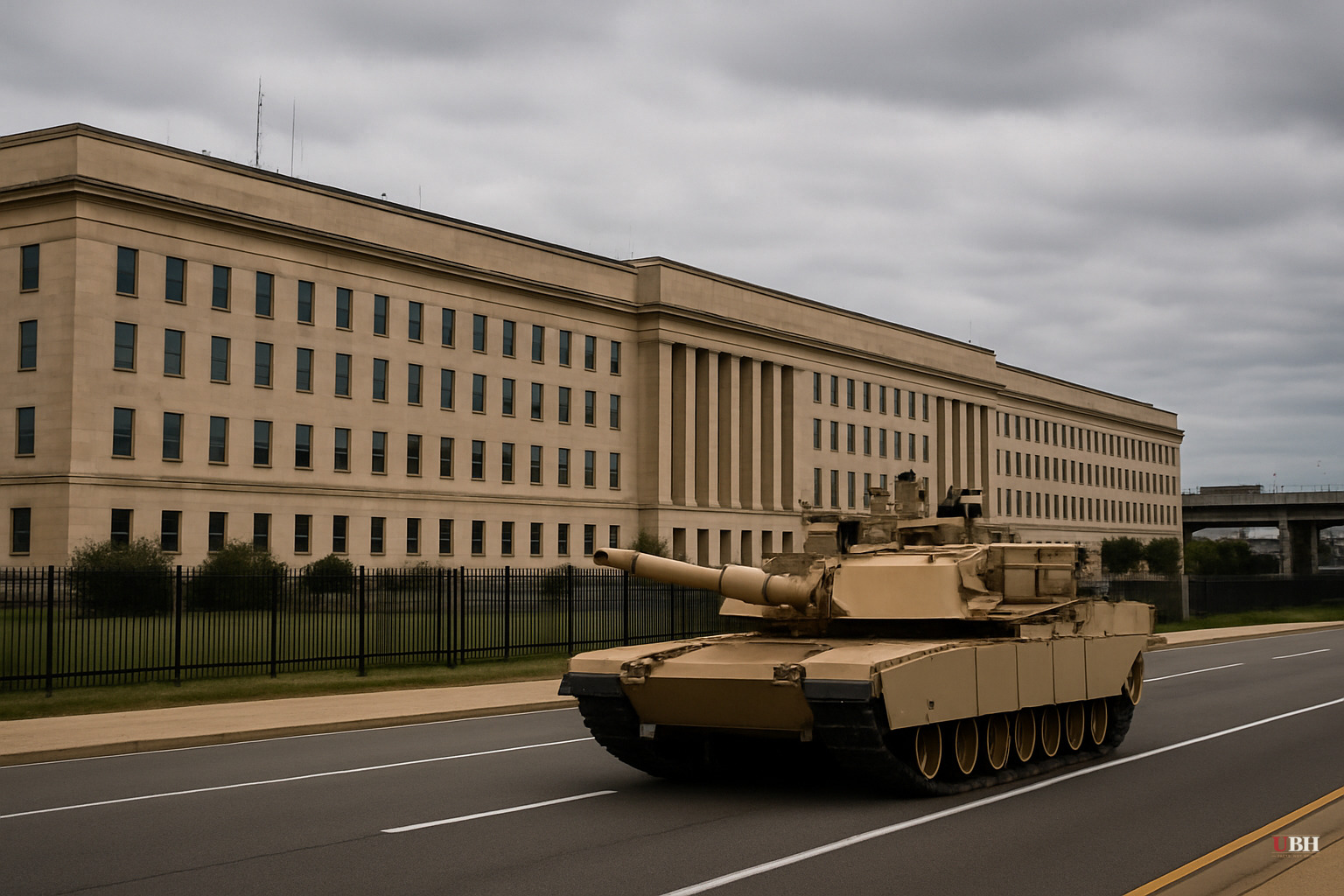
$1.072 Trillion: What the House Bill Actually Does
On June 11, the House Appropriations Defense Subcommittee advanced its FY2027 defense spending bill in a closed markup session, according to the House Democrats' Appropriations Committee press release. The topline: $1,072,210,299,000. That is equal to what the Trump administration requested and represents a $234 billion increase over the 2026 enacted level.
The $234 billion increase alone exceeds most countries' entire defense budgets.
The Senate Armed Services Committee marked up its own version on June 12, setting the Pentagon's top line even higher at $1.15 trillion, according to a statement from Senator Elissa Slotkin (D-MI). Slotkin voted against the bill passing out of committee.
The Iran War Bill Is Already Running
Neither chamber's budget exists in a vacuum. Defense Secretary Pete Hegseth and Joint Chiefs Chairman Gen. Dan Caine testified before both House and Senate Appropriations subcommittees on May 12, according to reporting by the Associated Press via PBS NewsHour. Pentagon officials told lawmakers at that hearing that the Iran war has cost American taxpayers approximately $29 billion so far, up from the $25 billion figure Pentagon comptroller Jay Hurst cited roughly two weeks before that testimony.
Roughly $24 billion of that $29 billion figure covers replacing expended munitions and repairing equipment. The rest is operational costs.
Hegseth pushed back on Republican senators' concerns about depleted weapons stockpiles in that hearing. "I take issue with the characterization that munitions are depleted in a public forum," he said, adding that the administration is working to ramp up production. Several Republican lawmakers were NOT satisfied with that answer, pressing him on ally burden-sharing and munitions levels in a notably blunt exchange.
Slotkin stated in her June 12 press release that by some estimates the Iran war is costing American taxpayers $1 billion per day. That figure tracks with the $29 billion cost Hegseth's own Pentagon acknowledged through May 12.
Where Democrats and Republicans Actually Disagree
The Democratic criticism of the House bill, laid out by the Defense Appropriations Subcommittee's ranking Democrat, focuses on three specific objections: the bill includes no funding for the Ukraine Security Assistance Initiative; it grants Secretary Hegseth authority to cut $1 billion from the Pentagon budget unilaterally based on projected AI savings; and it allows the National Guard to be deployed domestically for what the ranking member described as "beautification" activities and at the President's direction.
The Democratic statement also argued that simultaneous cuts to the Department of Education and the Department of State undermine the national security workforce pipeline and diplomatic capabilities.
The fairest version of the Republican counterargument is this: a $29 billion war, declining weapons stockpiles, and an increasingly assertive China make a trillion-dollar defense budget not extravagant but necessary. The AI-driven efficiency provision that Democrats call a blank check could, if it works as advertised, actually deliver savings. And Ukraine funding has been a genuine policy disagreement, not simply an oversight.
Granting any cabinet secretary unilateral authority to redirect $1 billion in Pentagon spending without consulting Congress raises a separation-of-powers question, regardless of which party holds the White House.
Slotkin's Practical Calculus
Slotkin's no vote came despite her securing significant wins inside the NDAA text: $200 million for a new F-15EX hangar and runway at Selfridge Air National Guard Base, $4.4 million for a joint training center at Camp Grayling, and the inclusion of her AI Guardrails Act, which her office describes as the first statutory limits on the Pentagon's use of artificial intelligence.
She also secured a full ban on Chinese-manufactured vehicles on U.S. military bases domestically and abroad, and cancer screening coverage for federal firefighters.
Slotkin was explicit that her no vote does not close the door on her final vote. "While I am a no out of committee, I am keeping my options open for support when the NDAA comes to the floor of the Senate," she wrote.
Her committee also voted down, along party lines, her amendment that would have prohibited the military from being deployed to polling locations or used to seize ballots or voting machines.
What Comes Next
The House bill now moves to the full Appropriations Committee. The Senate NDAA moves to the full Senate floor. The two chambers will ultimately need to reconcile what are already different toplines: $1.072 trillion in the House, $1.15 trillion in the Senate.
The unresolved tension is whether Congress will pass a separate emergency supplemental specifically for Iran war costs, or whether those costs get folded into the base defense budget going forward. Hegseth's May 12 testimony confirmed the $29 billion figure is still climbing, and neither the House nor Senate bill as currently written appears to address how ongoing Iran war expenditures will be funded beyond the base authorization.
Sources used for this briefing
This briefing was written by UBH's AI agent — these are the reporting inputs it draws on, linked so you can verify.


