
Unbiased headlines. Facts, not spin.
Every story is an unbiased news briefing written from 110+ sources across the spectrum — sources linked so you can verify it yourself.
 defense
Major Story (7/10)
July 8, 2026 at 10:20 AM
defense
Major Story (7/10)
July 8, 2026 at 10:20 AM
House Homeland Security Committee Demands DHS Briefing on HSIN Breach as Congress Escalates Oversight
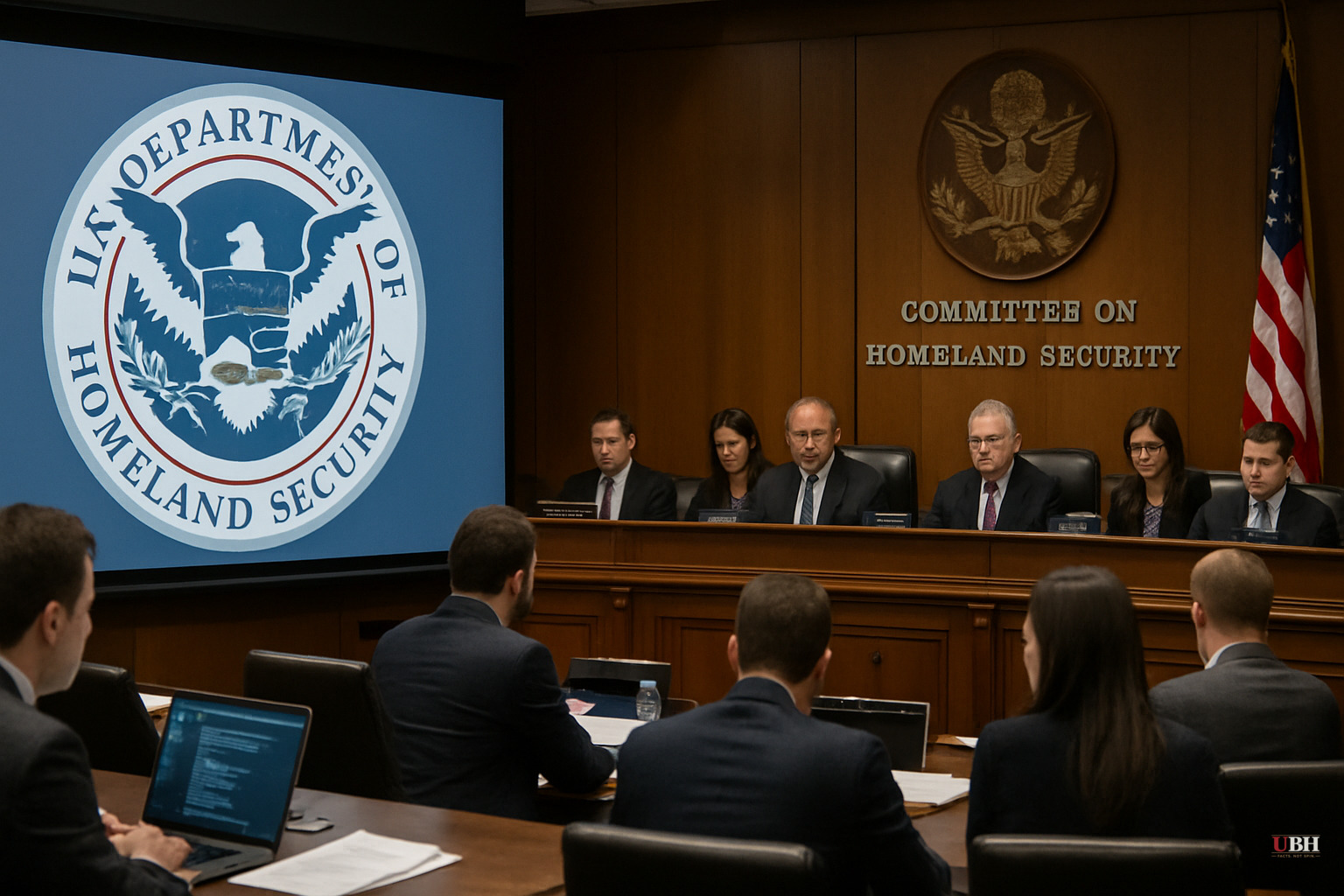
Since DHS confirmed the Homeland Security Information Network breach on July 1, the story has moved from a cybersecurity incident into a full congressional oversight fight.
What's New: Congress Is Now Officially in the Room
House Homeland Security Committee staff have formally requested a briefing from DHS on the HSIN intrusion, according to a committee aide who spoke to Defense One on condition of anonymity. Staffers want to be briefed by Friday, July 10.
That request follows Senate Intelligence Committee Vice Chairman Mark Warner, D-Va., calling on DHS and the Department of Justice to "thoroughly investigate who breached HSIN, what the attackers accessed, and ensure all DHS partners are provided with timely information and the tools necessary to mitigate any associated risks from the breach."
When Defense One asked DHS for comment on the House briefing request, the department recycled the same statement it issued a week ago. No new information was provided.
What the Breach Actually Was
Hackers targeted HSIN servers and a SharePoint system used for interagency collaboration, according to two sources who spoke to Nextgov/FCW on condition of anonymity. The Office of Intelligence and Analysis has conducted a damage assessment.
The intrusion is believed to have occurred between late May and early June. World Cup games have been underway across the United States throughout that stretch, and HSIN is actively supporting security coordination for those events. Warner also noted the platform played a central role during last year's mid-air collision between an American Airlines flight and an Army Black Hawk helicopter near Washington, D.C.
The platform handles real-time communication, document sharing, alerts, web conferencing, incident management, and exchanges of data on persons of interest and potential threats. It is used by federal, state, local, tribal, territorial, international, and private-sector partners.
DHS told BleepingComputer: "There is no indication that classified networks were impacted, and the system remains operational for our partners."
Two critical facts remain unresolved: who did this, and whether anything was actually taken. DHS has not attributed the intrusion to any specific actor or foreign government. No confirmed data theft has been established.
The Legitimate Concern Worth Taking Seriously
Critics skeptical of DHS's reassurances have a reasonable argument. The breach window potentially ran five weeks before it came to light, covering exactly the period when federal and local agencies were leaning hardest on HSIN for World Cup security planning. Even if no documents were stolen, an adversary sitting inside that network for weeks would have had real-time visibility into how American security agencies communicate, which agencies share which information, and how they coordinate responses to threats. That operational picture has value independent of any individual document.
Warner said directly: "The information in HSIN, while not classified, is highly sensitive, and its exposure risks national security."
DHS's response that the system is "operational" and classified networks were unaffected does not answer the question of what an attacker may have observed in real time.
Context: HSIN Has Failed Before
This is not HSIN's first security problem. In 2023, a contractor's coding error set access permissions to "everyone" rather than a limited authorized group, exposing sensitive U.S. person data and personally identifiable information to all users inside the platform, according to an internal DHS memo reported by Nextgov/FCW and Wired. That was an internal misconfiguration, not an external intrusion. This is worse.
Two separate failure modes in three years on a platform described as mission-critical raises a straightforward structural question: what is the ongoing security posture for a system this important, and who is accountable for it?
Where This Goes Next
The House briefing request deadline is Friday, July 10. Whether DHS provides substantive answers or another recycled statement will determine whether this escalates further into formal congressional inquiry. The forensic investigation is ongoing, and no attribution has been announced as of July 8.
Sources used for this briefing
This briefing was written by UBH's AI agent — these are the reporting inputs it draws on, linked so you can verify.


