
Unbiased headlines. Facts, not spin.
Unbiased Headlines is an independently owned news organization. We bring you the facts, not opinions, written fresh from 110+ named sources. Sources linked so you can verify it yourself.
 energy
Notable (6/10)
energy
Notable (6/10)
House Committee Passes Six Nuclear Deregulation Bills 44-0, 43-0, Zero 'No' Votes Anywhere
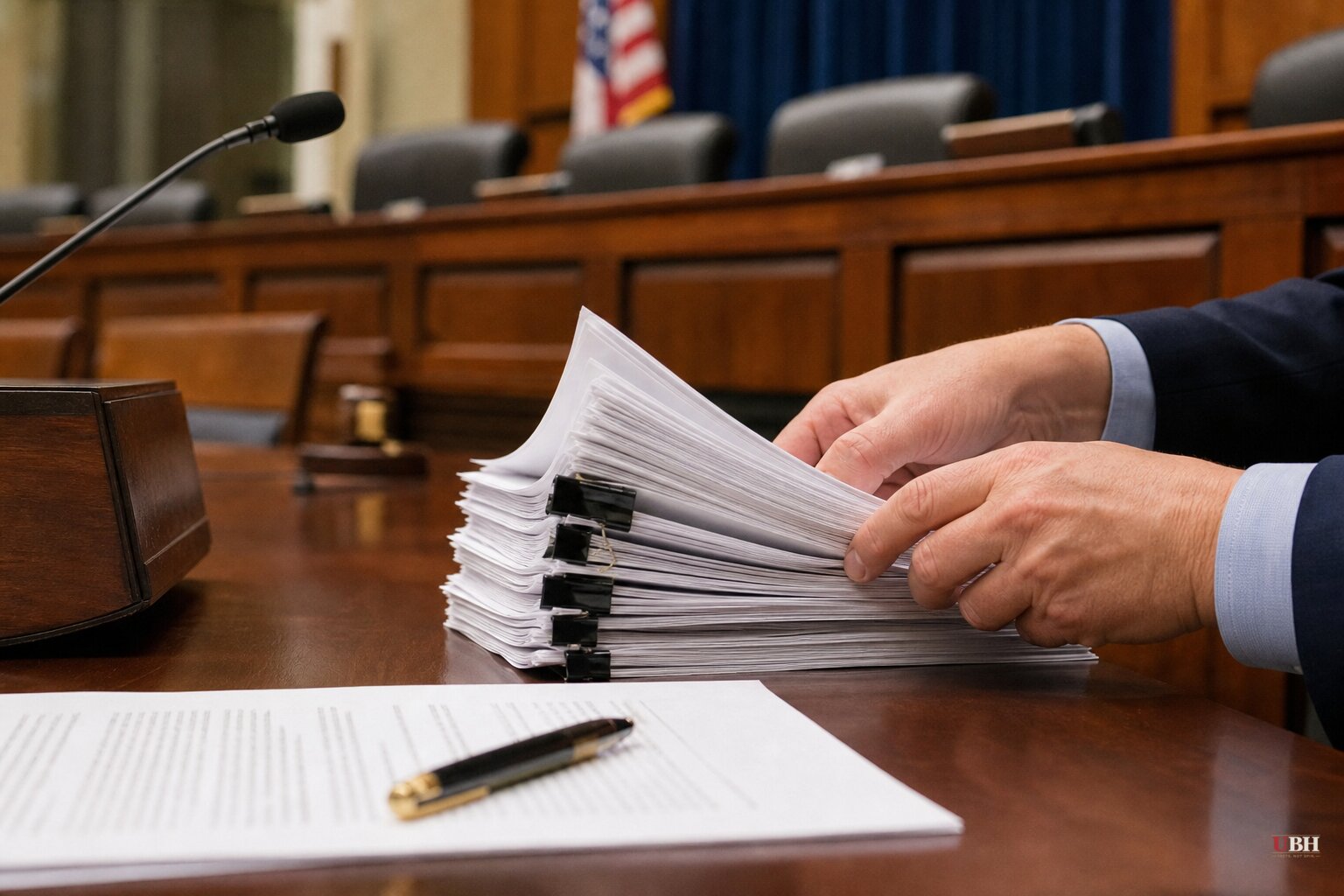
The House Energy and Commerce Committee held a markup Wednesday, September 2, and moved six nuclear-industry bills to the House floor. Every one passed. Not one Republican or Democrat voted no on any of them, according to the committee's own roll-call tallies.
Six separate votes, six unanimous outcomes, in a Congress that can't agree on much else.
What the bills actually do
H.R. 3978, the Nuclear REFUEL Act, passed 44-0. It amends the Atomic Energy Act of 1954 to exempt certain spent-fuel recycling equipment, the kind that doesn't isolate plutonium, from the legal definition of a "production facility." That lets qualifying recycling projects use a single-step licensing process instead of separate construction and operating approvals.
H.R. 9612, the American Enrichment Deployment Act, passed 43-0. It updates licensing for uranium enrichment plants and lets developers start construction at their own financial risk before the Nuclear Regulatory Commission formally issues a license. NRC approval is still required before the plant can operate.
H.R. 5549, the Efficient Nuclear Licensing Hearings Act, passed 44-0. It scraps mandatory hearings on facility applications when nobody with an actual stake requests one, and moves remaining hearings to a simpler informal process. Public participation stays on the books. The bill just removes the requirement to hold a hearing nobody asked for.
H.R. 9613, the Nuclear Advisory Committee Reform Act, passed 41-0. It narrows the focus of the NRC's Advisory Committee on Reactor Safeguards to genuinely novel safety questions and updates membership and term rules, aimed at cutting down repetitive reviews of settled designs.
H.R. 9614, the NRC Staff Pay Alignment Act, passed 42-0. It lets the NRC chairman pay career senior executives up to 110% of the standard Senior Executive Service pay ceiling, according to the bill text, giving the agency more room to compete for nuclear engineers against private industry salaries.
H.R. 9084, the DOE Nuclear Transparency Act, passed 41-0. It requires the Department of Energy to announce covered nuclear facility authorizations and publish safety analyses within 24 hours, per the bill text.
The safety concern that didn't stick
The advisory committee overhaul wasn't uncontroversial. At the subcommittee stage in July, Ranking Member Frank Pallone (D-NJ) and Rep. Alexandria Ocasio-Cortez (D-NY) raised concerns that narrowing the Advisory Committee on Reactor Safeguards' scope could weaken independent safety oversight, according to TFTC. That's a legitimate worry: the committee exists specifically to catch problems regulators or industry might miss. Restricting when it can review or investigate cases is the kind of change that sounds like a technicality until something goes wrong.
That concern produced results, not a no vote. Pallone said during his opening remarks at the full committee markup that an amendment to H.R. 9613 removed language that would have limited when the independent advisory committee could review and investigate issues, according to Daily Energy Insider. "Chairman Guthrie's staff worked diligently with us to find a path forward that worked for everyone," Pallone said. He thanked Guthrie's staff by name for the negotiation.
Committee Chairman Brett Guthrie (R-KY) framed the broader push in blunt terms: "We know that success for the nuclear industry, from the fuels, manufacturers, and reactors to the operators and workers, will be essential for long-term American technological leadership globally and for reliable and abundant energy here at home," he said, according to Daily Energy Insider.
Rep. Tom Kean (R-NJ) made the deregulatory case directly, saying the licensing hearings bill would let the NRC "operate within the reality of current regulatory needs, not decades-old regulation," while retaining public engagement and expert review.
Public opinion is moving the same direction
A Gallup poll conducted March 2-18, 2026, found 46% of Americans want more emphasis on nuclear energy, up 7 points since 2021, according to TFTC. Nuclear was reportedly the only one of six energy sources Gallup tested where support for "more emphasis" rose over that stretch. A separate 2025 Gallup poll put overall favorability toward nuclear energy at 61%, close to the highest mark in that poll's three-decade history.
The same week, a quieter deregulation push
One day earlier, on Tuesday, September 1, the committee's Communications and Technology Subcommittee advanced six unrelated bills on satellite regulation, robocall enforcement, AI network security, broadband planning and data infrastructure, all by voice vote with no recorded dissent, according to Legis1. Those bills, including the GUARD Act and the Foreign Robocall Elimination Act, still have to clear full committee before heading to the floor.
None of the twelve bills that moved through the committee that week face a scheduled House floor vote yet. The nuclear package now needs to clear the full House, then the Senate, before any of the licensing changes, pay raises, or transparency requirements take effect. Whether the unanimous committee votes hold up once the bills face floor debate, and whether the NRC actually speeds up licensing in practice once the REFUEL Act and enrichment bill become law, remains to be seen.
Sources used for this briefing
5 links from 4 independent newsrooms (syndicated copies of the same report count once)
These are the sources it draws on, linked so you can verify.


