
Unbiased headlines. Facts, not spin.
Every story is an unbiased news briefing written from 110+ sources across the spectrum — sources linked so you can verify it yourself.
 health
Notable (6/10)
July 20, 2026 at 05:10 PM
health
Notable (6/10)
July 20, 2026 at 05:10 PM
Hospitals Hide Prices, States Cap Them: Two Different Fixes for the Same Problem
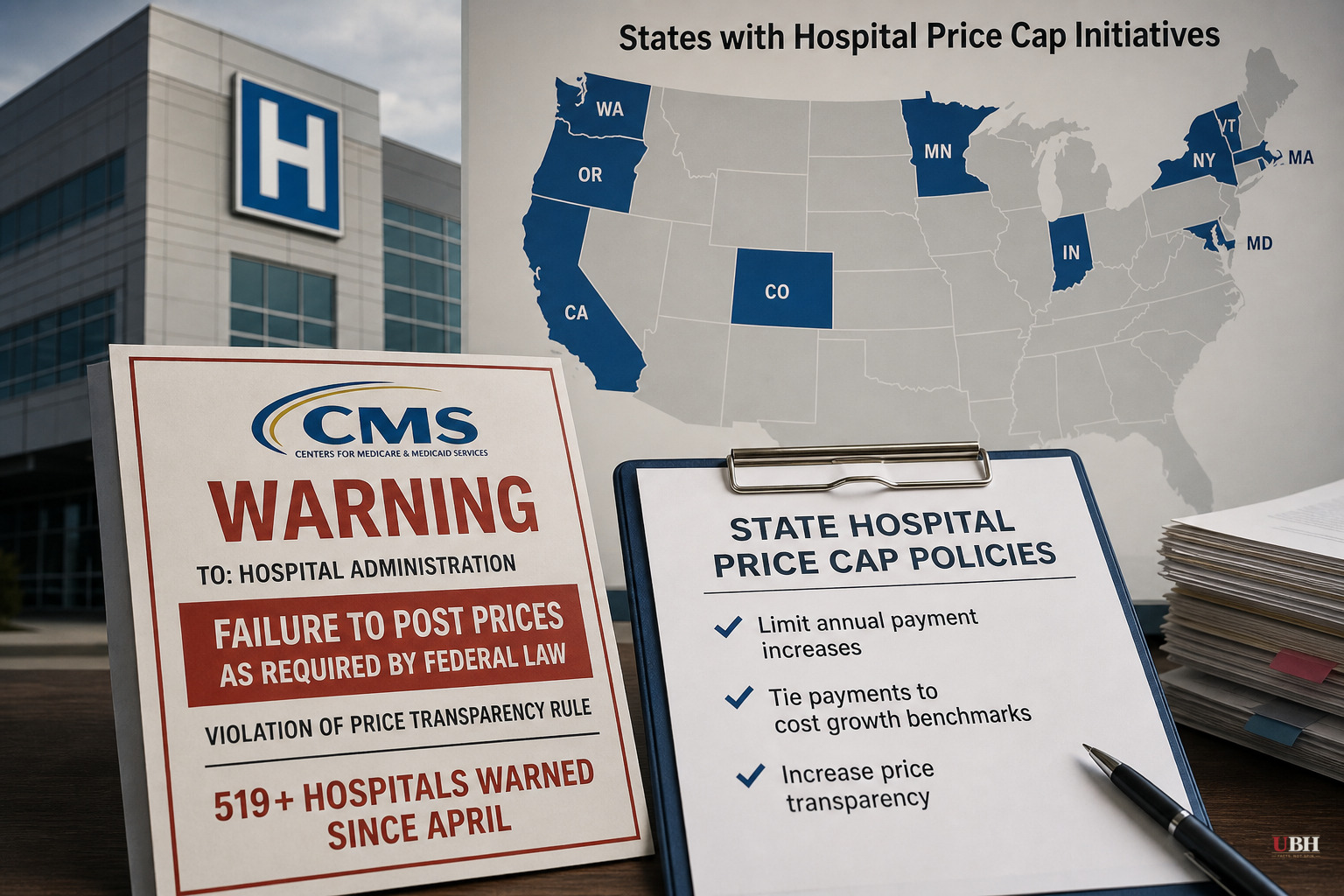
Two states of the problem, two different fixes
Nobody walking into a hospital knows what anything costs. That's why both the federal government and a growing list of states are now trying, in very different ways, to force hospital prices into the open.
President Donald Trump signed a hospital price transparency executive order in 2019, requiring hospitals that take Medicare and Medicaid money, which is virtually all of them, to post their actual prices publicly. Compliance was weak from the start. A 2024 federal audit found only 46% of hospitals required to post prices were actually doing it, according to the Daily Signal. Under President Joe Biden, enforcement was minimal.
That's changed since April. Centers for Medicare and Medicaid Services Administrator Dr. Mehmet Oz has issued federal warning notices or corrective action plan requests to more than 519 hospitals for failing to disclose what they charge, according to the Daily Signal, which cited a noncompliance list published by the Associated Press. Penalties can run up to $2 million a year per hospital.
The list shows real geographic spread. Texas has 42 flagged hospitals, the most of any state. California has 38. Indiana has 34, a striking number given its much smaller population. Among hospital systems, Ascension has 25 noncompliant facilities and UHS has 17, per the Daily Signal's review of the AP data.
Indiana tries a different lever entirely
While CMS pushes transparency, Indiana has gone a separate route: price caps. Under a law enacted last year, five of the state's largest nonprofit hospital systems, which together control nearly half of Indiana's hospital market, cannot charge patients on job-based health plans more than a set price ceiling, according to KFF Health News reporting published by the Indiana Citizen.
Hospitals that miss the target by 2029 risk losing their tax-exempt status, a penalty that would leave them owing millions in state taxes. The law also requires these systems to offer direct-to-employer contracts that bypass insurers altogether, and hospitals that don't comply face a $10,000-a-day fine. Most other Indiana hospitals must fall in line by September 2026.
Indiana isn't alone. Vermont has adopted similar limits on what hospitals can charge employer plans, according to KFF Health News. Washington and Oregon have tried smaller-scale versions aimed at state employee health plans specifically. Oregon's cap, set at twice the Medicare rate, reportedly saved the state's employee plan more than $100 million in its first two years, per KFF Health News. Legislation modeled on these approaches has been introduced in Colorado and New York, and according to a policy brief from Adventist Health Policy, Maine and Rhode Island are actively debating price cap bills of their own in 2026, including a proposed 200%-of-Medicare cap in Maine under LD 2196.
The case for caps, stated fairly
Supporters of price caps make a genuine market-failure argument, not just a "government knows best" one. In heavily consolidated hospital markets, insurers often have little real leverage to negotiate lower rates, because there's frequently only one dominant hospital system in a region. Brown University economist Christopher Whaley, quoted by KFF Health News, noted that Indiana and Vermont agree on almost nothing politically except that hospital prices in the commercial market are too high. That's a bipartisan diagnosis, even if the prescriptions differ.
The Adventist Health Policy brief frames this plainly: transparency and voluntary cost-growth targets haven't produced enough savings on their own, so states are moving toward direct price regulation, particularly in markets where hospital consolidation has weakened insurers' bargaining position.
The case against caps
Hospital leaders and critics counter that price caps don't touch the actual drivers of high costs: rising labor costs, drug prices, and the expense of new medical technology, according to KFF Health News. Their warning is that hospitals squeezed by a hard cap will respond by cutting services rather than becoming more efficient, particularly in rural or already financially distressed facilities.
The Daily Signal, in an opinion piece by Stephen Moore and Phil Kerpen, argues Indiana undercut its own case by building its price cap on incomplete data. Roughly a third of Indiana's acute-care hospitals are on the federal noncompliance list, meaning the state's 260% Medicare rate cap was set using a dataset that already excludes a third of the market it's regulating. If the underlying compliance numbers hold up, that represents a methodological problem in how the cap was calibrated.
What's unresolved
Whether price caps actually lower costs without reducing access to care hasn't been tested at scale over a full multi-year cycle yet. Indiana's tax-exemption penalty doesn't bite until 2029. Oregon's early savings numbers cover only two years and one narrow population, state employees, not the broader commercial market. Meanwhile the federal transparency push, now backed by real fines under Oz, is still working through a compliance list that grew past 519 hospitals in just a few months.
Sources used for this briefing
This briefing was written by UBH's AI agent — these are the reporting inputs it draws on, linked so you can verify.


