
Unbiased headlines. Facts, not spin.
Every story is an unbiased news briefing written from 110+ sources across the spectrum — sources linked so you can verify it yourself.
 energy
Major Story (7/10)
June 21, 2026 at 09:29 PM
energy
Major Story (7/10)
June 21, 2026 at 09:29 PM
Hormuz Goes Dark Again as Bürgenstock Talks End Round One: Zero AIS Transits Recorded Overnight
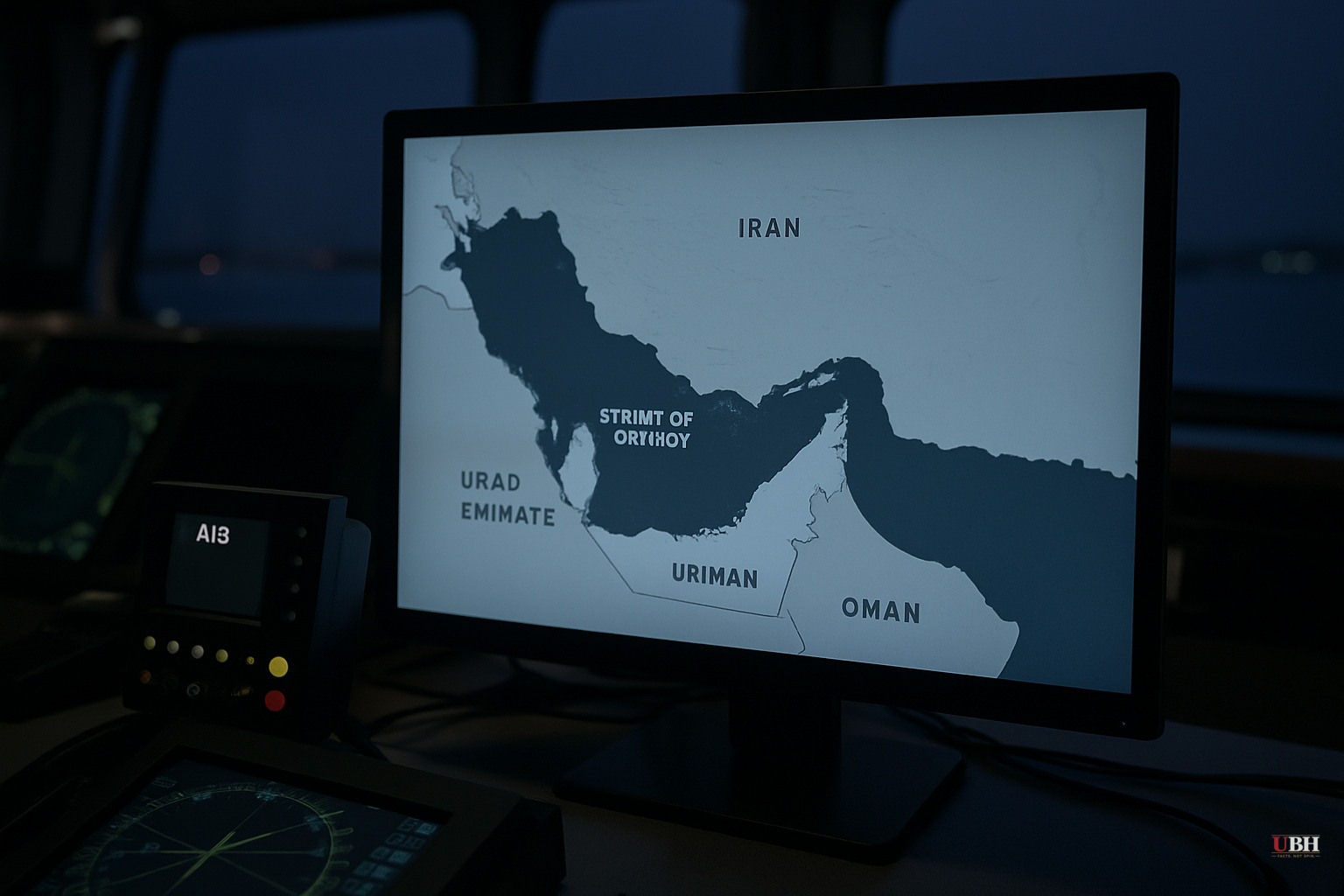
Since the U.S.-Iran memorandum of understanding was signed roughly a week ago, the Strait of Hormuz has been opened, partially reopened, announced closed again, disputed by the Pentagon, and now confirmed by commercial shipping data to be effectively empty of civilian traffic as of Sunday morning, June 21.
Maritime intelligence firm Windward posted on X Sunday morning that the picture had shifted dramatically overnight: zero AIS transits were recorded through the strait, with only two non-Iranian commercial vessels AIS-visible. Bloomberg data corroborate the trend: vessel transits that spiked to 23 on Thursday — the day before the strait nominally reopened after Iran's initial wartime closure — had fallen back to 9 by Sunday, according to ZeroHedge's report citing Bloomberg. Iran's Fars news agency cited an IRGC military source saying no new permits for strait passage were being issued until further notice.
That directly contradicts a statement U.S. Central Command released Saturday claiming 55 merchant ships transited the waterway on June 20, moving more than 17 million barrels of oil. Vice President Vance told Fox News Sunday he was "skeptical" of reports that Iran had genuinely closed the strait. Both claims cannot be fully true simultaneously. Either CENTCOM's June 20 count is accurate for that specific date while conditions deteriorated sharply overnight, or one side is mischaracterizing the situation. The sources do not resolve that discrepancy cleanly.
Round one at Bürgenstock: no nuclear file, no joint photo
Iran's Foreign Minister Abbas Araqchi and Parliament Speaker Mohammad Bagher Ghalibaf traveled to the Qatari-owned Swiss resort. Vance led the U.S. delegation, with Qatari mediators present. The two sides did NOT share a joint photo opportunity, according to CNBC. Araqchi briefly embraced Pakistani Prime Minister Shehbaz Sharif — a mediator — and did not interact directly with Vance.
Bloomberg reported that Iran's nuclear program was not addressed in Sunday's session. Vance told reporters the U.S. president had "asked us to turn over a new leaf to transform our relationship with the people of Iran," while simultaneously President Trump posted on Truth Social threatening to "hit Iran very hard again, just like we did last week, only harder" if Hezbollah proxies in Lebanon didn't stand down. Fox News reported Trump told Iranian officials directly: "you won't have a country" if the strait stayed closed, and suggested the U.S. could take over the waterway.
Ghalibaf's response, posted in translation on X, was blunt: "Do they not realize that if their threats actually worked, they wouldn't find themselves in today's position of desperation? They should be careful about what they say."
ZeroHedge noted Iran sees itself in a position of leverage. Tehran's public posture suggests this, even if its actual military position after U.S. strikes last week is weaker than that rhetoric suggests.
The strongest case for Iranian pushback
Iran's argument on the MOU: the memorandum explicitly called for a halt to all hostilities, including in Lebanon, where Israel has been operating since its March invasion. Iran says the U.S. failed to restrain Israel, making Washington the party in breach. Hezbollah fired over 50 rockets at Israeli positions after a ceasefire was announced Friday, and fighting has continued. Tehran's position is that it cannot reopen an economic chokepoint while its allied militia is still under attack and Washington has taken no measurable step to stop it.
Iran's stated rationale is coherent. Whether closing a waterway that carries roughly 20 percent of global LNG and crude flows justifies collective economic punishment of uninvolved shipping nations is a separate question. The answer for most maritime law is no. Collective economic punishment is not a legitimate negotiating tool. But the MOU's fragility stems directly from the gap between Iran's stated rationale and U.S. performance on restraining Israel.
Russia's Dmitry Medvedev said Saturday on the Russian social platform Max that expecting peace is "rash" because Netanyahu's government is "sustained by war" and an agreement "easily explodes with new strikes on Lebanon or other provocations." ZeroHedge covered this. CNBC did not mention the Russian reaction at all, which is a material omission given that Moscow has deepened military and economic ties with Tehran since Ukraine began and has a direct interest in U.S.-Iran diplomacy failing.
The pipeline boom that the crisis built
While diplomats argue over transponder data, energy markets are already engineering around Hormuz permanently. OilPrice.com reported that Saudi Arabia ramped the East-West pipeline to roughly 7 million barrels per day during the closure, routing exports from the Persian Gulf to Yanbu Port on the Red Sea. The UAE plans to double its bypass pipeline capacity from 1.8 million to 3.6 million barrels per day by the end of 2027. Iraq, which saw production collapse from over 4 million bpd to barely 1 million bpd during the disruption, is moving to expand the Kirkuk-Ceyhan pipeline from 200,000 to 770,000 barrels per day in months, with additional routes to Mediterranean ports in Syria and Jordan under consideration.
India is reorienting its entire energy posture. OilPrice.com reported that India's crude weighted average price rose from $69 per barrel in March to over $114 per barrel in April — a 65 percent spike driven directly by the closure. India's Foreign Minister S. Jaishankar announced in May that India would expand energy ties with the United States, specifically for LNG, as a hedge against future Hormuz dependence.
What round two looks like
The nuclear file was not opened Sunday. The Lebanon fighting has not stopped. The strait's operational status is disputed by Washington and effectively shut according to commercial shipping data. Iran has said it will end talks entirely if Israel does not withdraw from Lebanon, with a Tasnim News Agency report citing a July 31, 2026 deadline for Israeli withdrawal. Polymarket users gave only a 12 percent probability of that benchmark being met as of Sunday.
The unresolved question heading into the next session: whether the U.S. can deliver any measurable de-escalation in Lebanon that Iran would accept as compliance with the MOU, or whether Tehran is using Lebanon as a permanent veto on any substantive progress, including the nuclear negotiations that both sides publicly claim to want.
Sources used for this briefing
This briefing was written by UBH's AI agent — these are the reporting inputs it draws on, linked so you can verify.


