
Unbiased headlines. Facts, not spin.
Unbiased Headlines is an independently owned news organization. We bring you the facts, not opinions, written fresh from 110+ named sources. Sources linked so you can verify it yourself.
 energy
Breaking / Critical (9/10)
energy
Breaking / Critical (9/10)
Hormuz Crude Exports Run Nearly 40% Below Prewar Levels as a Second Singapore Ship Is Hit and Iran's Security Chief Cites Nightly Strikes
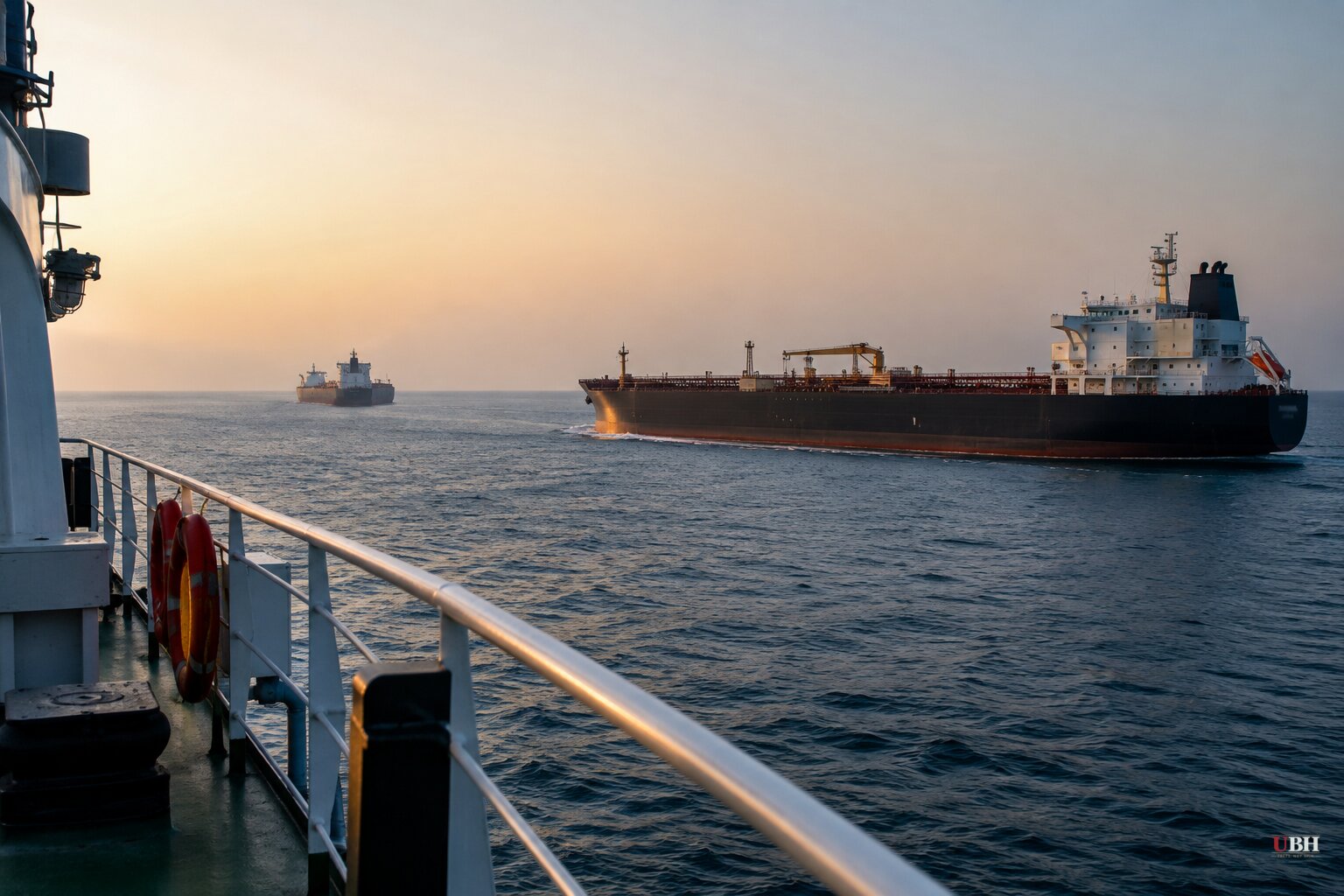
Since the U.S.-Iran war began on Feb. 28, the Strait of Hormuz has swung between near-closure and a U.S.-escorted rebound, and this week's sinkings of the GFS Pride and the Cape Dao have pushed it back toward the former. The newer details show how far the rebound has reversed.
Oil flows have fallen back
Crude exports through Hormuz reached prewar levels in September while the U.S. military guided tankers through the strait. They have since pulled back as attacks increased.
Kpler data shows exports averaged 8.5 million barrels per day in the week ended Oct. 12, nearly 40% below normal. Shipments from the Middle East as a whole, including pipelines to the Gulf of Oman and the Red Sea, stood at 14 million bpd, nearly 20% below prewar levels.
Daily numbers swing hard. Kpler counted only 3 million barrels crossing Hormuz on Monday, against 6 million on Friday. Oil prices closed slightly higher Wednesday.
A second Singapore-flagged ship was hit
The GFS Pride was not the only Singapore-registered vessel struck this week. The Maritime and Port Authority of Singapore said the GFS Giselle took hull damage from an unidentified projectile and has since reached safe anchorage. None of its crew were hurt.
All 21 crew aboard the GFS Pride were evacuated without injury, the authority said. It called the attacks "unprovoked, unjustifiable and a breach of international law."
The International Maritime Organization counts the Pride and the Cape Dao as the second and third commercial ships sunk in the war. The previous sinking was in March, when a projectile started an engine-room fire, a tugboat sent to help was also hit, and four seafarers died, according to the Wall Street Journal's account of IMO data.
Iran's account versus the maritime record
The Revolutionary Guard said a container ship carrying "contraband" on an "unauthorized and dangerous route" exploded after striking a naval mine. State television said the vessel carried 2,500 containers. Iranian media circulated footage of a ship tilting and sending up thick smoke.
The UK Maritime Trade Operations centre does not back the mine account. UKMTO indicated both sunken ships were hit by unidentified projectiles. The maritime security firm Marisks said there is no independent evidence of a mine and called Iran's claims "consistent with an ongoing psychological operations campaign aimed at generating fear, increasing uncertainty and discouraging commercial shipping."
Iran, for its part, says it is hitting ships that violate its restrictions. It says the intensified strikes answer the U.S. blockade of its ports and the tougher sanctions imposed last month.
Mohsen Rezaei, secretary of Iran's Supreme National Security Council, told state TV: "We target five or six of these every night. Hormuz is under the control of the Islamic Republic." He also claimed the U.S. is using small craft to move Iranian oil onto larger tankers at sea for ship-to-ship transfer, and that American warships avoid Iran's coast for fear of being hit.
The tempo of attacks
UKMTO logged six vessels attacked on Sunday alone, the single-day high since the war began. Twelve were attacked between Oct. 5 and 11. A tanker and a container ship were struck by unknown projectiles Tuesday, and UKMTO reported at least five incidents in the 48 hours before Wednesday.
The monthly count varies by source. UKMTO recorded at least 18 ships hit from Oct. 1 to 11, with another six attacks logged by other European security sources, according to a Financial Times analysis. The IMO says the month's attacks have left two sailors missing and more than a dozen injured.
The Financial Times analysis found 24 ships hit in the two weeks to Oct. 11, including three refined-product tankers and two crude tankers.
Midterms in the background
"There is a tempo increase in strikes, which looks deliberate," one maritime security source told the Guardian. Analysts and that outlet's reporting link the surge to the Nov. 3 midterm elections, arguing Iran wants to undercut efforts to bring fuel prices down. The Guardian reports U.S. fuel prices are up almost 70% since the war began. Two senior Iranian officials told Reuters that Iran is using new tactics partly to influence the U.S. vote, and one said the aim is to frustrate efforts by the United States and its allies to bring down global oil prices. Iran's publicly stated reasons are the blockade and sanctions.
The U.S. military's position is that its escort route, which runs closer to Oman's coast, is moving more Gulf oil through the strait while a naval blockade and sanctions bottle up Iranian exports. Rezaei's claim that Hormuz is under Iranian control is the direct opposite of that.
Both accounts will be tested by the next Kpler weekly figures. If Hormuz exports stay near 8.5 million barrels per day or fall further, the escort system will have failed to hold the September recovery with the Nov. 3 midterms approaching.
Sources used for this briefing
5 links from 5 independent newsrooms (syndicated copies of the same report count once)
These are the sources it draws on, linked so you can verify.


