
Unbiased headlines. Facts, not spin.
Unbiased Headlines is an independently owned news organization. We bring you the facts, not opinions, written fresh from 110+ named sources. Sources linked so you can verify it yourself.
 energy
Breaking / Critical (9/10)
energy
Breaking / Critical (9/10)
Gulf Strikes on Aramco Headquarters Continue as September CPI Hits 3.7%, With Gasoline Up 9.1%
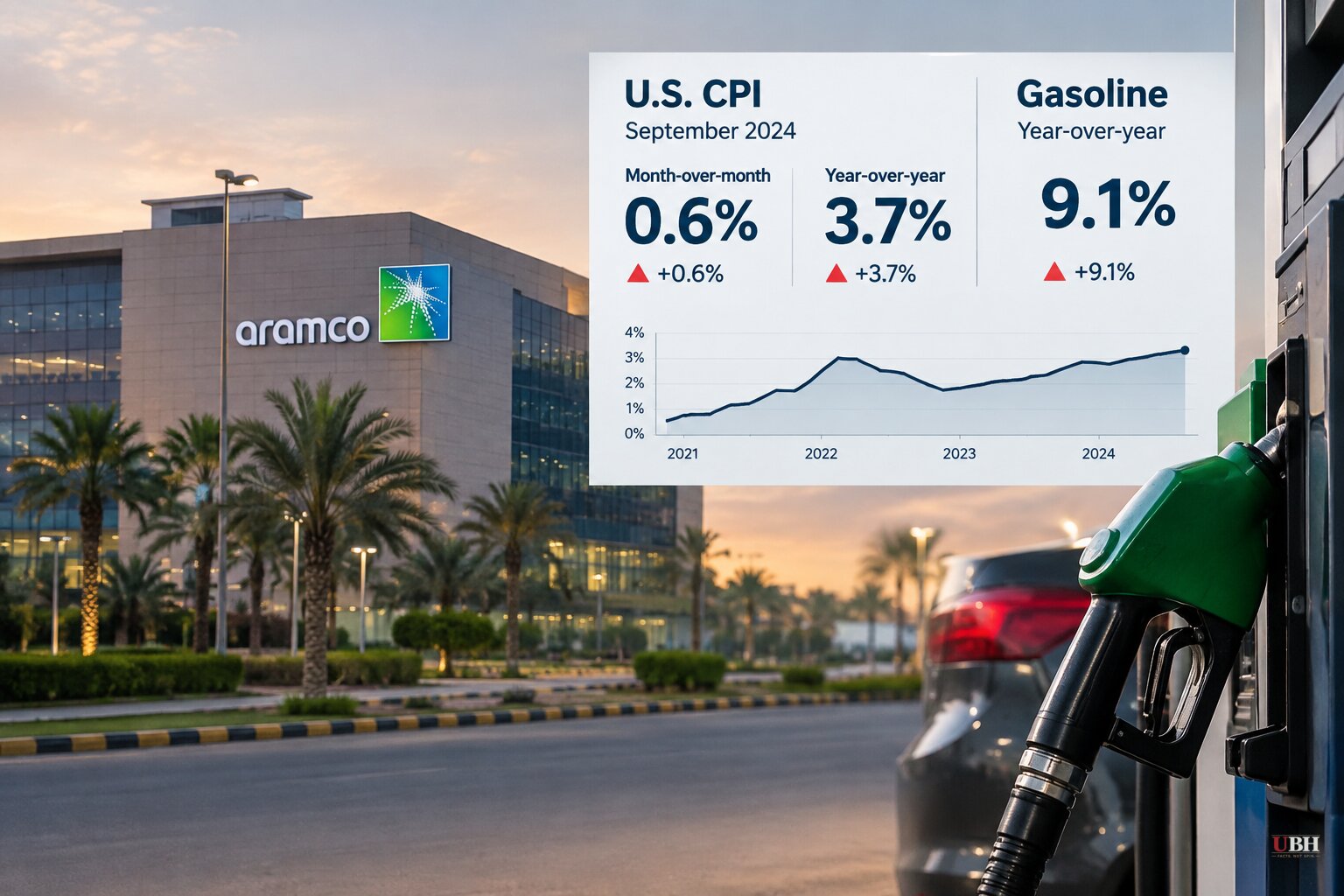
Since Houthi missiles and drones reached Saudi Aramco's headquarters in Dhahran, the energy shock has moved from the oil market into the household budget. The Bureau of Labor Statistics reported today, Oct. 14, that the September Consumer Price Index rose 0.6% from August, pushing the annual rate to 3.7% from 3.4%.
Economists had forecast 0.6% on the month and 3.6% on the year. Gasoline rose 9.1% in September and accounted for more than half of the monthly increase, according to the report.
Beyond the pump
Gasoline is not the only driver. Heather Long, chief economist at Navy Federal Credit Union, pointed to used cars, airfare, recreation, medical care and apparel all rising. "It's this more broad-based problem than just a gas price spike," she said.
Core CPI, which strips out food and energy, rose 0.3% on the month and 2.6% on the year. Economists had expected 0.2% and 2.5%. Shelter costs rose 0.4%, the fastest monthly pace in five months.
September was the sixth straight month in which inflation outran wage growth. Workers are going backward, and the data shows it.
This was the last CPI report before the midterm elections.
The Gulf escalation
The Houthis, an Iran-backed group in Yemen, launched missile and drone attacks across several Saudi cities, and Aramco's headquarters in the east of the kingdom was hit. The group has vowed further strikes on Saudi airports and oil facilities.
WTI crude was up about 1.6% in early trading after swinging between gains and losses as traders weighed the hostilities. The International Energy Agency has warned that diesel supplies will stay constrained well into 2027. OECD government oil stocks have fallen to their lowest level since 1989.
That is a thin cushion for a region now taking direct hits on its largest energy company.
Markets and the Fed
S&P 500 futures stood 0.2% higher at 7,872 as of 8:15 a.m. ET, before the CPI release. After the report, stock futures fell and bond yields rose as traders bet the Fed will hold rates higher for longer, according to CNN. The 10-year Treasury yield was at 5.20% before the data.
The Fed meets Oct. 28. Swaps priced roughly 24% odds of a quarter-point hike before the report.
Jeff Schulze, head investment strategist at Franklin Templeton Institute, wrote that the broadening of price pressures "bolsters the case for additional rate hikes." He noted, though, that recent comments from Fed officials suggest the bar for a hike at the October meeting could be high.
Boston Fed President Susan Collins said Tuesday that the central bank is not rethinking its 2% inflation target. JPMorgan CEO Jamie Dimon warned the same day that financial pressure across the country could intensify if rates rise another percentage point.
What comes next
The Fed's Beige Book is due at 2 p.m. ET today. Richmond Fed President Thomas Barkin speaks at 1:30 p.m. and Chicago Fed President Austan Goolsbee at 3 p.m.
It is unclear whether the Fed treats a war-driven energy shock as something to look through or something to fight. That call comes Oct. 28, with another round of Houthi strikes on Saudi airports and oil facilities threatened in the meantime.
Sources used for this briefing
7 links from 5 independent newsrooms (syndicated copies of the same report count once)
These are the sources it draws on, linked so you can verify.


