
Unbiased headlines. Facts, not spin.
Unbiased Headlines is an independently owned news organization. We bring you the facts, not opinions, written fresh from 110+ named sources. Sources linked so you can verify it yourself.
 energy
Major Story (8/10)
energy
Major Story (8/10)
Ukrainian ex-officer goes on trial in Hamburg over 2022 Nord Stream blasts, prosecutors allege Kyiv's state agencies ordered them
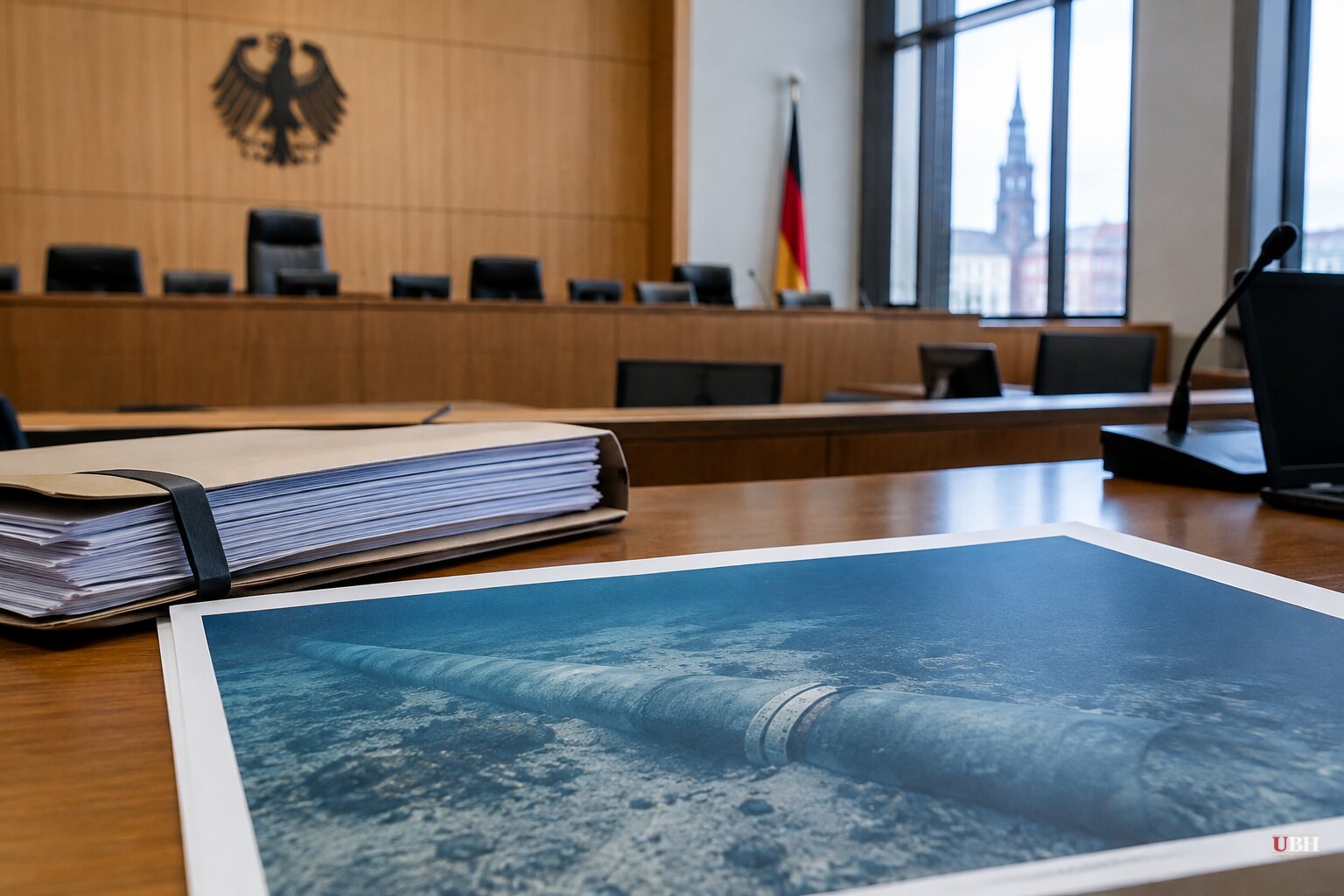
A Ukrainian former military officer is set to go on trial today, Oct. 14, at the Hanseatic Higher Regional Court in Hamburg. He is accused of organizing the operation that destroyed the Nord Stream gas pipelines on the Baltic seabed in September 2022.
German privacy rules identify him only as Serhii K. He was publicly named as Serhii Kuznietsov during extradition proceedings in Italy. He is 50, he denies any involvement, and he is the only defendant in the dock. The trial is expected to run into February 2027.
The charges
Federal prosecutors charge him with causing an explosion, damaging property, disrupting public service and being an accomplice to war crimes. The war crimes count rests on the allegation that the attack targeted civilian infrastructure.
Prosecutors say he and other military personnel developed the plan at the end of February 2022, "on behalf of state authorities in Ukraine." The stated aim, in the indictment summary, was to permanently halt gas deliveries and stop Russia from using the revenue to fund its war.
According to prosecutors, the group hired a sailboat in Rostock, using forged IDs and intermediaries. The yacht, called the Andromeda, sailed to waters near the Danish island of Bornholm. Investigators said traces of subsea explosives were found on the boat.
Prosecutors allege the team placed at least four bombs, each weighing between 14 and 27 kilograms, at a depth of 70 to 80 meters. They also allege Serhii K. traveled to Germany through Poland on a forged Ukrainian passport about three weeks before the attack.
What the blasts did
On Sept. 26, 2022, Swedish seismologists detected several blasts roughly 17 hours apart. Three of the four pipelines ruptured, releasing large plumes of methane.
Nord Stream 1 had supplied about half of Germany's natural gas imports until Russia cut flows in August 2022. Nord Stream 2 was finished in 2021 but never entered service, because Berlin suspended its certification shortly before Russia's full-scale invasion.
Western governments first pointed toward Moscow. Vladimir Putin blamed "the Anglo-Saxons," which the U.S. and UK reject. Denmark and Sweden closed their own investigations. Germany kept going, and in January 2025 the Federal Court of Justice ruled the case fell under German jurisdiction because it involved undermining the country's internal security.
Arrest and other suspects
Italian police arrested Serhii K. in August 2025 at a bungalow in a village where he was staying with his family. Police said he surrendered without resistance. Italy's top court approved his handover, and he was extradited to Germany in November 2025.
German prosecutors have identified seven Ukrainian suspects in all. A second man, identified as Vladimir Z., was arrested in Pula, Croatia, in August. Prosecutors believe he was one of the divers. He was earlier detained in Poland. He has applied for asylum in Croatia to fight extradition and also denies the allegations.
Serhii K.'s Italian lawyer, Nicola Canestrini, has said there is "no smoking gun" in the case. German broadcaster ARD, Süddeutsche Zeitung and Die Zeit reported, citing the full indictment, that investigators secretly recorded Serhii K. on a call with his wife while he was in Italian custody. They reported he said a lawyer had advised him it was time to admit this had been "an official military operation," and that his commander should say they were not just "two crazy military men." Canestrini has played down that evidence.
Kyiv, Warsaw and Moscow
Ukrainian President Volodymyr Zelensky has long said Ukraine had nothing to do with the blasts. That sits awkwardly beside a German indictment that names Ukrainian state agencies as the ones giving the order.
Oleksandr Merezhko, chairman of the Ukrainian parliament's Foreign Affairs Committee, has pointed out that the blasts took place during a war with Russia.
Polish Prime Minister Donald Tusk said in August that Germany should not prosecute the suspects. Those who built the project, he said, "should be ashamed, not those who disabled them."
Russia has its own stake. The Russian government said on Monday it expects a "just verdict" that names the perpetrators and those who ordered the operation. Moscow has opened its own terrorism case and has suggested the U.S. and countries with alternative supply routes benefited.
Why Berlin is exposed
Germany is Ukraine's largest European supplier of military aid. The government has stayed firmly in Kyiv's corner while its own prosecutors build a case that points back at Ukrainian state structures.
The trial also lands in a charged domestic climate. The far-right Alternative for Germany has led opinion polls for more than a year and has called for an end to military aid for Ukraine.
The pipelines themselves were majority-owned by Russia's state-controlled Gazprom and co-financed by major European energy companies. Whatever the court concludes about who planted the charges, the project already stood frozen by Germany's own decision before the blasts.
The verdict is months away. Judges must decide whether prosecutors can prove their central claim, that a Ukrainian military team acted on behalf of the state, and what a war crime conviction would mean for an act of sabotage against infrastructure owned by the opposing belligerent. Vladimir Z.'s extradition fight in Croatia, which would bring a second defendant into the case, remains unresolved.
Sources used for this briefing
7 links from 7 independent newsrooms (syndicated copies of the same report count once)
These are the sources it draws on, linked so you can verify.


