
Unbiased headlines. Facts, not spin.
Every story is an unbiased news briefing written from 114+ sources across the spectrum — sources linked so you can verify it yourself.
 energy
Major Story (8/10)
October 13, 2026 at 10:32 PM
energy
Major Story (8/10)
October 13, 2026 at 10:32 PM
FERC Rejects PJM's Plan to Cut Off New Data Centers First in Grid Emergencies, Leaving Curtailment Rules to the States
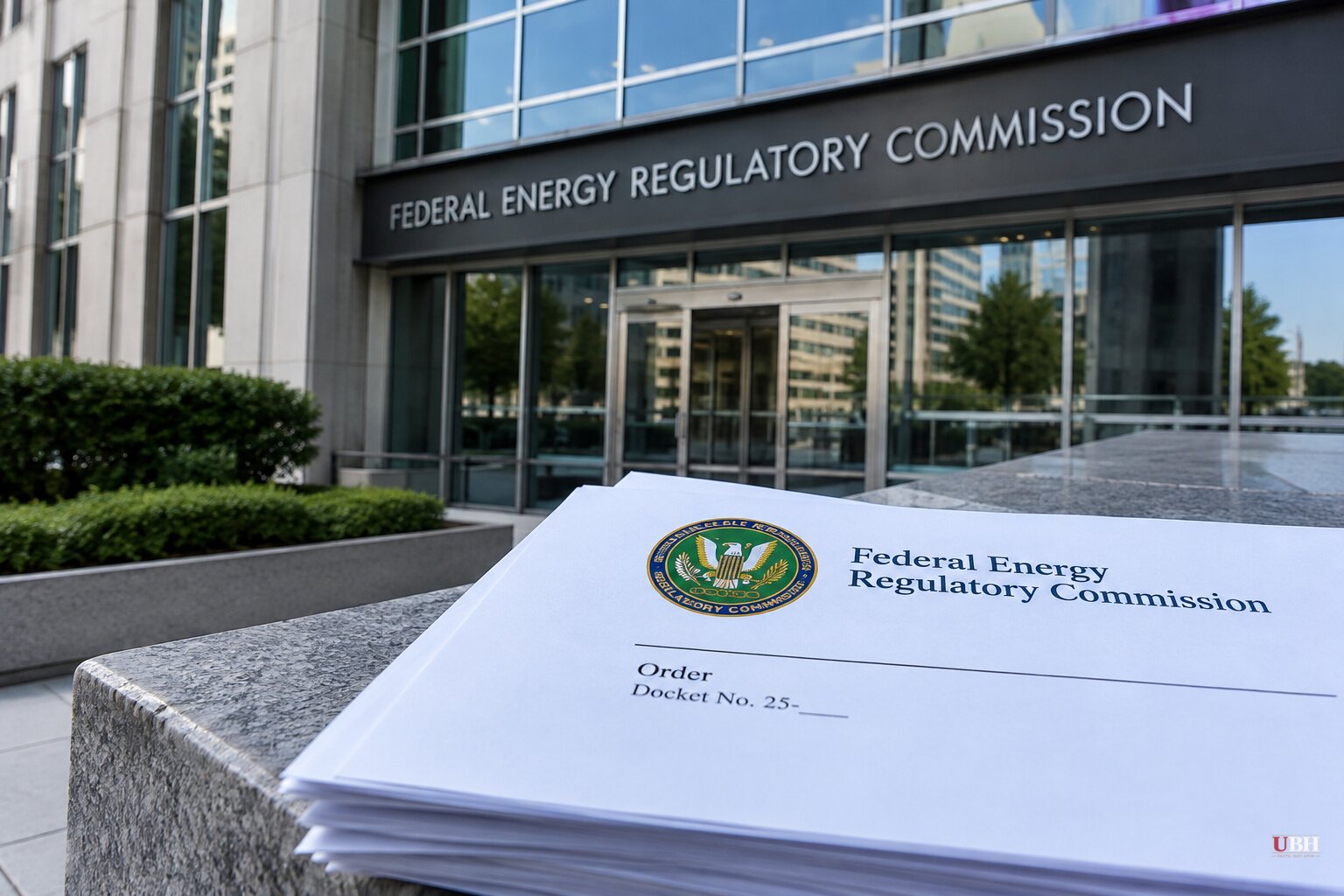
Since the Federal Energy Regulatory Commission ordered PJM to rewrite its 6.8 GW backstop auction, the grid operator has taken a second federal hit. On Friday, Oct. 9, in Docket ER26-3515, FERC rejected the core of PJM's plan for connecting giant new power users, mainly data centers.
FERC approved two pieces: a definition of a "large load" (50 MW or more at one site) and a Large Load Registry. The registry took effect Monday, Oct. 12. It will track each facility's location, ramp schedule, backup generation, fuel sources and capacity supply.
Everything else was rejected, including the Interim Resource Adequacy Service, or IRAS, package that made up the heart of the proposal. The vote was unanimous, with Commissioner David Rosner filing a concurrence.
What PJM wanted
In August, PJM proposed that new data center customers of 50 MW or more either fund enough new generation to cover their full needs or risk being curtailed during system emergencies. PJM says demand is rising while net supply falls. It cites a 6.8 GW capacity shortfall and a capacity-cost increase of more than 1,000% since 2024.
PJM also forecasts data center demand in its territory will triple by 2030 to around 29 GW.
Why FERC said no
FERC's objection was jurisdictional. Its order said several provisions "appear to place obligations directly on eligible new large loads, which are, for the most part, retail customers." It said other provisions "appear to dictate which retail customers taking retail service will be curtailed," and that the compensation framework "appears to establish a retail rate."
The commissioners cited the Federal Power Act, which they wrote "leaves to the states alone 'any other sale'" of electricity, "most notably any retail sale." The plan also "may be discriminatory," FERC said.
FERC told states they "have a crucial role to play" in deciding which retail customers are curtailed when the system is stressed. It said PJM may file a revised plan but would have to explain why data centers should be curtailed ahead of other large users.
Rosner's split position
Rosner agreed with the result but wrote separately. He said non-critical data centers should be shut off before homes, hospitals and schools in a grid emergency. He also said the call belongs to state regulators. "We need state regulators to establish clear rules for which customers should be curtailed first," he said, with curtailment used only after voluntary demand response is exhausted.
He also warned about PJM's idea of excluding IRAS loads from the capacity auction demand curve. "The result could be a capacity market signaling that PJM has more than enough capacity while the region sheds thousands of megawatts of demand on an involuntary basis," Rosner wrote.
PJM spokesman Jeff Shields said the operator is reviewing the order. He said PJM wants to meet FERC's requirements while recognizing state responsibilities and "honoring the concept that existing electricity customers should not be unfairly burdened by new, energy intensive customers in the form of higher costs or decreased reliability."
The cost fight is unresolved
That last point is politically sensitive. PJM's independent market monitor, Monitoring Analytics, says adding data center load to the last four capacity auctions raised costs by $29.4 billion. The NJ Board of Public Utilities said PJM's capacity auction results were the "main driver" of a $26.87 monthly increase for a typical PSE&G customer in June 2025. Maryland's Office of People's Counsel attributed a rise in BGE's summer supply price, from about 10.2 to 12.5 cents per kilowatt-hour, "largely" to data center capacity effects.
The order itself changes no rate. No regulator or utility has published an estimate of what the ruling means for bills.
Jeff Dennis, a former FERC staffer now at Co2efficient, said the decision pressures states to write their own policies, and those policies could differ significantly. Jefferies analysts wrote that the proposal could be "minimally revived" through state-led efforts, with Ohio and Pennsylvania the states to watch.
Utilities are screening requests themselves
Separately, utilities are filtering data center requests on their own. Exelon's Jeanne Jones said large-customer service requests tripled to 18,000 MW. After Exelon began requiring binding financial commitments and collateral, its high-probability list fell to 11,000 MW, with those projects posting roughly $1 billion. "If we build out the grid and then that data center walks away, someone's got to pay for it," Jones said.
Wood Mackenzie puts only 23% of disclosed data center requests in its high-confidence category.
Emergency order for this week
On a related track, the Energy Department on Oct. 12 issued Order No. 202-26-50 at PJM's request. It directs PJM to dispatch specified generating units and lets it direct backup generation before or during an Energy Emergency Alert 3.
PJM's Oct. 11 filing forecast demand "at or around 111,500 MW (or higher)" for Oct. 13 and said the system would sit within 900 MW of its reserve margin on Oct. 14. It put anticipated generation outages at 61,591 MW, with the most acute pressure in the BGE, PEPCO and Dominion zones. The order runs from Oct. 13 through Oct. 16, when temperatures are expected to ease. Energy Secretary Chris Wright found a statutory emergency existed. The sources do not tie the order to the data center ruling.
What comes next
PJM has not said whether it will file a revised curtailment plan. Without IRAS, it has not said how it will handle the shortfall it expects from 2027. Whether states such as Ohio and Pennsylvania write curtailment priorities, and who pays for the capacity data centers require, remain open.
Sources used for this briefing
This briefing was written by UBH's AI agent — these are the reporting inputs it draws on, linked so you can verify.


