
Unbiased headlines. Facts, not spin.
Unbiased Headlines is an independently owned news organization. We bring you the facts, not opinions, written fresh from 110+ named sources. Sources linked so you can verify it yourself.
 energy
Major Story (8/10)
Event date: September 14, 2026 ·
energy
Major Story (8/10)
Event date: September 14, 2026 ·
Brent Near $106 as IEA Warns Diesel Tightness Could Last Into 2027, Saudi Arabia Reports Aramco Building Fire
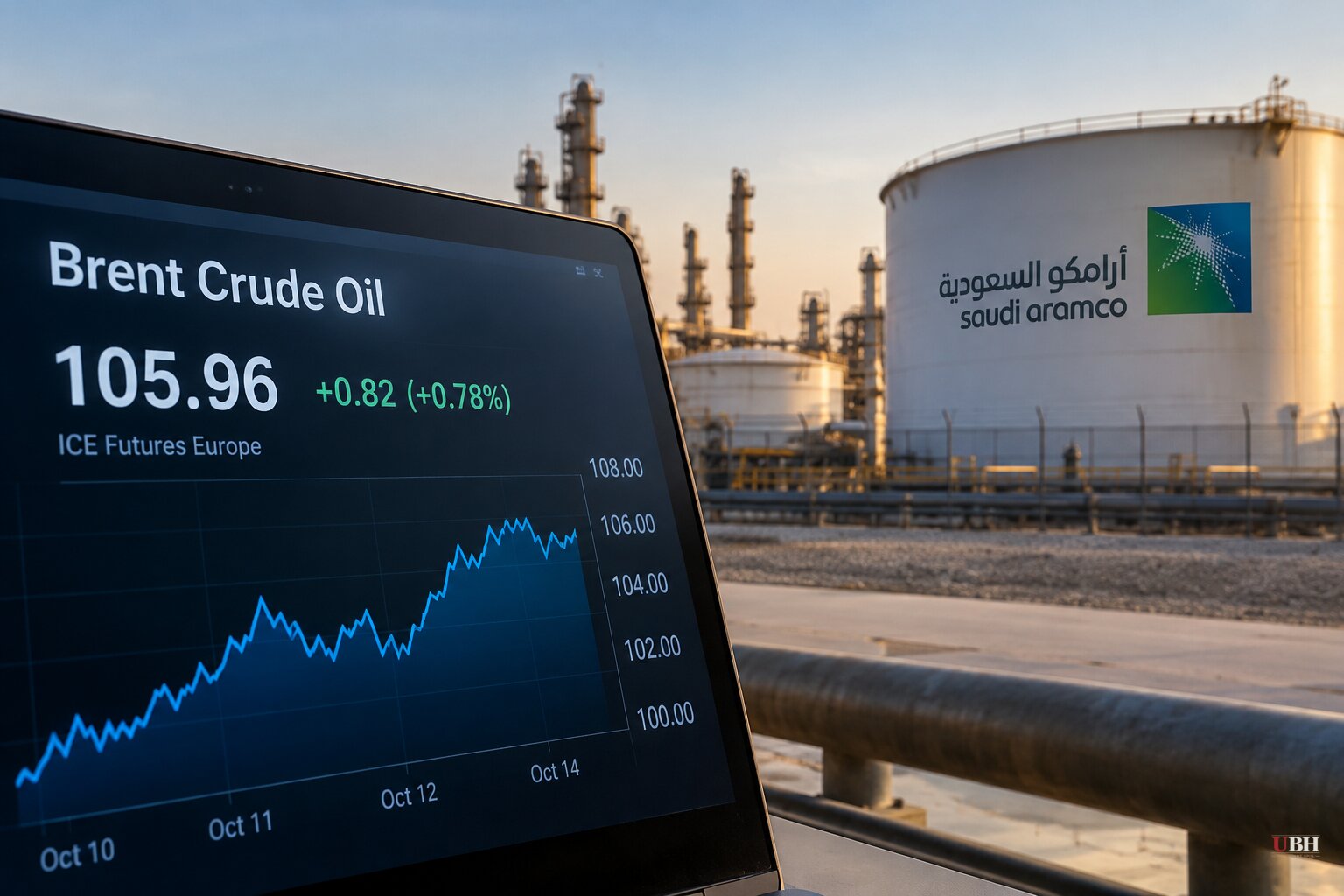
Since a Houthi strike on Riyadh's international airport killed 13 people on Saturday, Oct. 10, the worst attack on Saudi soil since 2015, the fighting has moved toward Saudi oil infrastructure. Wednesday, Oct. 14, added a fresh warning from the International Energy Agency about what that means for fuel.
Oil prices and the IEA warning
At 6:20 a.m. ET, before regular U.S. trading opened, Brent futures were up 0.7% at $106.46 a barrel. West Texas Intermediate futures were up 1.2% at $95.30. Those are futures quotes, not an opening price.
The IEA's October Oil Market Report, released Wednesday, says the global market is heading into peak winter demand without enough inventory cushion. It warns diesel constraints could continue well into 2027.
Global diesel exports fell 700,000 barrels a day in September from a year earlier. Other suppliers only partly made up for a 1.3 million barrel-a-day loss from Russia and the Middle East, the agency said.
Diesel and the pump
U.S. diesel crossed $6 a gallon for the first time last month and remains elevated. Gasoline is also high. AAA put the national average at about $4.36 on Oct. 8, against roughly $3.12 a year earlier. It is the first October in which the average has topped $4.
A Dallas Federal Reserve report dated Oct. 8, by analysts Jesse Thompson and Garrett Golding, says refinery damage, shipping constraints and export restrictions have sidelined as much as 10% of global refining capacity. Gaps between crude and wholesale fuel prices are "well beyond normal," they wrote, and wider than after Russia's 2022 invasion of Ukraine.
The analysts attribute the pricing to "acute, multifaceted supply constraints" rather than retailer or distributor markup. They also warn that pump pressure could persist even after Hormuz shipping normalizes.
The Dhahran fire and Riyadh
A Saudi Energy Ministry official said an administrative building belonging to Aramco in Dhahran was struck Tuesday evening. The result was a "limited fire" and no casualties. Aramco has said oil production and exports are unaffected, according to Crypto Briefing.
Saudi civil defense said debris from two intercepted Houthi missiles wounded four people in Riyadh and damaged 15 homes. Witnesses reported more explosions in the capital on Wednesday.
The coalition's account of its own action: it struck oil sites in Sanaa and the western provinces of Dhamar and Saada on Tuesday. Spokesman Turki al-Maliki said the sites supplied the Houthi war effort to "threaten the kingdom, Yemen, the southern Red Sea and waterways." The coalition had issued its first evacuation order in Sanaa since the war flared in July, before hitting the Yemen Petroleum Company facility on the city's outskirts.
The Houthis see it differently. Their Al-Masirah TV channel described the strike on the oil firm as "Saudi aggression." Before it went ahead, the group had warned it would target Riyadh's airport, a refinery and an Aramco facility in Dammam, and told citizens to stay away from them.
France has told its citizens to avoid Riyadh, Jeddah and Dammam airports. Other countries have also issued travel warnings.
Washington and Hormuz
President Trump said the Houthis are "behaving very badly," according to Euronews. Separately, U.S. Central Command rejected a claim by the IRGC Navy commander that Iran controls the Strait of Hormuz and would sink approaching U.S. warships. "RGC's navy commander has no navy," CENTCOM said on X, adding that "American forces and regional partners clearly control the Strait of Hormuz."
CENTCOM said Monday that its forces have redirected 130 ships since its blockade of Iranian ports began and destroyed 13 vessels it says were violating the blockade or part of an IRGC shadow network.
What the market is saying
Paul Tudor Jones, founder of Tudor Investment, told CNBC's "Squawk Box" he is long oil and that it "can rally another $20 or $25 bucks." He added: "If something to ameliorate the situation was going to happen, it would have happened already before the midterms."
That is one trader's forecast, not a data point. The IEA figures are the harder numbers, and they point to tight diesel supply regardless of where crude lands.
For the administration, the timing is awkward. Fuel prices have become a political issue ahead of the Nov. 3 midterms, and the IEA says relief is unlikely to arrive by then. Whether Houthi strikes on Saudi airports and energy sites reach production or exports, which Aramco says have not been touched, is the open question that would change the supply picture.
Sources used for this briefing
8 links from 8 independent newsrooms (syndicated copies of the same report count once)
These are the sources it draws on, linked so you can verify.


