
Unbiased headlines. Facts, not spin.
Unbiased Headlines is an independently owned news organization. We bring you the facts, not opinions, written fresh from 110+ named sources. Sources linked so you can verify it yourself.
 energy
Major Story (8/10)
Event date: October 9, 2026 ·
energy
Major Story (8/10)
Event date: October 9, 2026 ·
Vance Announces Defense Production Act Expansion of Delek's Tyler, Texas Refinery as Diesel Holds Near $6.28
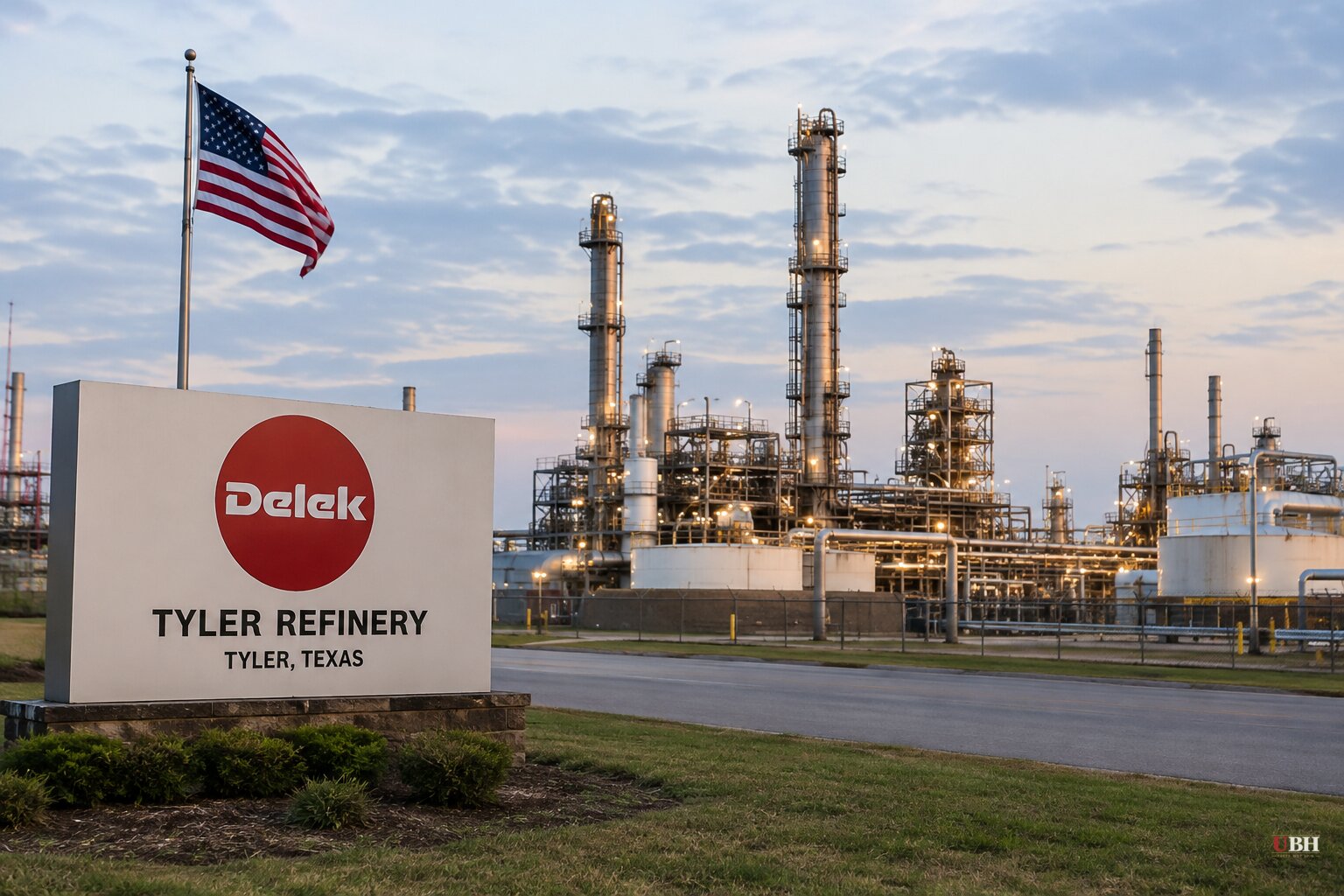
Since diesel hit a record $6.53 a gallon on Sept. 22, the White House has considered a diesel export ban (now ruled out), a Russian diesel deal and a dyed-diesel tax order. The latest lever is a 1950 law.
Vice President JD Vance announced it Tuesday, Oct. 13, at a political rally in Texas. "Today I am pleased to announce that the Trump Administration, working with the refinery at Delek, has used the Defense Production Act and we're going to expand the refinery right here in Tyler, Texas," he said.
What was announced
The Tyler refinery, about 200 miles north of Houston, processes roughly 74,000 barrels a day. Vance said the goal is "millions of gallons of commercial grade and military-spec fuel to come out of this refinery in addition to what it's already producing."
He pitched it as relief for households: lower costs "to fly from one place to another," lower costs "to drive your car into work every single day," and "a more reliable energy supply."
The White House and Delek did not immediately say how much money is being allocated or by how much capacity would rise. Vance gave no timeline and no volume. Nobody has said whether other refineries will get the same treatment.
The calendar problem
Refinery expansions are capital intensive and typically take many months, if not years, depending on the complexity of the additions. Election Day is Nov. 3, three weeks away. Any added barrels from Tyler are unlikely to reach the market and lower fuel prices before then.
The move follows a Reuters report last week, citing three oil industry sources, that Trump is preparing a presidential memorandum. It would direct agencies to find ways around state and local rules that block energy production and to use the Defense Production Act to expand refining capacity. Reuters also reported that refinery executives urged officials last month to put federal money into upgrading existing plants instead of building new ones, because new construction would cost more and take longer.
The act lets a president direct private companies to prioritize government orders and back expansion of strategic production with federal loans and guarantees.
Where prices stand
The national diesel average was $6.28 a gallon on Tuesday, down from $6.31 a week earlier but far above $3.65 a year ago. Regular gasoline averaged $4.34, a record for October and the first October ever with the national average above $4.
The supply problem is global. Hostilities with Iran, which began at the end of February, have held Strait of Hormuz traffic to roughly half its historic level, according to the International Energy Agency. Ukrainian strikes have knocked out roughly half of Russia's diesel refining capacity, and Russia has had a near-total diesel export ban in place since July. China has also restricted exports.
The Russian diesel deal Trump announced covers 35.76 million barrels in total, about 10 days of U.S. domestic diesel demand. Analysts quoted by OilPrice.com say it would make little or no difference to prices. The general license easing restrictions on Russian-origin diesel drew criticism from Democrats and some Republicans.
The dyed-diesel order
Earlier this month Trump signed an executive order letting off-road red-dyed diesel be used on highways through the end of the year. The IRS is told to waive penalties, which are normally $1,000 or $10 per gallon, whichever is higher.
The federal excise tax of 24.4 cents a gallon is deferred, not erased. The order tells officials to explore ways to forgive the deferred tax, including through legislation. According to ClearView Energy Partners, 10 states making up about a third of diesel sales had already moved to expand dyed-diesel access between Sept. 23 and Oct. 2.
The "record" dispute
Not everyone accepts the crisis framing. Breitbart Business Digest argues that diesel is not at a record once inflation is counted. It puts the June 2008 peak of $4.764 at about $7.20 in August 2026 dollars, and the June 2022 peak of $5.81 at $6.57. By its math, today's $6.28 equals $4.12 in 2008 dollars. The outlet also disputes the claim that high diesel bankrupted 16 trucking companies in 30 days, calling the sourcing for that claim thin.
The Energy Information Administration's nominal on-highway average reached $6.53 the week of Sept. 21, the highest since its series began in 1994. Diesel was $3.76 before the Iran war, according to AAA.
What comes next
The expected presidential memorandum has not been reported as issued. When it is, it will show whether the administration is moving to override state and local restrictions on energy production, and whether Delek is the first of several Defense Production Act refinery projects or the only one.
Sources used for this briefing
7 links from 7 independent newsrooms (syndicated copies of the same report count once)
These are the sources it draws on, linked so you can verify.


