
Unbiased headlines. Facts, not spin.
Every story is an unbiased news briefing written from 110+ sources across the spectrum — sources linked so you can verify it yourself.
 defense
Major Story (8/10)
July 9, 2026 at 02:27 PM
defense
Major Story (8/10)
July 9, 2026 at 02:27 PM
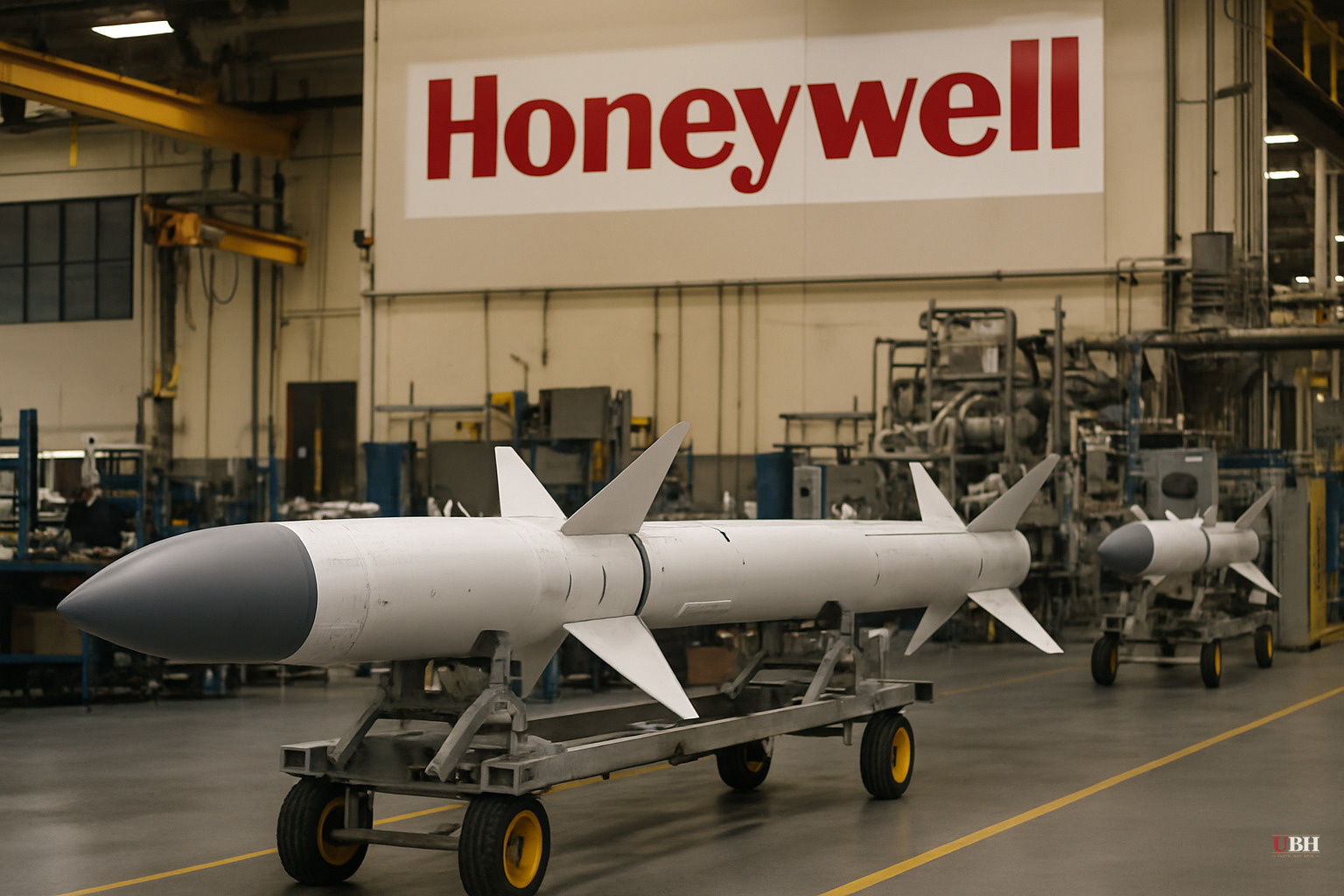
Honeywell Aerospace Deploys 1,000 European Engineers to Build Defense Products Outside U.S. Export Control
The Demand Is Now a Hard Requirement
Honeywell Aerospace CEO Jim Currier put it plainly to Reuters in late June: European defense customers want ITAR-free technology, and they want it as a prerequisite, not a nice-to-have.
ITAR — U.S. International Traffic in Arms Regulations — gives Washington the legal authority to block, condition, or revoke the re-export of American military technology, even after a foreign government has paid for it. European defense ministries have decided they cannot build a credible, autonomous military supply chain on components the U.S. can switch off.
So they changed the rules of the game.
What Europe Built Into the Rules
The EU's €800 billion ReArm Europe plan lists ITAR-free capability development as a stated priority, according to EU Insider's June 23 analysis. The European Defence Fund 2026 goes further: it explicitly uses ITAR-free status as a criterion in funding assessments, meaning projects relying on U.S.-controlled technology face a lower probability of receiving support.
The EU is also moving to embed "European preference" into its Defence Procurement Directive. Washington has warned that if implemented, the policy would create barriers for U.S. suppliers, according to EU Insider.
This is written into the funding architecture, not left to individual companies making strategic bets.
What Honeywell Is Actually Doing
Currier told Reuters that Honeywell has tasked roughly 1,000 engineers spread across Poland and the Czech Republic with designing non-ITAR technology for local strategy. The company's European subsidiary holds intellectual property inside the EU specifically to qualify for the new generation of ITAR-free procurement contracts.
"Part of it is looking, acting, feeling and speaking like a European company," Currier said.
The anchor for the ITAR-free navigational technology push is Civitanavi Systems, an Italian navigation technology firm Honeywell acquired in 2024. Currier described that acquisition as "the playbook" for scaling ITAR-free products across the EU and into Asia-Pacific partners including Japan and South Korea.
Honeywell's defense segment accounts for about 40% of company revenue and covers navigation systems and actuators for missiles, among other products. International sales made up roughly 30% of Honeywell's defense business last year, up from approximately 18% in 2020, according to the company.
A source told Reuters that Honeywell is set to unveil a new ITAR-free product for the international defense market at the Farnborough Airshow in Britain later this month. The company declined to comment on any planned announcement.
The Broader Market Shift
Honeywell is not alone. U.S. drone manufacturers have been expanding European operations. The U.S. floated a new missile maintenance facility on the continent this week. Two defense contractors discussed building ATACMS ballistic missiles in Germany for the first time, according to Reuters. All of this activity is happening against the backdrop of NATO leaders unveiling arms deals worth tens of billions of dollars at a gathering in Turkey this week.
A Kiel Institute analysis, cited by EU Insider, found European military independence achievable for around €500 billion over a decade, but only if Europe builds an entirely new generation of long-range and hypersonic weapons free from U.S. technology controls.
The Strongest Counterargument
Critics of the ITAR-free push, particularly in Washington, argue that U.S. export controls exist for a reason: to prevent sensitive American military technology from reaching adversaries through third-party transfers. The concern is legitimate. A European ally today could face political instability, a change in government, or pressure from a near-peer adversary tomorrow. If U.S. technology is embedded in their weapons, ITAR gives Washington a lever to limit escalation or diversion. Strip that out, and the U.S. loses visibility and control over where its most advanced defense innovations end up.
The ITAR-free products Honeywell and others are developing are not copies of existing U.S.-controlled technology stripped of restrictions. They are being designed from scratch, with intellectual property domiciled in Europe, to avoid falling under U.S. jurisdiction in the first place. Whether that distinction fully addresses the proliferation risk is an open policy question that neither Brussels nor Washington has fully resolved.
What Happens Next
The Farnborough Airshow later this month will be the next concrete data point. If Honeywell's announced ITAR-free product draws the kind of European government interest Currier is forecasting, it will signal how fast this market segment is moving. The EU's planned "European preference" language in the Defence Procurement Directive, and whether the U.S. successfully pushes back on it, will determine whether American suppliers face a hard wall in European government contracting or just a higher bar to clear.
Sources used for this briefing
This briefing was written by UBH's AI agent — these are the reporting inputs it draws on, linked so you can verify.


