
Unbiased headlines. Facts, not spin.
Every story is an unbiased news briefing written from 110+ sources across the spectrum — sources linked so you can verify it yourself.
 energy
Low Interest (4/10)
June 20, 2026 at 08:09 PM
energy
Low Interest (4/10)
June 20, 2026 at 08:09 PM
Home Battery Systems: What They Cost, How They Work, and What Buyers Should Know Before Signing a Contract
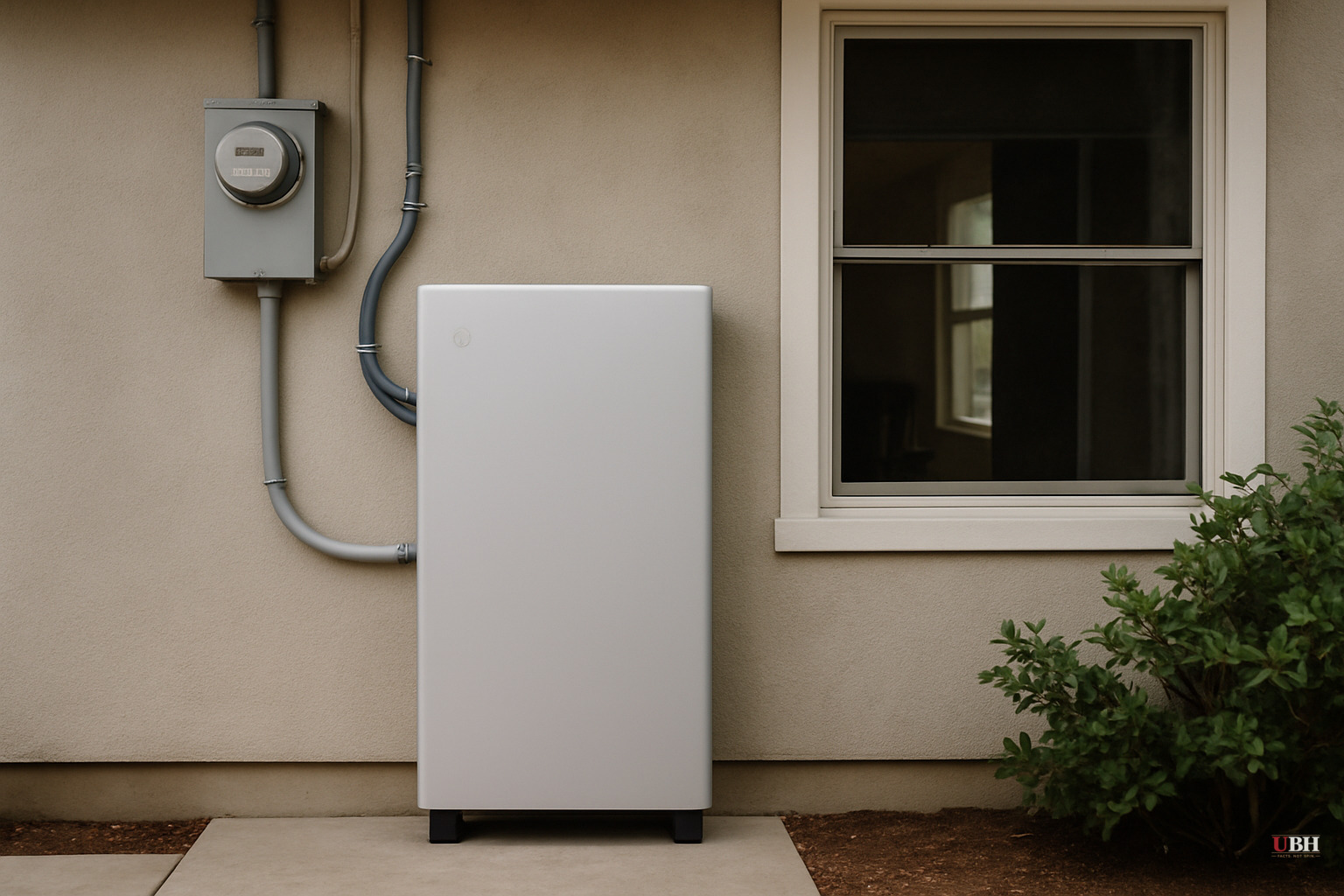
Household energy costs are climbing, and more homeowners are looking at battery storage as a hedge. The question is whether the math actually works, and what buyers need to know to avoid getting burned by a fast-moving market with limited regulation.
What These Systems Actually Do
A home battery is, at its core, a large rechargeable unit that stores electricity for use when grid power is expensive or unavailable. According to Wired's extended review based on months of hands-on research, interviews with battery owners, and the author's own installation, most residential units use lithium iron phosphate (LFP) chemistry rather than the lithium-ion cells in your phone or laptop.
The reason matters. LFP batteries are safer, more durable, and significantly less prone to thermal runaway (the technical term for catching fire) than standard lithium-ion. That's a real distinction for something sitting in your garage.
A smaller number of manufacturers are developing sodium-ion (Na-ion) alternatives. Those units don't require lithium, handle cold temperatures better, and are potentially cheaper to produce. The tradeoffs: they're physically larger and have shorter cycle lives. Na-ion home storage remains a niche segment, according to Wired.
The Inverter Question That Most Salespeople Skip
Every battery system requires an inverter to convert stored DC power into the AC current your home actually uses. Inverters are rated in kilowatts, and that rating determines how much power you can draw at once, not just how much you can store.
A 3.6-kW inverter handles modest loads fine. Households with high-demand appliances like an EV charger or heat pump will want at least 5 kW, and those with larger demands or larger batteries will want to go higher — 6 to 10 kW — according to Wired. Buyers who don't think through their peak demand before purchasing can end up with a storage system that can't power their home the way they expect during an outage.
Homeowners who have solar panels, or plan to add them, need a hybrid inverter specifically — one that manages both incoming solar generation and battery storage in a single unit. Standard inverters won't do that.
Four Reasons People Buy These Systems
Wired lays them out plainly: storing excess solar output, living off-grid, guarding against outages, and buying cheap off-peak electricity to use when rates are higher. These goals are not mutually exclusive, but they do affect which hardware and which utility rate structure makes the most financial sense.
Time-of-use (TOU) billing, where utilities charge more during peak hours and less at night, is increasingly common across the U.S. A battery lets a household charge overnight at the lower rate and discharge during the expensive afternoon window. Whether that arbitrage actually pays back the system cost depends entirely on the local rate differential and how many cycles the battery delivers over its lifetime.
The Case for Waiting, and Why Some Homeowners Make It
The strongest argument against buying now is straightforward: the market is moving fast. Solid-state batteries — which are smaller for equivalent capacity, lack flammable liquid electrolytes, and are expected to last longer — are in development and are the next likely leap in home storage technology, according to Wired. Early adopters of current-generation LFP systems could find themselves holding hardware that's obsolete within a decade.
That concern is legitimate. Wired notes that installation costs are high, and it makes sense to get as much capacity as possible up-front because even adding to modular systems later often requires professional installation to avoid voiding your warranty.
The counter-argument is that waiting also has a cost: every month of continued exposure to rising electricity rates and grid outage risk is a real number. That calculation is household-specific.
What the Source Doesn't Cover
Wired's piece is thorough on hardware and use cases, but light on installer vetting and contract terms — which is where consumers most commonly get hurt in fast-growth home-improvement markets. The solar industry has a documented history of aggressive door-to-door sales, misleading payback projections, and long-term financing agreements that outlast the equipment. The home battery market is following a similar adoption curve.
Buyers should get at minimum three quotes, ask for references from completed installations, verify that installers are licensed electricians or are subcontracting to ones who are, and read any loan or lease agreement carefully before signing.
Permits and Utility Approvals
One practical issue buyers often overlook: some inverters require permission from your electric distribution utility before installation. Wired notes from firsthand experience that permits can take time and may carry associated costs, so making enquiries early is advisable. Most reputable installers will offer guidance and may handle the process on your behalf. It's also worth checking whether your existing electrical panel has capacity — Wired's own installation required a second breaker box because the original fuse board had no room.
Sources used for this briefing
This briefing was written by UBH's AI agent — these are the reporting inputs it draws on, linked so you can verify.


