
Unbiased headlines. Facts, not spin.
Every story is an unbiased news briefing written from 110+ sources across the spectrum — sources linked so you can verify it yourself.
 energy
Notable (5/10)
June 13, 2026 at 03:56 PM
energy
Notable (5/10)
June 13, 2026 at 03:56 PM
Home Batteries Are Cutting Energy Bills in Half. Here Is What They Actually Cost.
The Setup
Electricity prices in most developed countries have not come down. In Europe, the post-2022 energy shock baked in structural rate increases that haven't reversed. In the U.S., residential rates have climbed steadily, driven by grid infrastructure costs, extreme weather events straining capacity, and rising natural gas prices. OilPrice.com reports this price pressure is directly fueling a global boom in home battery storage systems.
The logic is simple: if your utility charges four times as much for power during peak daytime hours as it does overnight, and you can store cheap power and use it later, you can arbitrage your own electricity bill.
One Real-World Test
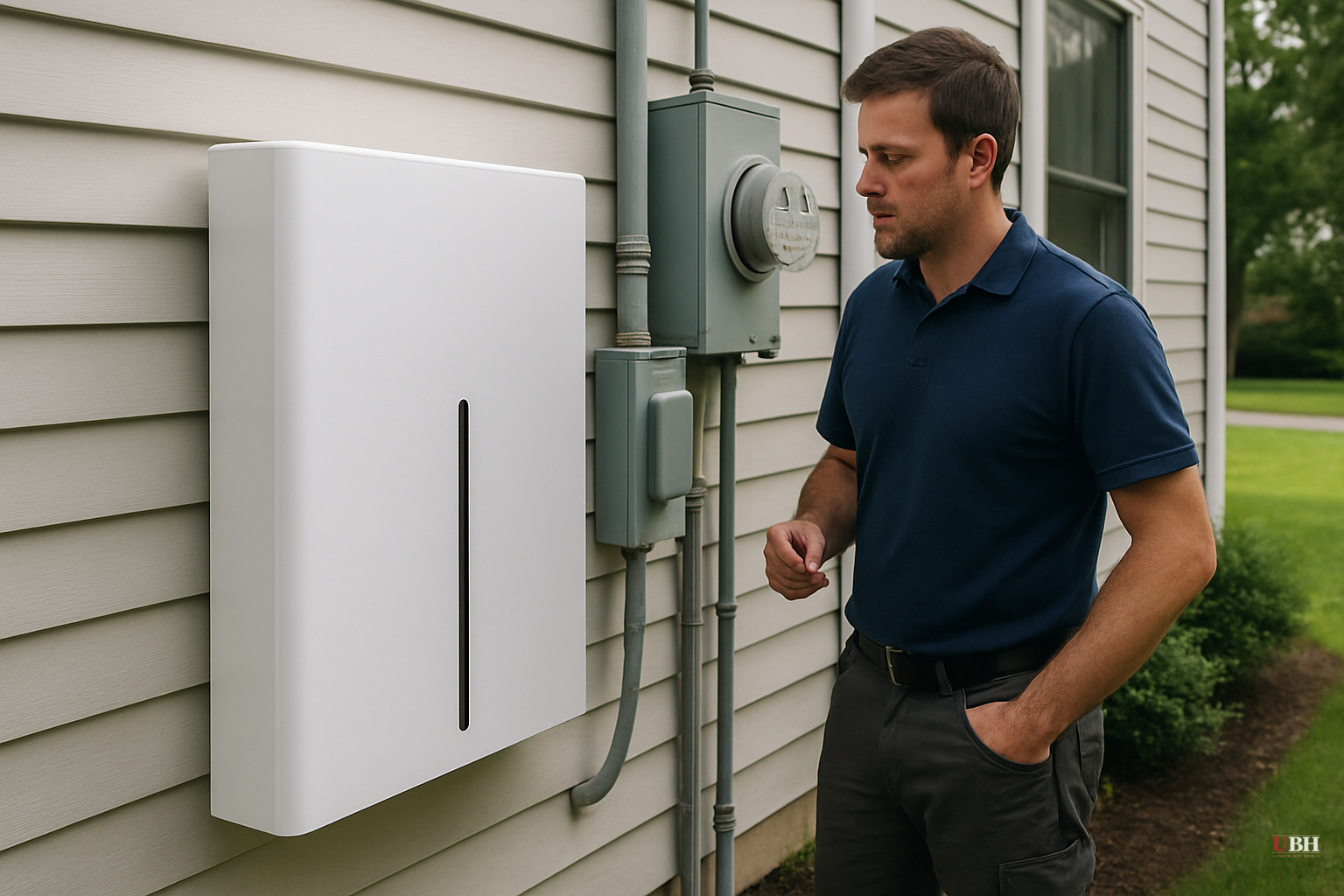
Wired published a hands-on review of the EcoFlow PowerOcean home battery, written by Simon Hill, who had the unit installed at his home in Scotland about two months ago. His stated goal was not environmental virtue-signaling. He wanted to buy power at his cheap overnight EV-charging rate and discharge it during the day when prices spike.
His bill reportedly dropped by roughly half.
Hill went with a 6-kW EcoFlow PowerOcean system, installed by The Greener Energy Group. According to Wired, the PowerOcean is a modular lithium battery system that starts at 5 kWh and scales to 45 kWh. It carries a 15-year warranty, an IP65 weatherproof rating, and a heated design for cold climates. The companion app supports automated charge/discharge scheduling. Wired gave it an 8 out of 10.
The sticker price listed at Wired: $10,000 at EcoFlow.
What the Installation Actually Involves
Hill's account is useful precisely because he doesn't sugarcoat the process. Before any battery goes in, you need to audit your electricity usage, potentially upgrade your wiring and electrical panel, and get authorization from your local grid operator. In the U.S., that means contacting your electric distribution utility or local distribution company. They may need to upgrade your connection, and response times vary.
Hill needed a new cut-out with a larger fuse to handle simultaneous EV charging, battery, and air-source heat pump loads. In his case, that upgrade was free. It won't always be.
If you also have solar panels, you need a hybrid inverter. Installation requires a licensed electrician, and Wired notes clearly that adding additional battery modules also requires professional installation, which adds cost each time you expand.
The Math
The $10,000 entry point is not trivial for most households. Whether you recoup it depends on three variables: your local electricity rate spread between peak and off-peak hours, how much electricity you actually cycle through the battery, and how long the battery performs at spec.
In markets with steep time-of-use pricing, the payback period compresses. In markets where rates are flat around the clock, the arbitrage case falls apart. Hill's Scottish rate structure gave him a strong spread. Many U.S. markets are moving toward time-of-use pricing, but not all have gotten there.
The 15-year warranty helps the long-term math. A battery that degrades significantly in five years is a losing investment. A battery that holds capacity for 15 years at $10,000 upfront, saving a few hundred dollars a month, can pay for itself.
The Strongest Counterargument
Skeptics have a fair point: home batteries are currently priced for early adopters and upper-middle-class homeowners who can absorb a five-figure upfront cost and wait years for payback. For renters, for households living paycheck to paycheck, and for anyone on a fixed income, this technology is NOT accessible in its current form. Critics on the left argue that without stronger subsidies or utility-sponsored financing programs, the grid savings flow disproportionately to wealthier households who can self-insure against high rates while lower-income customers remain fully exposed.
A $10,000 battery is a luxury purchase for most American families, and tax incentives only help if you have the capital to deploy first and wait for the credit.
The counterpoint is that early adoption drives manufacturing scale, which historically drops prices. Residential solar panels cost over $8 per watt in 2010; they now run under $1 per watt in many markets. Battery storage is on a similar curve, though not as far along.
Wired's Framing vs. the Broader Market Picture
Wired's review is genuinely useful consumer journalism, but its scope is narrow: one product, one household, one favorable rate environment. It does not address how OilPrice.com's broader market reporting frames the boom as an industry responding to sustained energy price inflation across multiple countries simultaneously. That context matters because it explains why the global market is scaling, which is what eventually makes the technology affordable for the rest of us.
Neither source addresses the supply chain question directly. The vast majority of lithium battery cells used in these systems come from Chinese manufacturers, which is a real dependency risk that neither the consumer nor the policy conversation has fully grappled with.
The Unresolved Question
The U.S. federal investment tax credit for residential battery storage currently covers 30% of installation costs for systems paired with solar under the Inflation Reduction Act. Whether that credit survives ongoing Congressional budget negotiations in 2026 is NOT settled, and its expiration or reduction would materially change the payback calculation for every American consumer weighing this decision right now.
Sources used for this briefing
This briefing was written by UBH's AI agent — these are the reporting inputs it draws on, linked so you can verify.


