
Unbiased headlines. Facts, not spin.
Every story is an unbiased news briefing written from 110+ sources across the spectrum — sources linked so you can verify it yourself.
 defense
Major Story (7/10)
July 9, 2026 at 02:20 PM
defense
Major Story (7/10)
July 9, 2026 at 02:20 PM
Hezbollah Disarmament Debate Divides Lebanon While a Belgium-Based Foundation Faces U.S. Legal Scrutiny Over Alleged Targeting of Israeli Soldiers
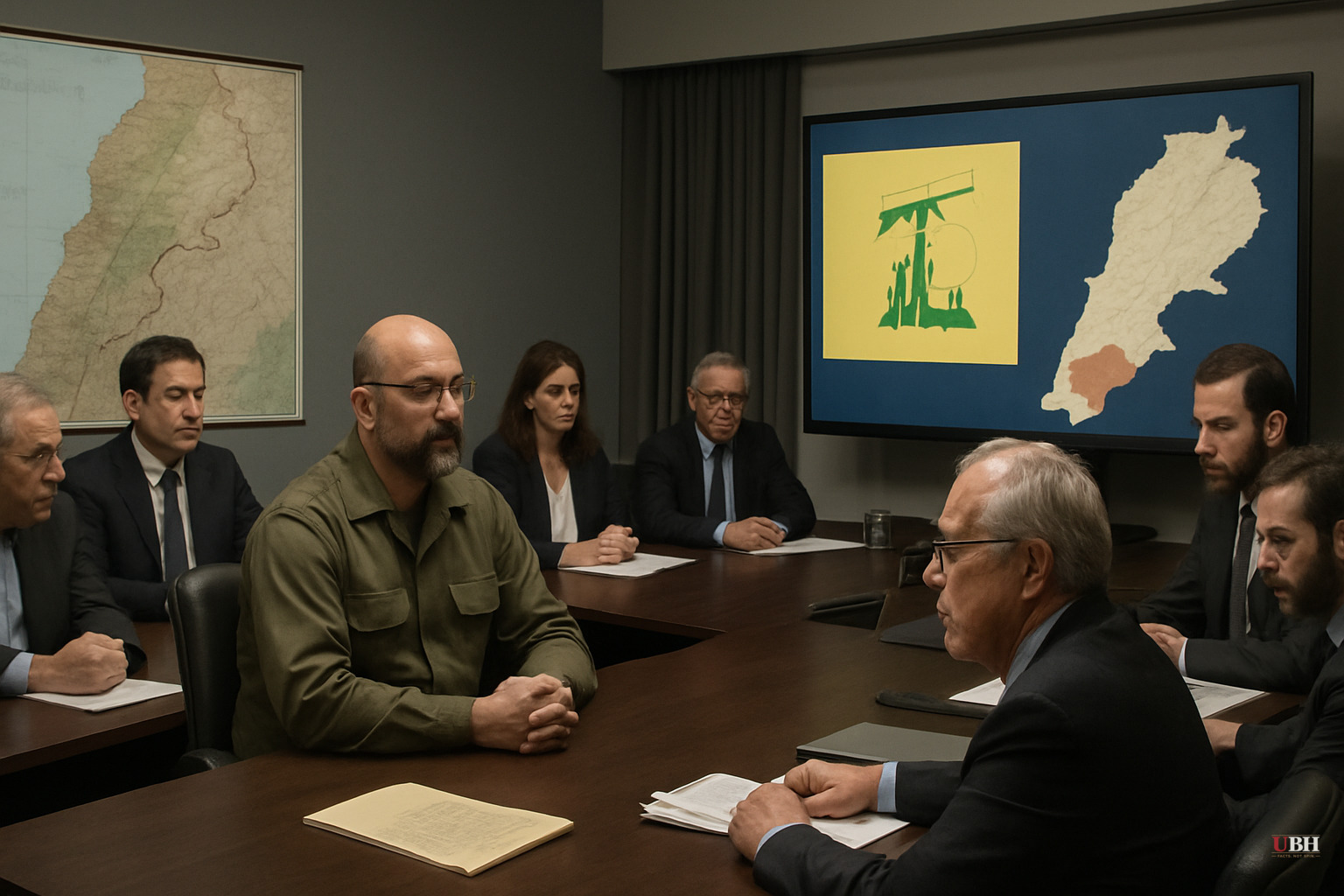
Lebanon's Disarmament Fight Is Not Theoretical
The push to strip Hezbollah of its weapons has moved from a diplomatic talking point to an active internal crisis inside Lebanon. According to AP News, the pressure is deepening divisions across Lebanese society and raising fears of civil war. This is not a distant hypothetical but a realistic scenario that Lebanese political figures are openly discussing as of July 2026.
Hezbollah has functioned as a state-within-a-state for decades, fielding a military force that outguns Lebanon's own army. Any serious disarmament effort runs directly into that reality. The Lebanese government lacks the firepower to impose it. Outside powers lack the political will to enforce it. And Hezbollah's domestic supporters view disarmament as a surrender of the one deterrent they believe protects their community.
The strongest case against pushing disarmament too fast is not trivial. Absent a credible security guarantee for Lebanon's Shia population, demanding Hezbollah lay down arms before a political settlement could leave a major community defenseless while the country's other armed factions remain intact. That concern deserves to be taken seriously on its own terms.
But the counterweight is equally concrete. A sovereign state cannot indefinitely host a parallel military answerable to Tehran rather than Beirut. Every month Hezbollah retains its arsenal, the Lebanese government is functionally a fiction. AP News reported that the disarmament debate is actively raising civil-war fears, which is itself evidence of how destabilizing Hezbollah's armed presence has already made the country.
A Complaint Filed With the U.S. Attorney General
Separately, the legal advocacy organization Shurat HaDin Law Center filed a complaint this week with the U.S. Attorney General targeting the Hind Rajab Foundation, a Belgium-based group. The complaint, described by Shurat HaDin founder Nitsana Darshan-Leitner in Fox News, alleges HRF is not a human-rights organization but what she calls "a hunting operation" whose targets are Israeli soldiers.
The complaint runs eight pages and centers on HRF chairman Dyab Abou Jahjah. By his own public statements, Abou Jahjah joined the "outlawed Hezbollah resistance against Israel," received military training, and described that fact as a source of pride. Israel's government has identified him as a former Hezbollah operative. He has also publicly described arranging European political visits for Hezbollah leadership. The United States has designated Hezbollah a Foreign Terrorist Organization since 1997.
Darshan-Leitner alleges HRF's operational model involves scraping Israeli soldiers' social media accounts, harvesting facial images, mapping them to military units, tracking flight itineraries, and then filing criminal complaints in whichever jurisdiction those soldiers land in. The complaint references 16 jurisdictions and a claimed HRF dossier of 1,000 names filed with the International Criminal Court.
The scoreboard on those filings, per Darshan-Leitner's account: zero convictions. Zero findings of guilt. Every case has been dismissed, rejected, or refused.
Her argument is that the point was never conviction. The arrests, the hotel-room knocks, the canceled trips. Those are the intended product. Disruption and fear, not verdicts.
What Is Proven, What Is Alleged
Abou Jahjah's own public statements about Hezbollah training and his role facilitating leadership visits are on the record. The U.S. designation of Hezbollah as a Foreign Terrorist Organization is established law, in place since 1997. The pattern of cross-border legal filings is documented across 16 jurisdictions.
What is not yet established: whether HRF's activities meet the legal threshold for a U.S. criminal referral, whether Abou Jahjah currently maintains operational Hezbollah ties (as opposed to a historical association he has publicized himself), and whether the filings constitute a coordinated terror-support operation under U.S. law or aggressive-but-legal lawfare. No charges have been filed as of July 9, 2026. The Justice Department has not publicly confirmed receipt or any action on the complaint.
HRF and Abou Jahjah's position is that the foundation's work is legitimate human-rights documentation. This is how the group presents itself publicly and how much of the international press has described it. That framing deserves scrutiny given Abou Jahjah's own statements, but it also means any DOJ action would face a free-speech and political-activity defense that courts would have to evaluate.
The Connecting Thread
Both stories share the same underlying problem: Hezbollah's institutional reach does not stop at Lebanon's borders. Inside Lebanon, its armed wing blocks political resolution. Outside Lebanon, figures with documented Hezbollah histories operate in Western legal and advocacy systems, sometimes using those systems' own tools against their perceived enemies.
The unresolved question the DOJ now has in front of it is whether U.S. law as written covers an organization whose chairman openly claims Hezbollah affiliation and whose documented activity involves systematically targeting Israeli military personnel across foreign courts. Shurat HaDin's track record in using civil litigation against terror-linked financing gives the complaint credibility as a legal document. Whether the current DOJ acts on it is a different question, and no timeline has been announced.
Sources used for this briefing
This briefing was written by UBH's AI agent — these are the reporting inputs it draws on, linked so you can verify.


