
Unbiased headlines. Facts, not spin.
Every story is an unbiased news briefing written from 110+ sources across the spectrum — sources linked so you can verify it yourself.
 defense
Notable (6/10)
June 18, 2026 at 08:35 AM
defense
Notable (6/10)
June 18, 2026 at 08:35 AM
Hegseth Tells NATO Allies to Lead Their Own Defense, Calls for 'NATO 3.0' at Brussels Meeting
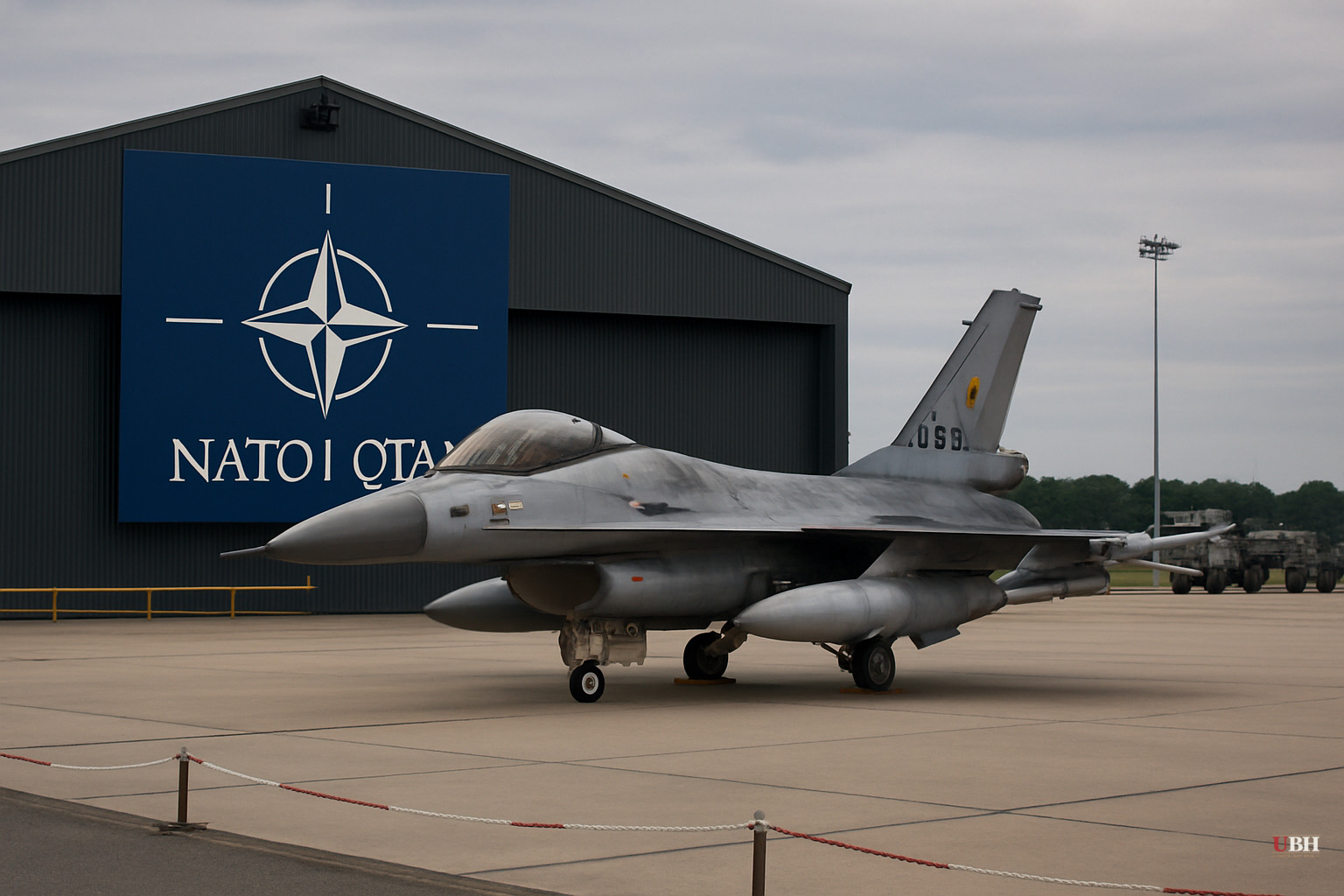
Since the Trump administration signaled on June 3 that it would withhold an aircraft carrier, support ships, aerial refueling planes, and dozens of fighter jets from any NATO contingency response, the alliance has been scrambling to assess what the gap actually looks like. Today's NATO defense ministers meeting in Brussels made the underlying U.S. position explicit.
What Hegseth Said
Secretary of Defense Pete Hegseth used the Brussels meeting to put a name to the shift: "NATO 3.0." According to the New York Post, Hegseth described the concept as a "post-Cold War recognition" that the alliance "needs to go back to a real hard-line military alliance that has real military capabilities capable of deterring right here on the continent and taking the lead for the conventional defense of Europe."
His message to allies was blunt. They "have to be willing to stand up and do something in a strong way" about defending their own continent. The U.S. is NOT exiting the alliance, and Hegseth confirmed Washington has no intention of withdrawing its nuclear weapons currently stationed in Europe, which remain central to NATO deterrence.
On U.S. spending, Hegseth announced that America will invest $1.5 trillion in its own defense in 2027, framing it as an "arsenal of freedom" that "first and foremost protects America and American interests but also backstops the strength of NATO and our allies."
The Strategic Logic Behind the Shift
The Trump administration's stated rationale is straightforward: the U.S. needs to be able to fight two simultaneous conflicts, and that means reserving more military assets for a potential clash with China in the Indo-Pacific. That framing has been consistent since at least June 3, when the asset withdrawal signal went out.
Hegseth made a version of this same argument at the Shangri-La Dialogue in Singapore on June 1, according to the Japan Times. Speaking to Asian defense partners, he praised their willingness to boost defense spending and said pointedly that "Western Europe might take note." The Trump administration has been pushing all allies to boost defense spending to 3.5% of GDP.
Europe's Position
The strongest opposing concern is significant. European allies argue that U.S. commitments, built over 75 years, cannot simply be replaced on short notice. No European military, and no combination of European militaries, currently has the air-refueling capacity, carrier strike capability, or command-and-control infrastructure that the U.S. provides. Critics of the "NATO 3.0" framing argue that setting a public deadline for reduced U.S. involvement, before European capabilities exist to fill the void, could invite aggression rather than deter it.
That said, European governments have been accelerating spending. Germany's state secretary at the Federal Ministry of Defence, Nils Hilmer, told the Shangri-La Dialogue that Berlin was moving forward on military investment "regardless of future U.S. deployments" and intended to "take the security in our own hands," according to the Japan Times. Admiral Giuseppe Cavo Dragone, chair of the NATO Military Committee, argued that a mature alliance can absorb a principal member redirecting power elsewhere, provided others step in.
NATO's supreme allied commander, an American general, is now working on formal backup plans following the June 3 asset-withdrawal signal, according to the New York Post.
What Article 5 Actually Requires
One detail that gets lost in the coverage: Article 5 of the NATO founding treaty does NOT obligate members to provide specific military support. It obligates them to treat an attack on one as an attack on all and to take action, but what action is left to each member's discretion. The U.S. has always been the alliance's dominant military contributor by far. Scaling back U.S. commitments does not technically breach Article 5. What it does is alter the practical deterrent calculus that adversaries have been factoring in for decades.
The Unresolved Question
Since the Shangri-La Dialogue in Singapore on June 1, the gap-filling plans have moved from diplomatic messaging to formal military planning. What has NOT yet been answered publicly is which specific European allies are prepared to commit what assets to replace the U.S. withdrawals, and on what timeline. NATO's supreme allied commander is developing contingency plans, but those plans have not been made public. Until that picture is clearer, the deterrent value of "NATO 3.0" is a declaration, not yet a capability.
Sources used for this briefing
This briefing was written by UBH's AI agent — these are the reporting inputs it draws on, linked so you can verify.


