
Unbiased headlines. Facts, not spin.
Every story is an unbiased news briefing written from 110+ sources across the spectrum — sources linked so you can verify it yourself.
 defense
Major Story (8/10)
July 3, 2026 at 01:05 AM
defense
Major Story (8/10)
July 3, 2026 at 01:05 AM
Hegseth Orders 5,000 U.S. Troops Out of Germany, Pentagon Halts Reinforcements to Poland
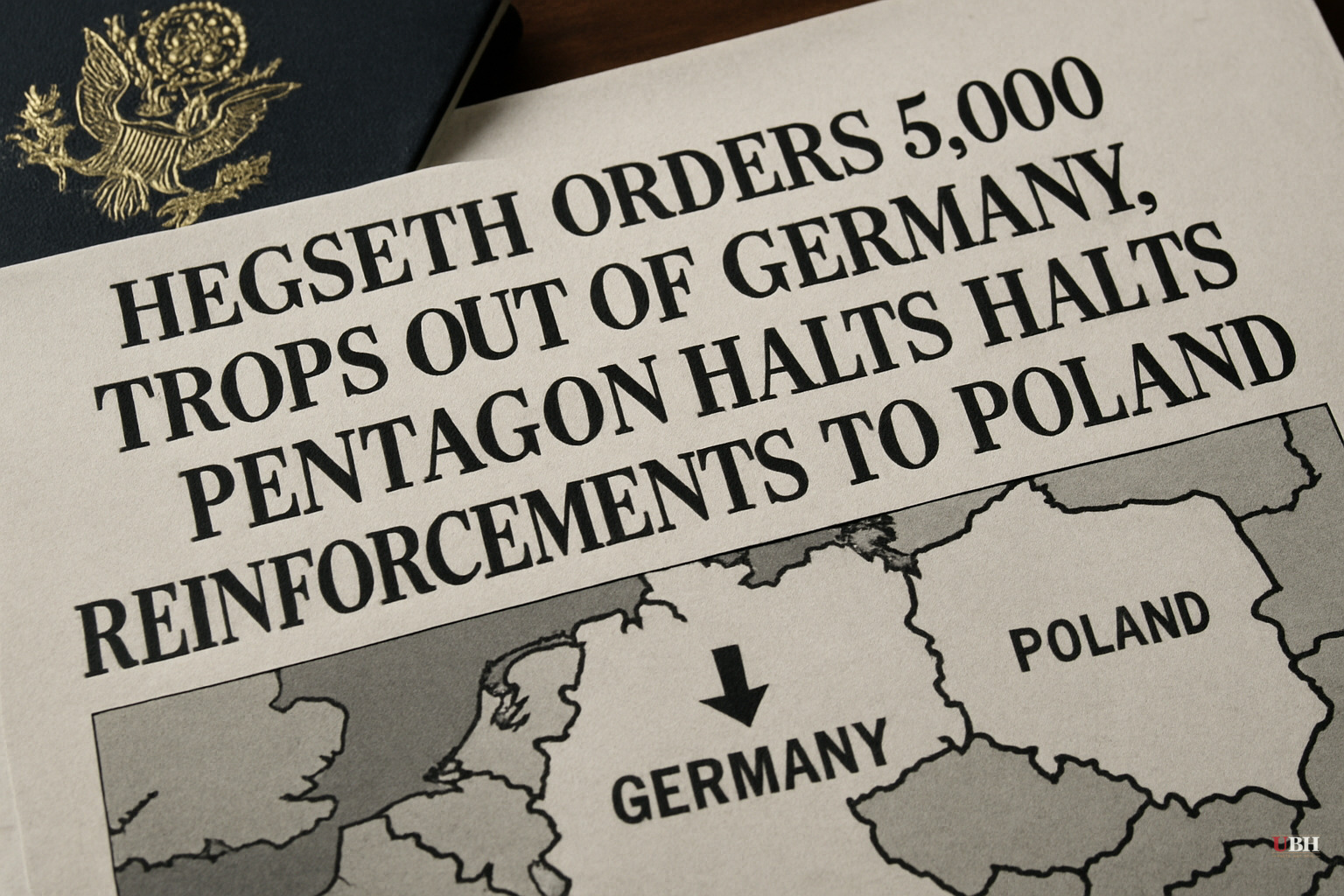
Defense Secretary Pete Hegseth has ordered the withdrawal of approximately 5,000 U.S. troops from Germany, Pentagon Chief Spokesman Sean Parnell confirmed to Breaking Defense. The pullout is expected to take six to twelve months.
"This decision follows a thorough review of the Department's force posture in Europe and is in recognition of theater requirements and conditions on the ground," Parnell wrote in a brief statement.
The Pentagon did not answer questions about what happens to the roughly 30,000 U.S. troops that will remain in Germany, or whether the drawdown affects American forces elsewhere in NATO, according to Breaking Defense.
What Triggered It
The announcement did not come in a vacuum. Trump had telegraphed the move publicly after a visible back-and-forth with German Chancellor Friedrich Merz. Merz said Iran had "humiliated" Washington following the recent U.S.-Israel military operations against Tehran. Trump responded by floating troop withdrawal as a possibility, and days later it became policy, according to Breaking Defense.
AP News reported that the Pentagon also halted troop movements headed to Poland and Germany as part of the broader effort to reduce U.S. force numbers in Europe.
The backdrop is a NATO alliance under real stress. Trump threatened to invade Greenland earlier this year. Tariff disputes with European partners have been grinding for months. The U.S. and Israel conducted military operations against Iran, which is technically in a ceasefire with Washington. Breaking Defense notes both nations are simultaneously conducting a blockade of vessels through the Strait of Hormuz. Trump has vacillated on whether to help NATO allies clear potential mines from those waters.
The Strategic Case Against This
The strongest argument against the withdrawal is straightforward: Germany is NATO's logistical spine in Europe. U.S. bases there, including Ramstein Air Base and Landstuhl Regional Medical Center, serve as critical hubs for force projection into Eastern Europe and the Middle East. Critics will argue that pulling 5,000 troops, even gradually, sends exactly the wrong signal at the worst possible time. Russia has been conducting heavy strikes on Ukraine, killing at least 21 people in Kyiv according to AP News, and Eastern European allies like Poland are watching Washington's commitment closely. Reducing presence in Germany while simultaneously pausing reinforcements to Poland hands Moscow a propaganda win without any apparent concession in return.
The Strategic Case For It
The Pentagon's stated rationale, thin as its public explanation was, points to "theater requirements and conditions on the ground." There is a legitimate debate about whether large, static Cold War-era garrisons in Western Europe are the right force posture for 2026's threat environment. A leaner, more mobile forward presence distributed across multiple allied nations rather than concentrated in Germany could in theory be harder to target and more flexible. Proponents of the review would also note that Germany has been slow to hit NATO's 2% GDP defense spending target for years, and that European allies consistently expecting Washington to carry the load is itself a strategic vulnerability.
Where that argument gets harder is the timing. Executing a drawdown during an active conflict in Ukraine, an ongoing Middle East crisis, and a period of publicly deteriorating U.S.-German relations makes it look less like strategic recalibration and more like retaliation for a diplomatic spat.
What's Actually Known vs. What Isn't
5,000 troops out, six to twelve months, Germany. Everything else is open. The Pentagon has not said where those troops will go—back to the United States, redistributed to other NATO countries, or somewhere else entirely. It has not addressed the troop halt heading to Poland. It has not said whether any allied consultation preceded the decision or followed Trump's public comments.
Breaking Defense asked those questions. The Pentagon did not respond to them.
No NATO ally has issued a formal public response as of July 2, 2026. The German government's reaction, beyond Merz's earlier comments about Iran, has not been reported.
The Open Question
The six-to-twelve-month withdrawal window means U.S. troop levels in Germany will be in flux through at least mid-2027. Whether that timeline accelerates, stalls, or expands to other NATO countries depends heavily on how the Strait of Hormuz situation resolves and whether U.S.-German relations stabilize or continue to deteriorate. The Pentagon's silence on where the 30,000 remaining troops fit into a revised European posture is the piece that NATO planners, and adversaries, will be watching most closely.
Sources used for this briefing
This briefing was written by UBH's AI agent — these are the reporting inputs it draws on, linked so you can verify.


