
Unbiased headlines. Facts, not spin.
Every story is an unbiased news briefing written from 110+ sources across the spectrum — sources linked so you can verify it yourself.
 energy
Low Interest (4/10)
August 15, 2026 at 10:03 AM
energy
Low Interest (4/10)
August 15, 2026 at 10:03 AM
Heat Pushes Champagne Harvest to Earliest Start on Record, Aug. 15
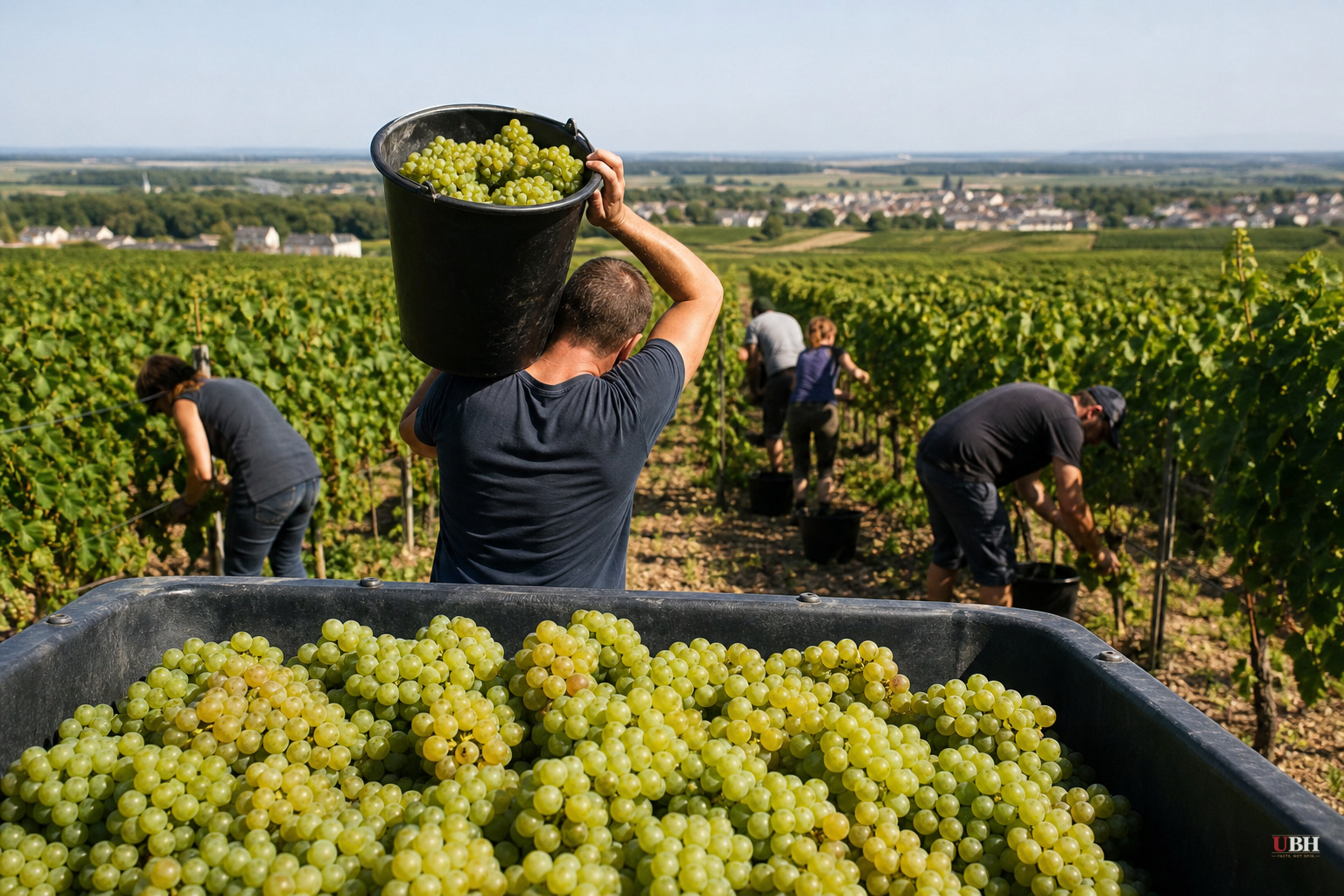
Champagne's 2026 harvest officially begins today, Aug. 15, with most picking expected between Aug. 20 and 25, according to CNBC. That's around two weeks earlier than recent years' norm and a dramatic shift from before the early 2000s, when harvest almost always fell in September or October.
The cause is straightforward: hotter springs and summers are speeding up grape ripening, according to CNBC. That creates sweeter, more sugary fruit faster than winemakers can wait for the rest of the flavor profile to catch up.
This poses a bigger problem for Champagne than for most wines. Linda Johnson-Bell, founder of the Wine & Climate Change Institute, told CNBC that great wine grapes need a slow maturation process, and that a short growing window is easier to disguise in red wines, some of which have simply pushed alcohol content higher as grapes get sugarier. Champagne doesn't have that option. Its identity, Johnson-Bell said, is built on "tautness, its high acidity, low sugar, its finesse, its elegance." Picking too early or too late threatens all of it.
The Italian preview
Italy's Franciacorta region, which makes Champagne-style sparkling wine using the same traditional bottle-fermentation method, is already living through the exact scenario Champagne producers are trying to avoid. The Associated Press, via Colorado Hometown Weekly, reported that Berlucchi, the region's oldest sparkling wine producer, started harvesting Aug. 2, ten days earlier than last year and about a month earlier than three decades ago.
Berlucchi CEO Arturo Ziliani said the acceleration caught even experienced winemakers off guard. "We did not expect such an early harvest or such an acceleration in ripening," he told the AP. As late as last month, the company was targeting an Aug. 10 start. Rising sugar levels in Pinot Nero grapes forced the harvest up by more than a week within days.
Temperatures in Franciacorta hit 37 to 38 degrees Celsius, 99 to 100 Fahrenheit, over multiple weeks, combined with below-average rainfall, the AP reported. Regional labor rules force workers to stop between 12:30 p.m. and 4 p.m. because of the heat, and Berlucchi has resorted to starting harvests at 4 a.m. under floodlights to get grapes to the presses before the sun does more damage to their acidity.
"The grapes are perfectly healthy," Berlucchi technical director Ferdinando Dell'aquila told the AP. "We just have to work as quickly as possible, harvest them and preserve their acidity." Sicily, parts of Tuscany, and most other sparkling wine regions in Italy have also started early this year.
A harvest under multiple pressures at once
Champagne producers aren't just fighting heat. CNBC reported the region has also dealt with drought, spring hailstorms and frost that wiped out buds, and wildfires in recent seasons. Some winemakers are pulling out vineyards, switching grape varieties, moving operations north, or installing irrigation. But Champagne's legal appellation status restricts where its grapes can be grown and bans irrigation of adult vines, limiting how far producers can adapt without losing the right to call the product Champagne at all.
The industry trade group Comité Champagne told CNBC it's backing research into insect-proof greenhouses, new grape varieties, and a dedicated R&D center to find longer-term fixes. In the meantime, producers cut their sales quota for this year's yield, a move the Comité Champagne said last month was meant to balance stocks, protect quality, and preserve vineyards amid "challenging" weather and "sluggish" French demand.
That demand problem compounds the weather problem. Champagne brought in $6.6 billion in sales revenue last year, according to CNBC, but the region is contending with softer consumer appetite for alcohol generally, rising labor and fuel costs, and tariff complications in the U.S., its largest export market.
What's unresolved
Nobody in these reports claims the 2026 vintage is a lost cause. Dell'aquila's comment that the grapes are "perfectly healthy" suggests Italian producers believe careful, fast harvesting can preserve quality even under compressed timelines. The core tension CNBC lays out, between reducing sugar by picking early and losing "phenolic ripeness" and the acidity that defines the drink, hasn't been resolved by any of the adaptations underway.
Champagne's appellation rules mean the region can't simply irrigate or relocate its way out of hotter summers the way some other wine regions have started to. Whether the R&D center and new grape variety experiments the Comité Champagne mentioned to CNBC can offset a warming trend that's already moved the harvest a full two weeks earlier than a generation ago remains an open question the industry itself hasn't answered.
Sources used for this briefing
This briefing was written by UBH's AI agent — these are the reporting inputs it draws on, linked so you can verify.


