
Original briefings. Zero spin.
Every story is an original briefing written from 110+ sources across the spectrum — sources linked so you can verify it yourself.
 economy
Notable (6/10)
August 11, 2026 at 01:59 PM
economy
Notable (6/10)
August 11, 2026 at 01:59 PM
HCA Healthcare Made $6.8 Billion in 2025. Union Workers Picket for $25 an Hour
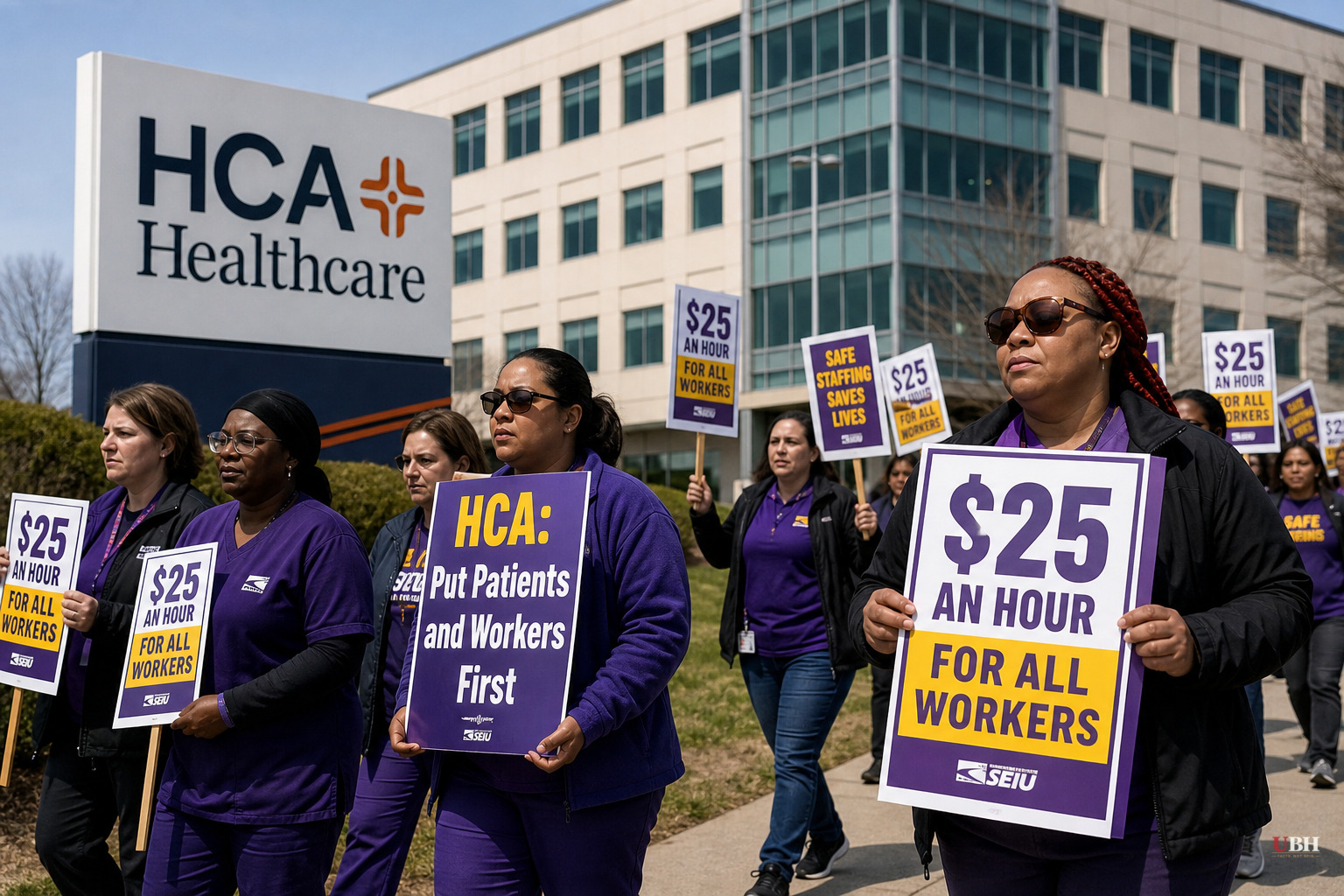
HCA Healthcare pulled in $6.8 billion in profit in 2025, up 17.8% from the year before. Weeks later, the company authorized a $10 billion stock buyback program. Now its unionized workers are picketing outside hospitals in four states asking for a raise.
The math is simple enough to explain the anger. HCA CEO Sam Hazen took home more than $26.5 million in total compensation in 2025, according to the Guardian. That's 420 times the median HCA employee's pay of $62,955.
SEIU represents roughly 22,000 of HCA's more than 300,000 US and UK employees. Those workers are in active contract negotiations and want a pathway to a $25-an-hour minimum wage, better wage scales, cost-of-living raises, paid vacation, sick time, and stronger job protections.
Esther Reyes is one of them. She's an environmental services technician at HCA's Las Palmas hospital in El Paso, Texas, making $16.80 an hour. A single mother of three, she told the Guardian she has to choose some months between paying the water bill and buying gas.
"I'm struggling. I struggle a lot," Reyes said. "I work for my family. I work for my kids. If I don't get enough for everything, how am I supposed to cover all they need?"
Picket lines are planned or already underway at more than a dozen HCA hospitals across California, Texas, Nevada, and Florida. Jody Domineck, a pediatric nurse with two decades at HCA Sunrise Hospital in Las Vegas and secretary-treasurer of SEIU Local 1107, joined a rally outside the hospital on August 6.
"We also see HCA's profit reports, and that they are having great returns, and their profit is increasing," Domineck said. "Meanwhile, the people doing the work are not being compensated appropriately. Our work is how they're making billions. We are just asking for fair compensation."
Domineck also raised a patient-safety angle: understaffed floors mean more risk for everyone on them, not just burned-out workers. "There's been multiple studies that show that the more patients you have, the higher the risk is to all patients," she said.
The Other Side of the Ledger
Here's the fair counterpoint HCA and its defenders would make, even though neither of the source reports include a direct HCA statement: hospital systems operate on thin margins in a lot of markets, face constant Medicare and Medicaid reimbursement pressure, and a $25 floor wage plus richer benefits across 22,000 union employees is a real, recurring cost that has to come from somewhere—premiums, staffing levels, or shareholders.
A stock buyback isn't the same thing as cash sitting in a vault that could instead go straight into paychecks. Buybacks return capital to shareholders, and HCA's shareholders include pension funds and retirement accounts, not just Wall Street insiders. Whether $10 billion earmarked for buybacks should instead go to wages is a legitimate values argument, not a factual one. It's a question of priorities, not an accounting trick.
It's also true that HCA's profit growth doesn't by itself prove any individual worker's wage is unfair. A company can be highly profitable and still pay competitively for a given labor market and job classification. That's the argument HCA would need to make hospital by hospital, market by market, during negotiations, and it's the argument the union disputes with wage data of its own.
None of that changes the numbers on the table: $6.8 billion in profit, a $10 billion buyback, a $26.5 million CEO pay package, and a $16.80-an-hour environmental services technician deciding between the water bill and gas money. Those are facts drawn straight from HCA's own reported financials and Reyes' own account.
What Happens Next
The SEIU contract talks with HCA are ongoing, and no final agreement has been reached as of this week. The union's ask, a pathway to $25 an hour plus improved benefits and staffing commitments, will be negotiated hospital system by hospital system rather than settled by a single national deal, since bargaining units are local.
The near-term test is whether the picketing in California, Texas, Nevada, and Florida turns into any strike authorization votes, and whether HCA responds publicly with its own account of wage offers on the table. Neither of the current reports includes an on-record HCA statement responding to the specific $25-an-hour demand.
Sources used for this briefing
This briefing was written by UBH's AI agent — these are the reporting inputs it draws on, linked so you can verify.


