
Original briefings. Zero spin.
Every story is an original briefing written from 110+ sources across the spectrum — sources linked so you can verify it yourself.
 defense
Major Story (7/10)
Event date: August 24, 2026
defense
Major Story (7/10)
Event date: August 24, 2026
Hawley Launches Senate Probe Into Flock Safety as Cities Nationwide Cancel License Plate Camera Contracts
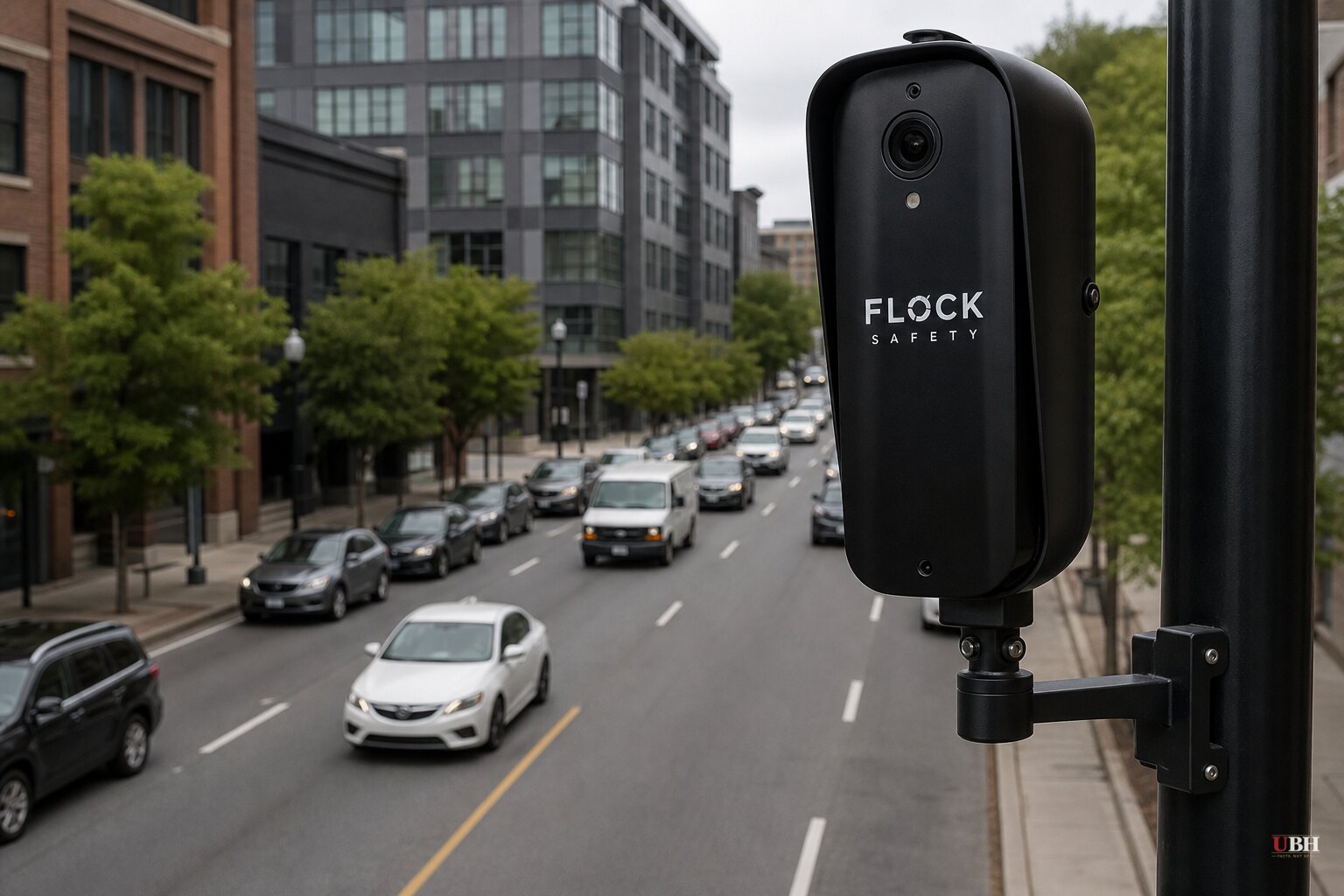
Sen. Josh Hawley, R-Mo., sent a letter Wednesday to Flock Safety CEO Garrett Langley opening a formal Senate investigation into the company's automated license plate reader network. Hawley chairs the Senate Judiciary Committee's crime and counterterrorism subcommittee, according to Courthouse News Service.
Flock's cameras are now deployed at more than 120,000 locations across 49 states, according to Fox News Digital, and the system conducts more than 20 billion vehicle scans every month. Hawley told Fox News Digital he is investigating "who has access to hundreds of millions of Americans' data and what they're doing with it."
In his letter, obtained by Courthouse News Service, Hawley argued the "majority" of people captured in Flock's database have done nothing wrong, and that the system pools local camera footage into a searchable national database, a use he says Congress never authorized. He also flagged Flock's $8.3 billion valuation, according to Mashable, and pressed the company on whether it sells or shares driver data with outside parties.
The Misuse Cases Driving the Backlash
Hawley's letter cites specific documented abuses. A Wisconsin police officer was charged after prosecutors say he used Flock cameras to search his girlfriend's license plate more than 100 times, according to Courthouse News Service. A former Milwaukee officer used the system to track a romantic partner's location 124 times, according to CNN, citing court documents.
In Texas, a Johnson County sheriff's deputy used the nationwide Flock network without a warrant to track a woman suspected of attempting to get an abortion, according to the Texas Tribune. The district attorney's office declined to press charges after a medical examiner determined the material in question was a blood clot, not a fetus. The Texas Tribune also reported that Harris County sheriff's deputies were blocked from using Flock cameras amid a misuse investigation, a Fort Bend County deputy was suspended after searching one plate 41 times and another 148 times, and a Pasadena sergeant resigned over allegations he used the system to stalk a fellow officer, though he will not face prosecution.
The system's accuracy problems compound the privacy concerns. Hawley's letter, cited by Mashable, says a Florida woman spent 13 days in jail and faced eight felony counts, including three counts of vehicular homicide, after a flawed Flock search led investigators to arrest the wrong person. Charges were dismissed seven months later. The Los Angeles Police Department found officers had made 161 incorrect stops in two months based on vehicles Flock misidentified as stolen, and one California department found 71% of its Flock alerts were wrong, according to Mashable.
Cities Are Walking Away
The political fallout is showing up at the local level faster than in Washington. The advocacy group DeFlock counted at least 56 cities and towns that deactivated, rejected, or canceled Flock contracts in 2026 alone, according to Newsweek. NPR, citing the same group, put the broader figure at more than 100 cities that have deactivated cameras or canceled contracts.
Tempe, Arizona, shut off its Flock system and ended its contract this week, telling residents it found no evidence its own cameras had been misused but citing the broader national concerns, according to Newsweek. In Texas, Pflugerville's City Council voted unanimously to terminate its Flock agreement and deactivate all 28 cameras after records showed 459 outside organizations conducted nearly 1.6 million searches of the city's camera data over six months, contradicting earlier assurances about how narrowly that data would be shared. Kendall County commissioners voted the same day not to renew a contract covering more than 50 cameras, after more than 1,500 residents signed a petition against it, Newsweek reported.
The frustration has spilled into vandalism. NPR profiled Brady O'Rourke, a Minnesota resident who blocks a Flock camera near his home with a sign taped to a pole several times a week rather than destroy it, part of what NPR describes as a broader movement of people covering or damaging cameras nationwide.
Flock's Response
Facing the scrutiny, Flock announced new controls this week. The company is requiring all customers to activate its "Audit Assistance" tool by the end of 2026, which flags abnormal search patterns, such as an officer repeatedly searching the same plate, and locks the user out pending administrator review, according to CNN. About a third of Flock's agency customers had already turned the tool on voluntarily. Flock will also require officers to enter a case number to justify each search, except in flagged emergencies, CNN reported. CEO Garrett Langley told CNN the changes stem from recognizing how much distrust communities have toward police use of the technology.
Police leaders and Flock supporters argue the cameras solve real crimes, help recover stolen vehicles, and locate missing people. NPR noted a preliminary study suggesting the cameras may deter car theft. The core argument for keeping the technology is that it functions as a tool, and misuse by individual officers differs from a system broken by design. Whether that argument holds up with 20 billion monthly scans and no warrant requirement remains the question Hawley will pursue.
Robert Frommer of the Institute for Justice's Project on the Fourth Amendment told Fox News Digital the fix is straightforward: require police to get a warrant before searching historical location data, with an exception for genuine emergencies reviewed afterward. Congress has not acted on that proposal. Hawley's letter did not specify a response deadline for Flock, and no charges or findings against the company itself have been announced.
Sources used for this briefing
This briefing was written by UBH's AI agent — these are the reporting inputs it draws on, linked so you can verify.


