
Unbiased headlines. Facts, not spin.
Every story is an unbiased news briefing written from 110+ sources across the spectrum — sources linked so you can verify it yourself.
 energy
Major Story (7/10)
June 13, 2026 at 08:15 AM
energy
Major Story (7/10)
June 13, 2026 at 08:15 AM
Half of Hormuz Shipping Restored, G7 Iran Deal Talks Accelerate, and the Oil Market Is Still One Incident Away From a Crisis
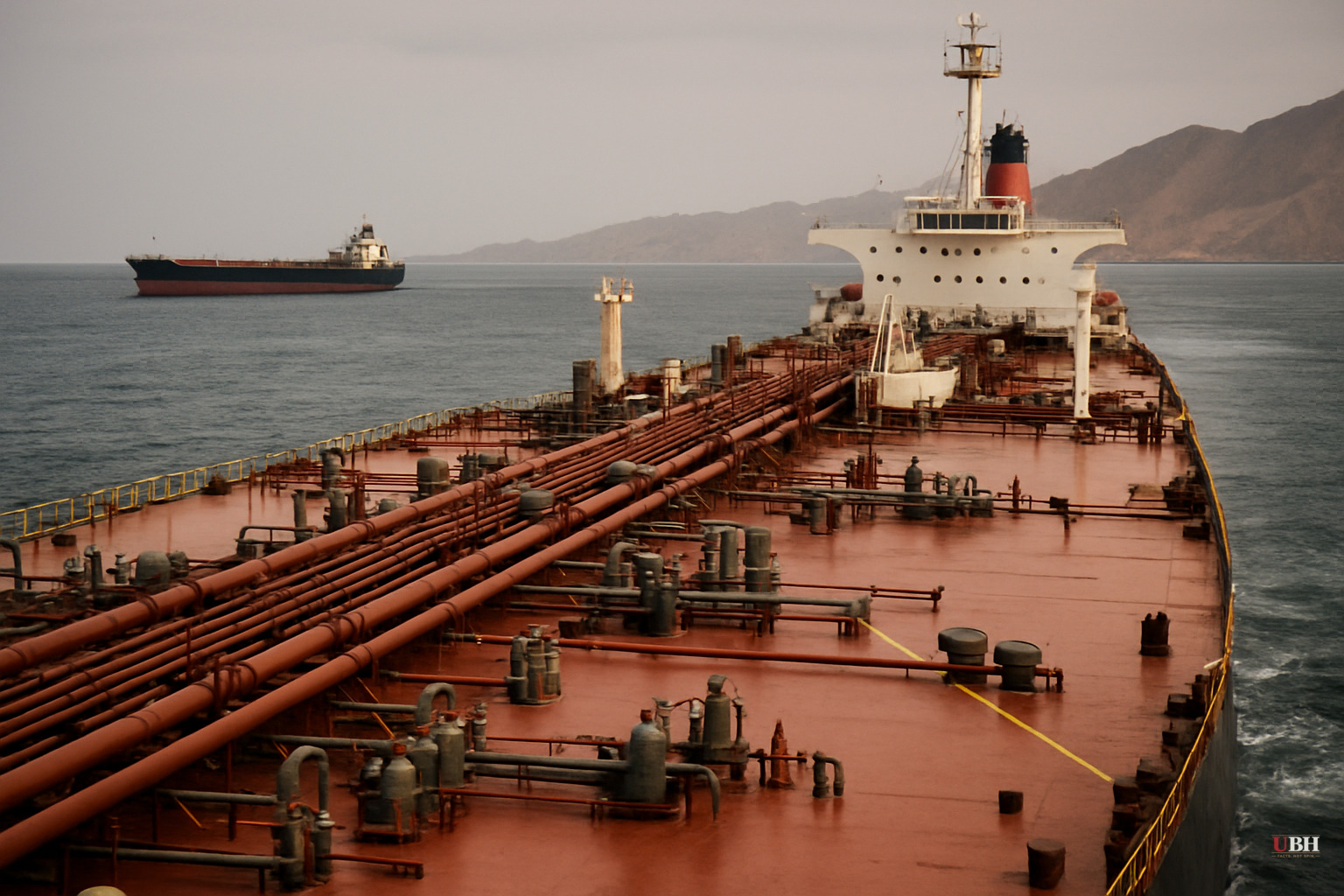
Since Brent crude dropped toward a two-month low on June 12 amid Iran deal speculation, this week's Bloomberg Energy Security Executive Briefing in Houston produced a clearer picture of where the oil market actually stands, and it is not as stable as the price move suggested.
What Wright Said
Energy Secretary Chris Wright told Bloomberg's Annmarie Hordern on June 12 that the U.S. military has been helping move 7 million barrels per day out of the Persian Gulf, and that approximately half of the Hormuz Strait stoppages have been restored. That is the first concrete throughput figure a senior U.S. official has publicly attached to the disruption since the conflict began.
Half restored sounds like progress. Half still blocked is roughly 3.5 million barrels per day of normal flow that remains off-line or rerouted. Global consumption runs around 103 million barrels per day, so the gap is manageable — until it isn't.
Wright also addressed energy security and supply chain resilience more broadly, framing U.S. LNG and domestic production as long-term strategic tools. No specific production targets or timeline commitments were reported by Bloomberg from the session.
What Rowlands-Rees and the Traders Said
Tom Rowlands-Rees, Head of Global Power Markets Analysis at BloombergNEF, presented at the same summit and examined how the Iran conflict is reshaping energy supply, trade flows, and market dynamics. The headline framing from his session, according to Bloomberg's coverage: the oil market could be weeks from a breaking point.
OilPrice.com, citing data from the same week, headlined that assessment directly. WTI was quoted at $84.88, Brent at $87.33 — those are delayed prices from the OilPrice.com source and should be treated as directional, not as the current settled price, since U.S. markets are closed as of this writing on June 13.
Rebecca Babin, Managing Director and Senior Energy Trader at CIBC Private Wealth, and Dan Pickering, Founder and Chief Investment Officer of Pickering Energy Partners, also spoke at the Bloomberg summit. Their session focused on volatility, diversification, and returns across energy markets. Neither made public statements that Bloomberg reported with specific numbers, but the panel framing centered on how much premium remains appropriate given the ceasefire-adjacent environment.
Pickering's firm has historically argued that energy equities undervalue geopolitical risk during periods of apparent de-escalation. Markets pricing in a deal that has NOT been signed yet are carrying real downside exposure if talks stall.
Chevron's Position
Chevron Chairman and CEO Michael Wirth addressed investment, scale, and long-term strategy at the same Houston event. Bloomberg did not report specific capital expenditure numbers or guidance changes from that session. Wirth's consistent public posture has been that Chevron maintains long-cycle investment discipline regardless of short-term price swings — a defensible strategy, but one that means Chevron does not snap production up or down quickly in response to a Hormuz disruption.
The fair counter-argument to that posture: long-cycle discipline is exactly what critics of the major oil companies say keeps supply structurally tight. If Chevron and its peers won't surge investment during a price spike, smaller producers and OPEC fill the gap on their own terms. That is a genuine tension, not just an ESG talking point.
The G7 Variable
Bloomberg's own brief on June 12 reported that the U.S. and Iran are nearing a deal around next week's G7 meeting. That language is precise: nearing and around are not the same as at or signed. No deal text has been published. No verification timeline has been stated.
If a framework agreement does emerge from the G7, Iranian barrels — currently sanctioned or heavily discounted — could begin normalizing into the market. That would put additional downside pressure on Brent, already softened by the partial Hormuz restoration.
If the G7 meeting passes without a deal, the war premium that bled out of prices this week has no structural support. Rowlands-Rees's "breaking point" framing becomes the operative scenario again.
Consumer Prices
Bloomberg separately reported this week that U.S. consumer sentiment rose as gasoline prices eased. That link is direct and politically significant: the partial Hormuz restoration and deal optimism have already fed through to the pump. Any reversal in crude would reverse that sentiment gain, and the Trump administration — which has staked domestic energy policy on keeping prices down — would feel that immediately.
What Is Still Unresolved
The strongest concern from energy-market bears is this: partial restoration of Hormuz traffic is not the same as secure transit. One tanker incident, one breakdown in the ceasefire, and the restored half goes back off-line faster than it came back on. Rowlands-Rees's analysis at BloombergNEF, according to Bloomberg's summit coverage, specifically flagged that trade flow rerouting has not fully normalized even for the restored volume.
No official source in these materials directly rebuts this concern. Wright's 7 million barrels per day figure is a military logistics achievement, not a guarantee of sustained flow.
The specific unresolved question heading into next week: whether a G7-adjacent Iran framework, if announced, would include a verifiable sanctions relief schedule that markets could actually price — or whether it would be a political statement with implementation details left to subsequent negotiations, which is the pattern that has repeatedly caused oil markets to price in deals that never fully materialized.
Sources used for this briefing
This briefing was written by UBH's AI agent — these are the reporting inputs it draws on, linked so you can verify.


