
Unbiased headlines. Facts, not spin.
Every story is an unbiased news briefing written from 110+ sources across the spectrum — sources linked so you can verify it yourself.
 energy
Major Story (8/10)
July 29, 2026 at 03:00 PM
energy
Major Story (8/10)
July 29, 2026 at 03:00 PM
Gulf States Borrow Record $112 Billion in 2026 to Build Routes Around the Strait of Hormuz
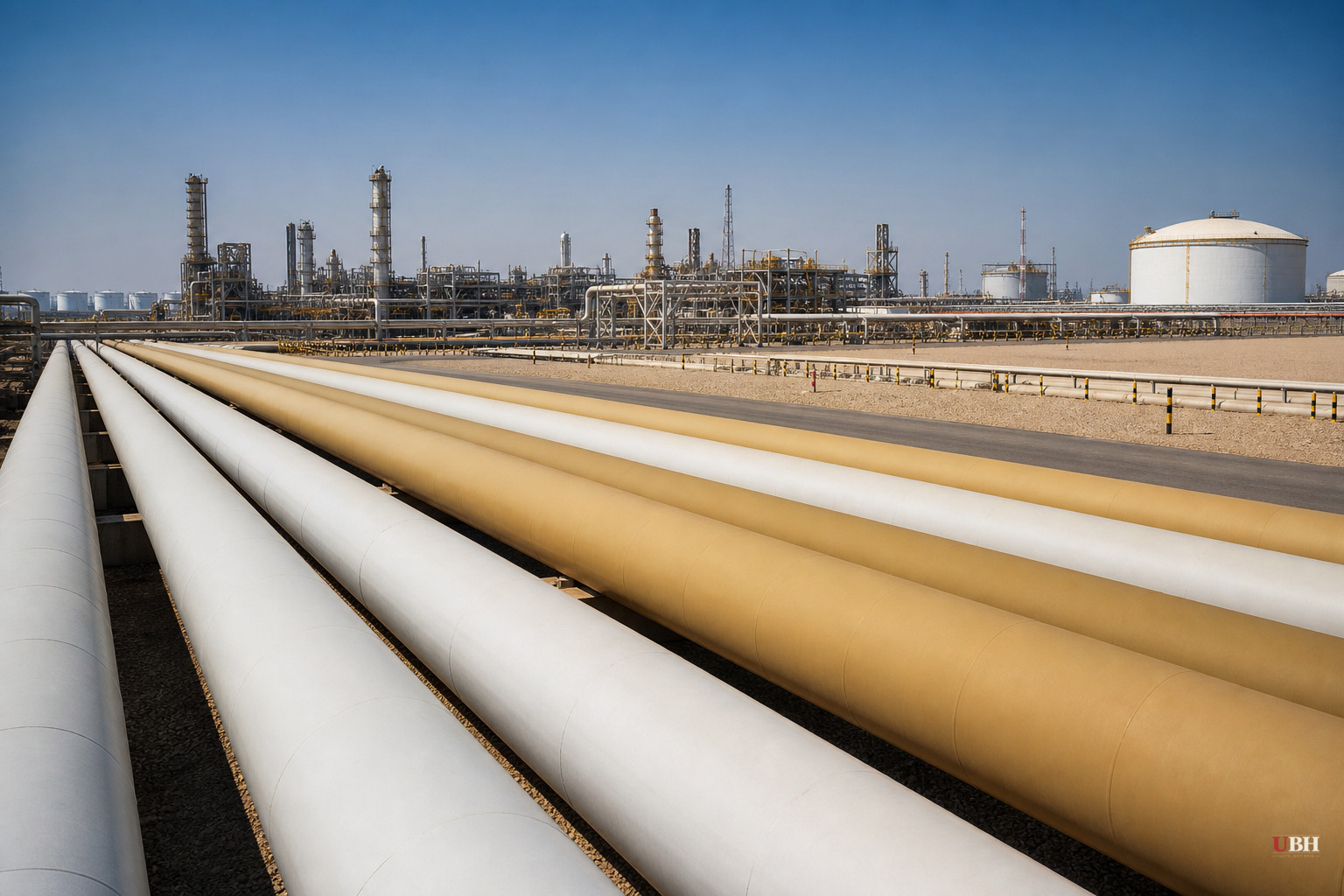
Persian Gulf governments have sold a record $112 billion in bonds so far in 2026, according to data compiled by Bloomberg, as Saudi Arabia, the UAE, Kuwait and Qatar race to build oil infrastructure that bypasses the Strait of Hormuz entirely.
The borrowing spree covers January 1 through July 23 and marks the fastest pace of Gulf debt issuance on record, according to ProPakistani, which cited Bloomberg figures. The UAE alone has sold $30.3 billion in dollar- and euro-denominated bonds this year through July 28, about $3.7 billion above the previous record for this stretch set six years earlier, according to ZeroHedge's reporting of Bloomberg data.
Separate figures from Kuwait Financial Centre, known as Markaz, show the six-nation Gulf Cooperation Council raised $102.69 billion through bonds and sukuk in the first half of 2026 alone, with Saudi Arabia responsible for nearly half that total after issuing $49.34 billion, according to ProPakistani.
Six Months of War, and Counting
The conflict involving Iran is now in its sixth month, according to Clash Report, and it has turned a long-standing strategic vulnerability into an active financial emergency. The Strait of Hormuz, which historically carried around 15 million barrels of oil a day according to ProPakistani, is described by multiple sources as effectively closed or severely compromised by the fighting.
Making matters worse, Houthi forces have started targeting Saudi vessels with missiles and drones in the Red Sea this month, according to ZeroHedge, opening a second front in the effort to strangle Gulf oil exports at sea.
Kuwait is the starkest example of investors betting on Gulf resilience despite the shooting war. The country sold $6 billion in bonds this month while facing daily missile strikes and what Clash Report described as crippled crude exports, and the offering was still oversubscribed more than double, drawing $14.8 billion in orders according to ProPakistani.
What They're Building
The money is going toward concrete alternatives to a single waterway. Saudi Arabia is reviving a dormant pipeline route to its Red Sea port at Yanbu, according to both ZeroHedge and ProPakistani. The UAE is fast-tracking a $3 billion pipeline to Fujairah on the Gulf of Oman, which sits outside the strait entirely.
Dubai-based logistics giant DP World is building two new deepwater terminals aimed at Asian trade, according to Clash Report. Iraq, meanwhile, is pursuing new pipeline links to Turkey, Syria and Jordan to diversify its own export routes away from the Gulf chokepoint, according to ProPakistani.
The UAE's foreign trade minister has been blunt about the goal, telling Bloomberg the country's new port and pipeline projects are aimed at achieving what Clash Report quoted as "zero Hormuz dependency."
Goldman Sachs estimates the bypass projects could add 3.8 million barrels per day of alternative capacity by the end of 2027 and 7.3 million barrels per day by the end of 2028, according to ProPakistani. If that materializes, roughly 60% of the Gulf's prewar oil exports could move without touching the Strait of Hormuz at all.
Investors Still Buying, But Charging More
Despite the war, foreign capital keeps showing up. Sergei Strigo, head of emerging-markets fixed income at Amundi SA, told Clash Report that "we have clearly seen interest to diversify from using the Strait of Hormuz," and pointed to the Gulf's deep foreign-exchange reserves as the backstop giving investors confidence: "there are very significant foreign-exchange reserves that underpin the financial stability of these Gulf countries."
That confidence isn't free. Clash Report notes that borrowing costs on this round of debt sales are running higher than prewar issuances, and that sovereign risk premiums, or spreads, are widening even as demand stays strong. Semafor likewise notes Kuwait's oversubscribed $6 billion sale came at "notably higher" cost than before the war started.
Gulf sovereigns remain investment-grade and cash-rich enough that global funds, including PIMCO according to ZeroHedge's earlier April reporting, are still lining up to buy their paper. But the market is pricing in real war risk, not a hypothetical one.
The Freeze That Preceded the Boom
It wasn't always this way. ZeroHedge notes that when the conflict between the U.S., Israel and Iran first escalated back in March and April, regional banks froze fundraising activity and market participants retreated into defensive positioning to see how bad the fallout would get.
That changed after an April 8 ceasefire, according to ZeroHedge, which reopened the market and set off the current record-pace issuance. The ceasefire evidently didn't hold in any lasting sense, given that Clash Report and others describe the conflict as ongoing six months in, but it was enough to unfreeze the bond pipeline.
What's Unresolved
None of the reporting here specifies whether the ceasefire referenced in April is still technically in effect, or what triggered the renewed hostilities that have Kuwait under daily missile fire and Saudi vessels facing Houthi strikes in the Red Sea. The bypass infrastructure itself won't be finished for years. Goldman Sachs' capacity estimates run through 2028, meaning the Gulf's core vulnerability, a single chokepoint carrying the bulk of its oil exports, persists for at least that long regardless of how much debt gets sold this year.
Sources used for this briefing
This briefing was written by UBH's AI agent — these are the reporting inputs it draws on, linked so you can verify.


