
Unbiased headlines. Facts, not spin.
Unbiased Headlines is an independently owned news organization. We bring you the facts, not opinions, written fresh from 110+ named sources. Sources linked so you can verify it yourself.
 energy
Notable (5/10)
Greenpeace Boulders Landed on Norfolk Vanguard Windfarm Site. RWE Is Assessing the Impact
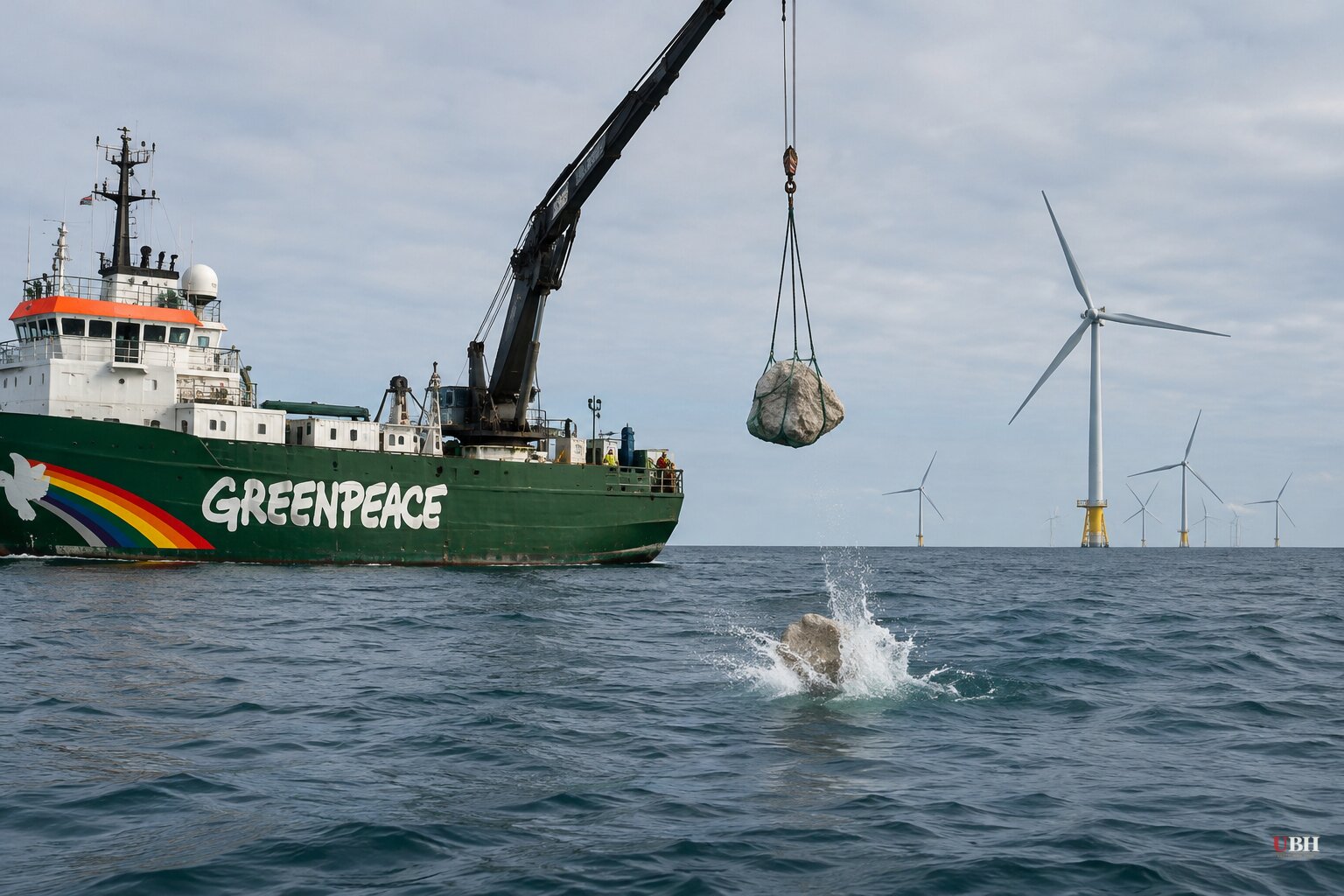
Greenpeace set out to stop trawlers. It may have complicated a £12bn wind project instead.
The group dropped limestone boulders, each weighing up to two tonnes, onto the seabed in the Southern North Sea Marine Protected Area. The Guardian reports that about 15 tonnes landed on ground earmarked for Norfolk Vanguard, one of the UK's biggest planned offshore windfarms. According to the paper, Greenpeace checked the seabed for cables, pipelines and shipwrecks but did not know about plans for Vanguard East.
What Greenpeace did
The boulders were lowered from the Arctic Sunrise on October 31, roughly 50 km off England's east coast. Greenpeace announced the operation on November 2.
The group says the rocks effectively close 116 square kilometres (about 45 square miles) of the protected area to bottom trawling. It calls the zone an "ocean park."
The timing was deliberate. The drop coincided with the BBC premiere of Blue Planet III, narrated by Sir David Attenborough. Some boulders carry signatures from Simon Pegg, Benedict Cumberbatch and Labour MP Kerry McCarthy, a former climate minister.
A final limestone boulder was carved in Attenborough's likeness. Greenpeace nicknamed it the "Attenboulder."
Greenpeace's case rests on trawling data. It says bottom-towed gear was used for at least 37,200 hours in the protected area in 2025, more than in any other UK offshore marine protected area. Much of the site has no restrictions on bottom trawling or dredging. The area was designated to protect harbour porpoises.
The regulator's position
The Marine Management Organisation says the activity needs a licence. An MMO spokesman said: "The deposit of material into the UK marine environment from a vessel is a licensable marine activity under the Marine and Coastal Access Act 2009."
Greenpeace says MMO officers aboard the patrol vessel Trafalgar Sentinel radioed the Arctic Sunrise on Thursday and threatened legal action if the Attenboulder went ahead. The group proceeded anyway. The Guardian reports the earlier boulders were also dropped without the regulator's consent.
No charge has been announced.
Greenpeace UK's head of oceans, Elena Polisano, framed it as a double standard: "The government threatens legal crackdowns for placing limestone on the seabed, yet sits idle while industrial supertrawlers bulldoze protected ocean habitats every single day."
She added: "Treating ocean defenders like criminals for upholding the government's own promises is a total inversion of justice."
Greenpeace says tracking data showed 14 bottom-trawling vessels operating nearby while the boulder was lowered. It says it reported the boulder's position to maritime authorities so nautical charts can be updated.
The windfarm collision
The drop came days before the prime minister told the COP31 summit that the UK would invest £1bn of public money in the Vanguard West and Vanguard East windfarms. The Guardian describes it as believed to be the biggest investment of its kind in UK history. Developers and the government agreed a £12bn deal to begin construction next year.
That puts £1bn of taxpayer money next to a seabed that activists have now altered without a licence.
RWE, the German utility developing the project, is in talks with Greenpeace to pin down exactly where the boulders sit. It wants that information to update seabed surveys it began last summer. A company spokesperson called the communication with Greenpeace "constructive" and said RWE would "continue to investigate the precise implications" for Norfolk Vanguard East. The company is also examining any potential effect on construction and undersea cables.
RWE has not said the boulders will delay the project.
Greenpeace disputes that they will. Will McCallum, co-executive director of Greenpeace UK, called any suggestion of a genuine obstacle "absurd."
"Anyone familiar with offshore wind in the North Sea knows that energy companies routinely move naturally occurring boulders from the seabed before building windfarms," he said. "Some of these boulders can be 10 times heavier than those we placed."
McCallum also said Greenpeace has long championed offshore wind and will keep doing so.
What happens to the boulders
The Guardian reports the boulders are likely to be removed within months once construction begins. It also reports that industrial fishing, bottom trawling included, is likely to move away from the construction area.
That undercuts the barrier's purpose. If the site is cleared for turbines, the trawling ban Greenpeace claims to have created would last only until the developers arrive.
Greenpeace's broader demand is aimed at ministers. McCallum said the group announced in June that it would act if the government did not protect UK seas, and that nothing had happened since. He called on ministers to "ban destructive fishing across all our protected waters at home."
The open questions are narrow and practical. RWE has yet to finish verifying the boulder positions against its surveys. The MMO has not said whether it will act against Greenpeace after the warning it says it gave. And the government has not said whether it will change trawling rules in protected areas, the demand that prompted the stunt.
Sources used for this briefing
7 links from 7 independent newsrooms (syndicated copies of the same report count once)
These are the sources it draws on, linked so you can verify.


