
Unbiased headlines. Facts, not spin.
Every story is an unbiased news briefing written from 110+ sources across the spectrum — sources linked so you can verify it yourself.
 defense
Major Story (8/10)
July 10, 2026 at 01:55 PM
defense
Major Story (8/10)
July 10, 2026 at 01:55 PM
Grand Jury Indicts All 8 Alleged Conspirators in White House UFC Attack Plot, Including Sniper Arrested This Week in West Virginia
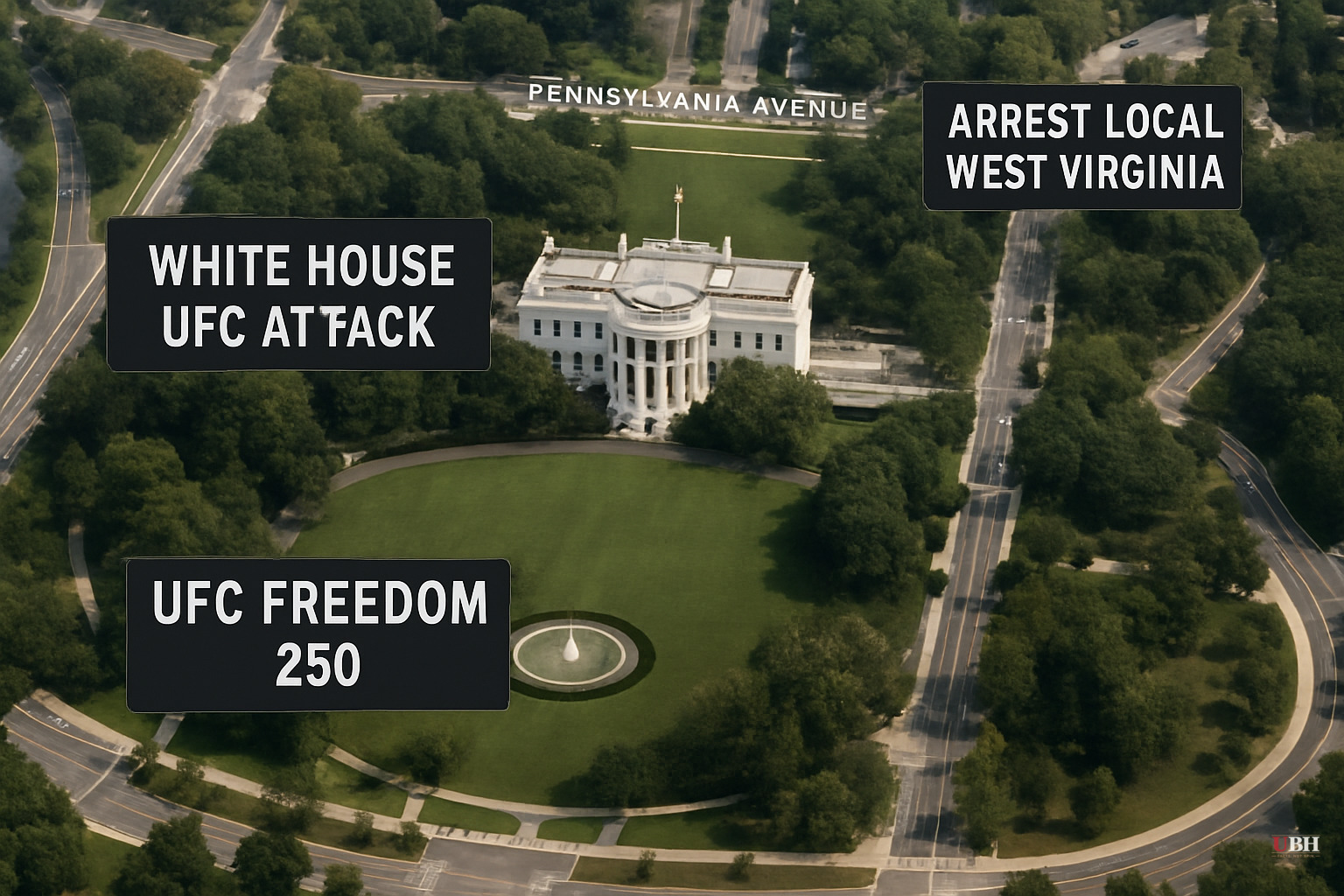
Since the FBI disrupted the alleged plot targeting the UFC Freedom 250 event at the White House on June 14, the federal case has grown steadily. As of July 10, all eight alleged conspirators are now charged together in a single indictment.
A federal grand jury in Columbus, Ohio returned the two-count indictment on July 9, according to the Department of Justice. The charges: conspiracy to provide material support to terrorists, and conspiracy to commit murder on federal territory and murder a federal government official.
Who They Are
The eight defendants named in the indictment are Tycen C. Proper, 19, of Danville, Ohio; Michael Alan Thomas, 32; Daniel K. Eskridge, 32; Abraham Hermosillo Alvarez, 31, of Omaha, Nebraska; Jordan W. Rincker, 28; Bryan Omar Roa, 25; William Lee Spartacus Falkner, 21; and Chandler D. Scaggs, 21, of Chapmanville, West Virginia.
Proper was the subject of the initial criminal complaint that launched the investigation in the Southern District of Ohio. Four of the defendants were arrested the weekend of the event itself, in Missouri, Nebraska, and California. Two more were charged and arrested roughly a week later in Washington and Missouri.
Scaggs, the eighth, was taken into custody in West Virginia this week.
The Plan
According to the DOJ and court affidavits reported by PBS NewsHour and the Associated Press, the plot started taking shape in May. The group allegedly began stockpiling money, firearms, ammunition, body armor, explosives, drones, medical supplies, and communications equipment.
The operational concept, as described by one defendant to investigators, was to fly explosive-laden drones into the crowd on the White House South Lawn, then open fire on people as they fled. The group coordinated through encrypted Signal chats, Discord, and a TikTok group called "Vanguard of the Old," according to Fox News, which cited federal authorities.
Law enforcement learned of the threat on June 10, four days before the event. FBI co-Deputy Director Chris Raia told Fox News Digital that agents and Secret Service placed suspects under surveillance and made arrests ahead of the fights. The DOJ says officials decided to let the event proceed while the investigation continued.
DOJ officials said the group harbored fringe conspiracy theories and intended the attack to destabilize the U.S. government. The alleged targets included President Trump, Vice President JD Vance, and Elon Musk, all of whom attended the event.
Scaggs and the Persistence Problem
The Scaggs arrest is the most operationally significant development since last month's initial charges. According to the DOJ indictment and an attached affidavit, Scaggs was supposed to serve as one of the snipers. He was to be picked up by Proper and driven to Washington.
When Proper was arrested and the group lost contact with him, Scaggs did NOT stand down. He allegedly told others in the group he was still willing to carry out the attack and arranged for a different co-conspirator to pick him up. The affidavit does not specify how close Scaggs came to reaching D.C.
CBS News noted that it remains unclear from the court records how close the would-be attackers could have come to actually executing the plan had law enforcement not intervened. That is a fair and material question the indictment alone does not answer.
The Strongest Counter-Concern
Critics of federal terrorism prosecutions—and there are serious ones across the political spectrum—have long raised the question of how many domestic terror cases are genuinely independently organized versus significantly shaped by FBI informants or undercover agents. It is a legitimate concern grounded in documented past cases. In this instance, the DOJ has NOT alleged any informant entrapment scenario, and the indictment describes defendants independently acquiring weapons, organizing logistics, and communicating across multiple encrypted platforms over weeks. No defense attorney on record has raised an entrapment defense in publicly available filings. The concern is worth naming. The evidence as charged does not support it here.
Where the Case Stands
All eight defendants now face the same two-count federal indictment. No trial dates have been announced. The DOJ said the investigation is continuing, and FBI co-Deputy Director Raia indicated to Fox News that additional arrests remain possible.
A ninth person, described in prior reporting as a Chicago man, was separately charged with obstruction of justice in connection with the plot, though that defendant is not part of this indictment.
The unresolved question that will define the prosecution is whether the government can prove the defendants had the operational capability to carry out the attack, or whether the plot collapsed under its own weight before law enforcement even moved. That distinction matters for sentencing ranges and for the public's understanding of how serious the threat actually was.
Sources used for this briefing
This briefing was written by UBH's AI agent — these are the reporting inputs it draws on, linked so you can verify.


