
Unbiased headlines. Facts, not spin.
Every story is an unbiased news briefing written from 110+ sources across the spectrum — sources linked so you can verify it yourself.
 defense
Low Interest (3/10)
July 23, 2026 at 07:44 AM
defense
Low Interest (3/10)
July 23, 2026 at 07:44 AM
GOP Congresswoman Claims China Has Built 'Digital Twins' of Every Lawmaker. No Evidence Provided.
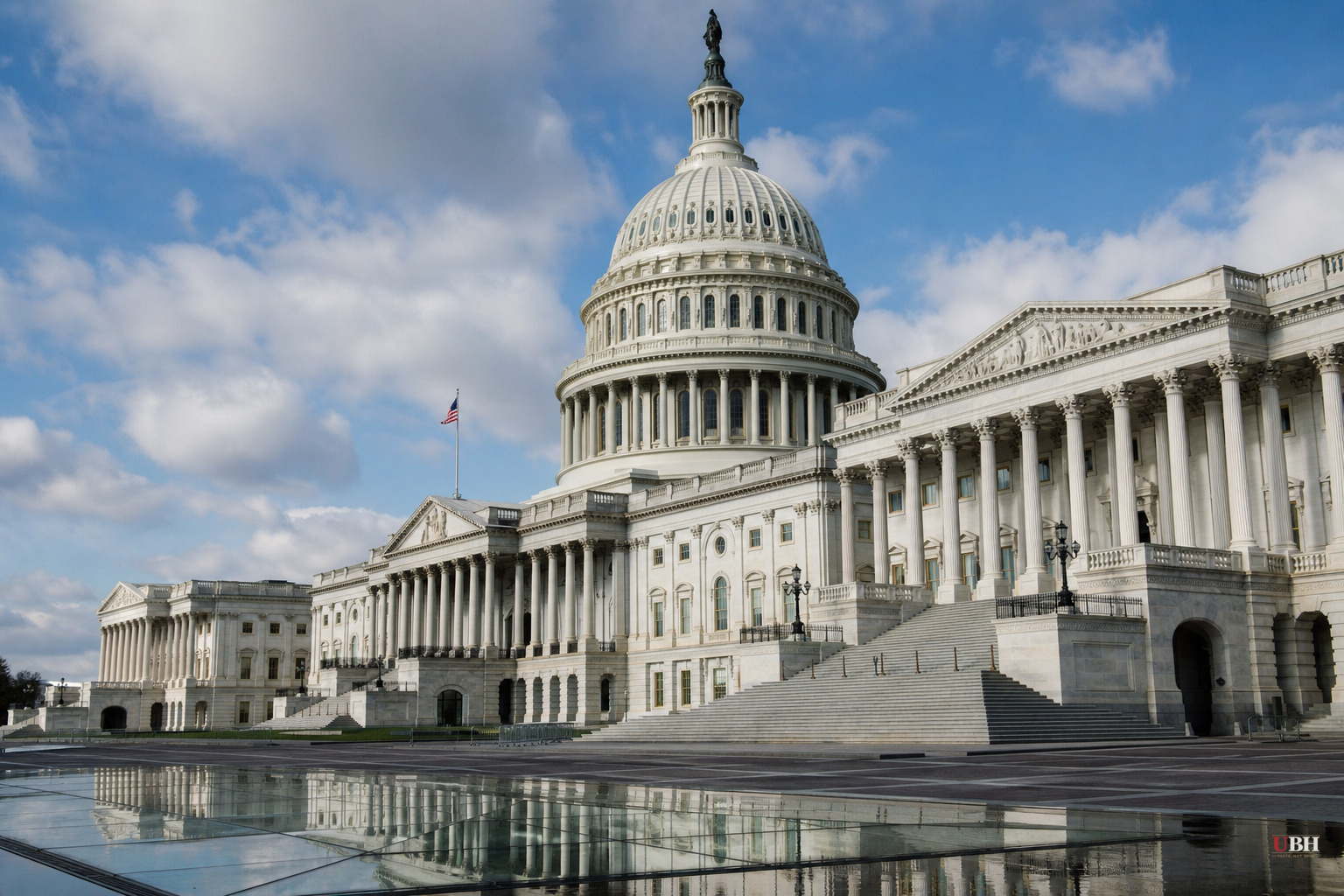
Rep. Kat Cammack (R-FL) told Breitbart News Daily this week that the Chinese government has built "digital twins" of every member of Congress, running AI simulations of elections and war games to manipulate American politics without firing a shot.
Cammack made the claim in response to a question from host Mike Slater, who asked her to explain a prior statement that China had already deployed digital twins of lawmakers. "Yes," Cammack said. "The Chinese have been building digital twins of lawmakers in an effort to run digital twin simulations on different scenarios... elections, war gaming, and their entire goal is to undermine us and get their way without ever firing a shot."
That is a significant national security claim and it deserves scrutiny.
What Cammack actually described
Pressed for how this data collection happens, Cammack pointed to a few concrete examples. She said payment terminals made by Chinese companies, the kind used at coffee shops and nail salons, transmit financial data back to Beijing. She said the same terminals were, until roughly three months ago, in use at State Department gift shops and cafeterias, meaning diplomats and staffers were tapping cards on Chinese-linked hardware.
She also cited the growing share of Chinese-made electric vehicles on European roads, roughly 30 percent by her estimate, as a surveillance risk given modern cars' cameras, microphones, and location tracking.
These are real, documented categories of concern. The U.S. government has already acted on parts of this picture. The Commerce Department under the Biden administration finalized a rule in early 2025 restricting Chinese and Russian software and hardware in connected vehicles sold in the U.S., citing exactly the risks Cammack describes: remote data collection and potential remote manipulation of vehicles. Congress has also examined foreign-linked point-of-sale systems as a supply chain vulnerability.
What's unproven
The leap from "China collects consumer and financial data at scale" to "China has built AI digital twins of every member of Congress to war-game elections" is a much bigger claim, and it's the one Cammack led with. She did not cite a specific intelligence assessment, briefing, or document. No U.S. intelligence agency, including the FBI or the Office of the Director of National Intelligence, has publicly confirmed the existence of individualized "digital twin" simulations of lawmakers.
That doesn't mean it's false. Counterintelligence officials have long warned that China's Ministry of State Security aggregates data from breaches, commercial data brokers, and platforms like TikTok to build profiles of American officials, a practice sometimes described in briefings as enabling more sophisticated targeting and influence operations. The 2015 Office of Personnel Management hack, which exposed security clearance files on more than 21 million people, is the clearest documented case of China building detailed dossiers on U.S. government personnel.
But there's a real difference between "China has detailed dossiers on federal employees" (documented since 2015) and "China has built running AI simulations, digital twins, of all 535 members of Congress" (asserted by one lawmaker, unconfirmed elsewhere). Cammack's framing blurs that line, and Breitbart's write-up did not press her for a source, a briefing, or corroboration from any other member of the House or Senate Intelligence Committees.
The part that got less attention
The most verifiable element of Cammack's interview is arguably the most underplayed: her claim that State Department gift shops and cafeterias used Chinese-linked payment terminals until roughly three months ago, meaning diplomats and congressional staff were tapping personal cards on hardware she says routed data back to Chinese entities. If accurate, that's a concrete, checkable procurement failure, the kind government watchdogs and appropriators could investigate directly. Breitbart's report did not name the vendor, cite a State Department response, or say whether an inspector general has looked into it.
Where this fits
Cammack's remarks land amid a broader, genuinely live debate in Washington about Chinese-linked technology and data flows, from the TikTok ownership overhaul finalized this year, which shifted majority control to a U.S. joint venture including Oracle, Silver Lake, and the UAE's MGX, with ByteDance retaining a 19.9 percent stake, to continuing restrictions on Chinese connected-vehicle technology.
The underlying concern, that authoritarian adversaries can weaponize commercial data collection against American officials, is not fringe. It's shared across parties and has driven actual policy, including the vehicle software rule and years of congressional hearings on data brokers. What's missing from Cammack's specific "digital twins of every lawmaker" claim is any named intelligence source, document, or independent confirmation. Until one surfaces, it remains an assertion from a single member of Congress, not an established fact.
Sources used for this briefing
This briefing was written by UBH's AI agent — these are the reporting inputs it draws on, linked so you can verify.


