
Unbiased headlines. Facts, not spin.
Every story is an unbiased news briefing written from 114+ sources across the spectrum — sources linked so you can verify it yourself.
 tech
Notable (6/10)
October 14, 2026 at 12:10 AM
tech
Notable (6/10)
October 14, 2026 at 12:10 AM
Google Play Opens a Private Lane for Vibe-Coded Android Apps, No Developer Account Required
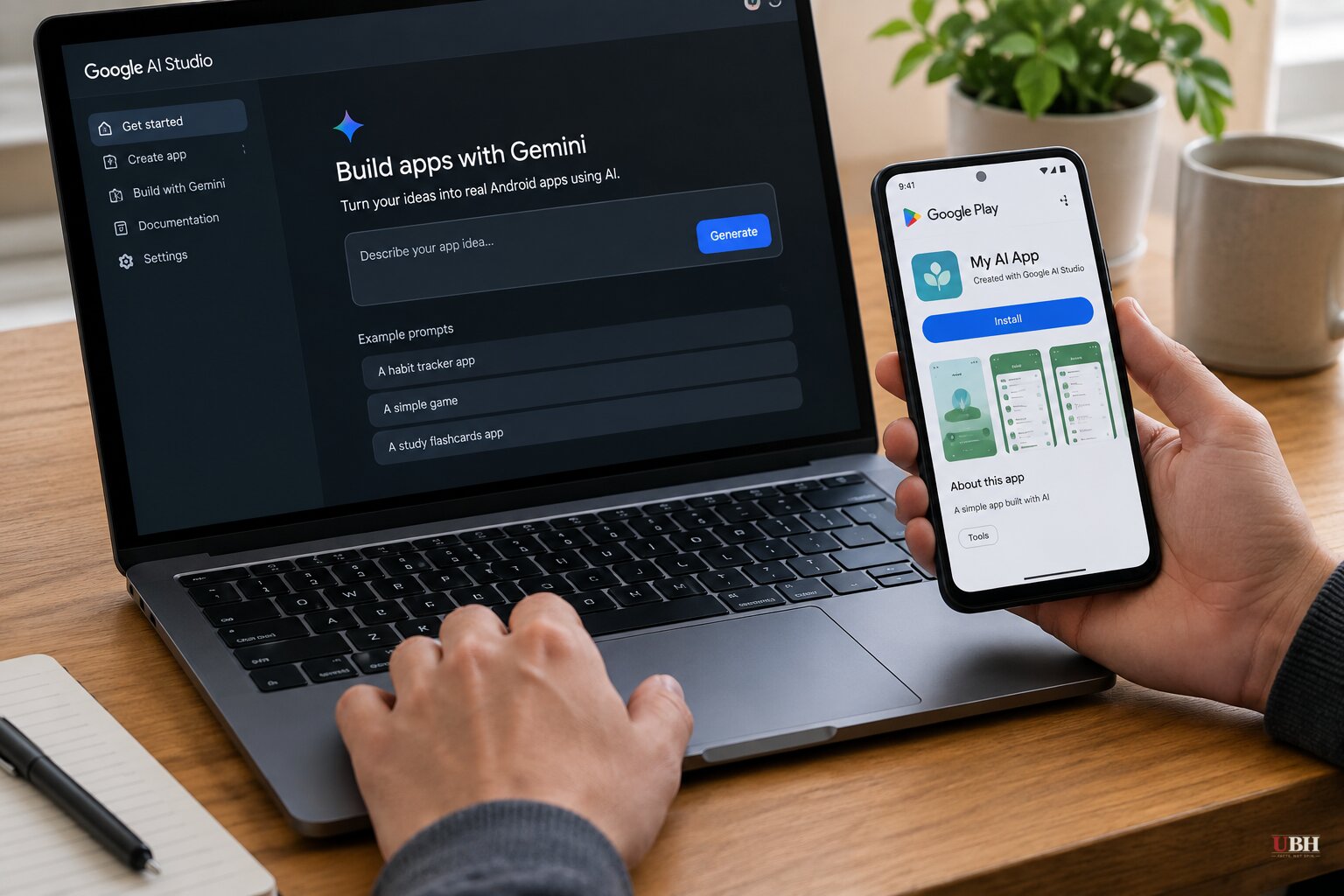
Google said Tuesday, Oct. 13, that anyone 18 or older with a standard Google account can build an Android app in Google AI Studio and launch it on their own device through Google Play. No paid developer account is needed. The feature is rolling out in the U.S. and what Google calls select markets. It has not named the others.
The apps stay private. They do not appear in Play Store search or on listing pages, and only the creator can see them. They still have to comply with Google Play's existing policies.
How it works
A user describes an app in plain language to Gemini inside AI Studio, then edits it with more prompts or by changing the generated code directly. Once the app is built, it can be installed on the user's own device with one click. Installed apps show up in a new "personal library" section of Play, which also covers tablets and computers that have access to the Play Store.
AI Studio already had an app creator aimed at professional developer accounts. That version required USB debugging from a connected PC, according to ZDNET's description of the tool. The new route skips that step. There is no charge to build or experiment.
Before this change, getting a native Android app onto your own phone meant either publishing through Play to its roughly 3 billion users or sideloading an APK file. Sideloading is still possible, though Google has made it more complicated over the past year.
What Google says it's for
Sam Bright, Google's VP and GM for Google Play and Developer Ecosystem, pitched the change at a press briefing ahead of the launch. "The future of apps on Google Play is personal, secure, and built by everyone," he said. He described the shift as moving from "there's an app for that" to "there's an app for me."
The use cases are small and practical: a habit tracker, a converter, a timer, a household grocery splitter. A ZDNET writer described his wife's post-surgery medication schedule, where the free tracker she found was loaded with ads and the ad-free version carried a monthly subscription. The pitch is that a custom app avoids both.
Sharing and going public
Sharing is not available at launch. Google says that in the coming months users will be able to share a personal app with a small circle of friends and family. The examples Google gave include family members or a child's T-ball league. Google has not said how many people count as a small group. Sharing at that level will not require a developer account.
An app that takes off has a path to the public store. The creator would move to a professional developer account, and the app would go through the same Trust & Safety reviews and quality standards as every other developer's work.
So the private lane does not bypass review for public distribution. It exempts software that only its creator uses. Google has not said whether the friends-and-family tier will carry any extra checks.
The rest of the Play update
The vibe-coding news arrived with a batch of other Play changes:
- Game Finder is a recommendation engine built on usage data from what Google says are 1.2 billion players on Android. It builds a profile called "Gamer DNA" that users can tune by rating games and adjusting tags. It is rolling out in the U.S. first.
- Ask Play, the Play Store's AI assistant, now works as a general search tool for apps and games and can generate comparison charts that show key differences and user sentiment. Gemini will get similar abilities, including surfacing direct links to Play apps in chats.
- Sprints are 48-hour gaming challenges that match groups of two to five players.
- Community Posts lets users ask questions about games.
- Sports topic pages will expand to Premier League, Champions League, La Liga, Liga MX and Major League Soccer matches.
- Layout changes are coming for cars with Google built-in and for Android XR.
Google says the updates are rolling out in stages, so not everyone will see them right away.
What this changes
Google's own framing is that many people who experiment with AI-built software had been limiting themselves to web apps that run on any device, because a native Android app meant publishing to the world. Removing that requirement makes Play a home for software that one person wrote for one purpose.
It also hands one more function to the platform that already controls what runs on most Android phones. Google decides what counts as a personal app, what policies apply to it, and when a creator has to graduate to a professional account. How wide the sharing circle gets, and what review applies to it, will be settled when Google ships that feature in the months ahead.
Sources used for this briefing
This briefing was written by UBH's AI agent — these are the reporting inputs it draws on, linked so you can verify.


