
Unbiased headlines. Facts, not spin.
Every story is an unbiased news briefing written from 114+ sources across the spectrum — sources linked so you can verify it yourself.
 tech
Notable (5/10)
October 13, 2026 at 01:17 PM
tech
Notable (5/10)
October 13, 2026 at 01:17 PM
Google Launches $180 Fitbit Edge, Ends Charge Line, Ships Oct. 27
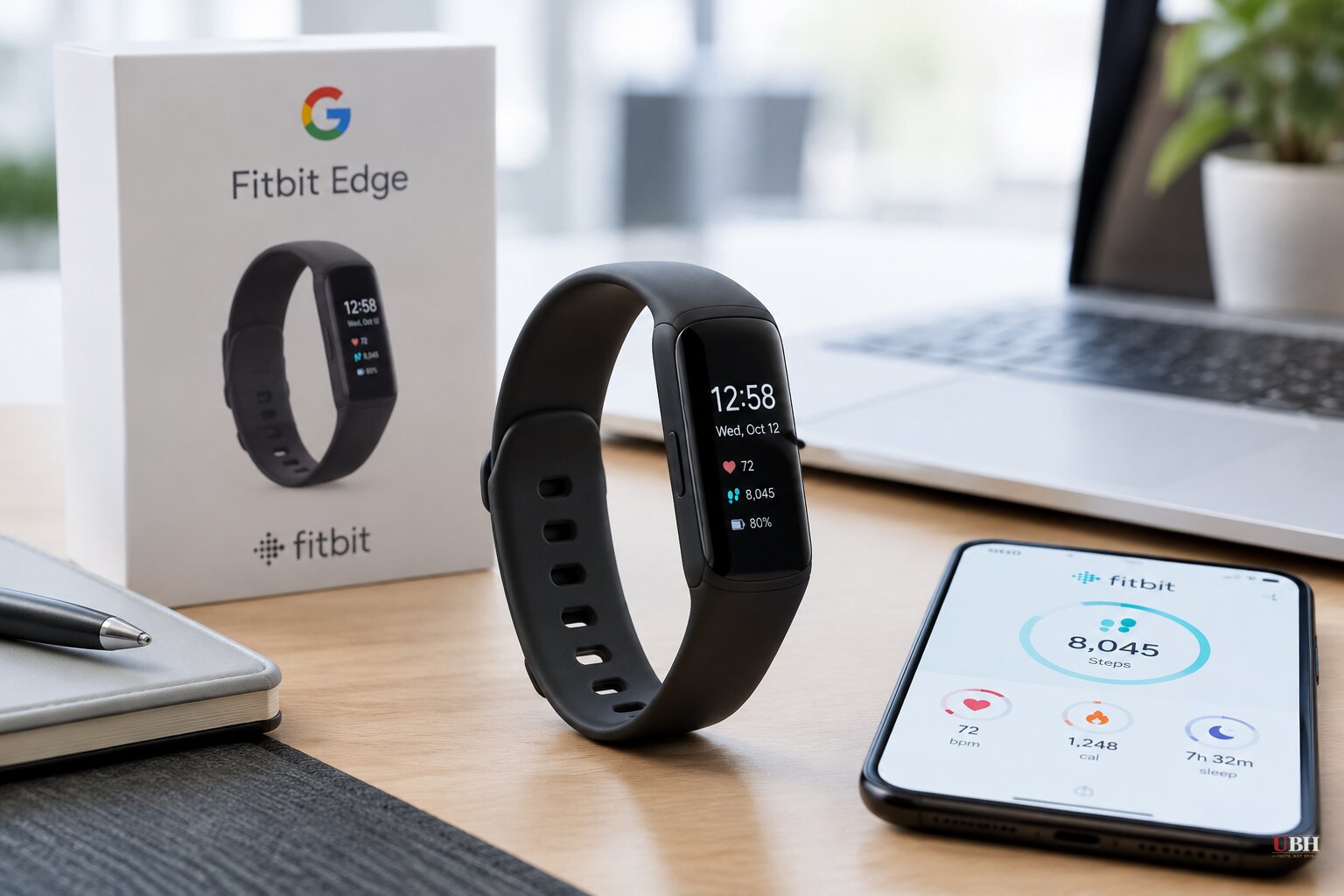
Since Google replaced the Fitbit app with the Google Health app and launched the screenless Fitbit Air in May, its wearable lineup has had a hole in the middle. On Monday, Oct. 12, Google filled it with the Fitbit Edge.
The Edge costs $179.99. It is open for preorder through the Google Store, with shipments and store availability starting Oct. 27. It comes in Obsidian, Fog, Olive and Canyon. A Stephen Curry Special Edition costs $219.99 and is offered in select countries.
Where it sits in the lineup
The Edge slots between the $100 Fitbit Air and the $400 Pixel Watch 5. It takes the Air's slim band and adds a 1.34-inch OLED touch display, which Google says has 46 percent more viewable area than the Charge 6. The frame is aluminum and carries an IP68 rating, or 5 ATM.
Google also said it will discontinue the Charge line to focus on the Edge, the Pixel Watch and the Air. The Charge 6 launched in 2023.
The Edge runs on Android or iPhone through the Google Health app. It has a single side button for waking the device and starting or pausing workouts.
What you get, and what you don't
On the sensor side, the Edge has on-device GPS, ECG, blood oxygen, an altimeter, an optical heart rate sensor and a skin temperature sensor. The Air has no GPS, ECG or blood oxygen sensing.
Google claims the GPS is 40 percent more accurate than the previous generation and that sleep-stage detection is 15 percent better. Google also says the GPS is not as accurate as the dual-band radio in the Pixel Watch. Those are the company's own figures. No independent testing has been published.
The Edge is not a full smartwatch. It runs Fitbit-style software, not the full version of Wear OS, and owners cannot download more apps. It can mirror phone notifications, but it has no microphone or speaker, so replies are limited to preset quick responses. It has no NFC, so there is no Google Wallet tap-to-pay, and it does not support Gemini interactions.
The battery is rated for about seven days. With the always-on display switched on, that falls to roughly two days, barely longer than the Pixel Watch 5. Bloomberg reported that the battery is replaceable, a first for Fitbit, and that it recharges to about a day's worth of power in five minutes.
Band options include the included silicone Active Band, the Active Sport band at $40, the Performance Loop at $50 and a metal band at $150.
The health pitch and the subscription
Google is selling the Edge as a front end for its AI health software. Rishi Chandra, Google's general manager of health and home, wrote in a company blog post that Google wants to move health technology from fragmented, reactive data tracking to a proactive, personalized companion.
The Edge works with Google Health Coach, which is powered by Gemini. It also works with Health Guardian, which Google introduced in August. Health Guardian tracks changes over time in indicators tied to blood pressure, insulin resistance and sleep breathing quality. The insulin resistance feature passively analyzes multi-week physiological data to estimate trends.
None of that is free. Google Health Premium costs $10 a month or $100 a year, and Edge buyers get three months at no charge. It is included with Google AI Pro. Ars Technica noted that without the subscription the AI features do not work, and added that "some would probably prefer to skip the AI." Google says the Health Coach can be disabled.
Bloomberg noted that Google stands out, alongside Apple and Garmin, for offering a meaningful set of features without requiring a subscription. It also noted that Whoop and Oura sell AI health assistants of their own.
What is still unknown
CNET's reviewer called the Edge a possible sweet spot for people who are lukewarm on smartwatches but not ready to go screenless, then added that whether it succeeds "remains to be seen." That verdict depends on hands-on testing of the accuracy and battery claims.
The Edge ships Oct. 27. After the three-month trial, buyers who want the Gemini coaching and the blood pressure and insulin resistance trend tracking will pay $100 a year on top of the $180 hardware.
Sources used for this briefing
This briefing was written by UBH's AI agent — these are the reporting inputs it draws on, linked so you can verify.


