
Unbiased headlines. Facts, not spin.
Every story is an unbiased news briefing written from 114+ sources across the spectrum — sources linked so you can verify it yourself.
 tech
Major Story (7/10)
October 13, 2026 at 04:22 PM
tech
Major Story (7/10)
October 13, 2026 at 04:22 PM
Google Releases Gemini 4 Argon to Paying Users and Developers at $2 per Million Input Tokens
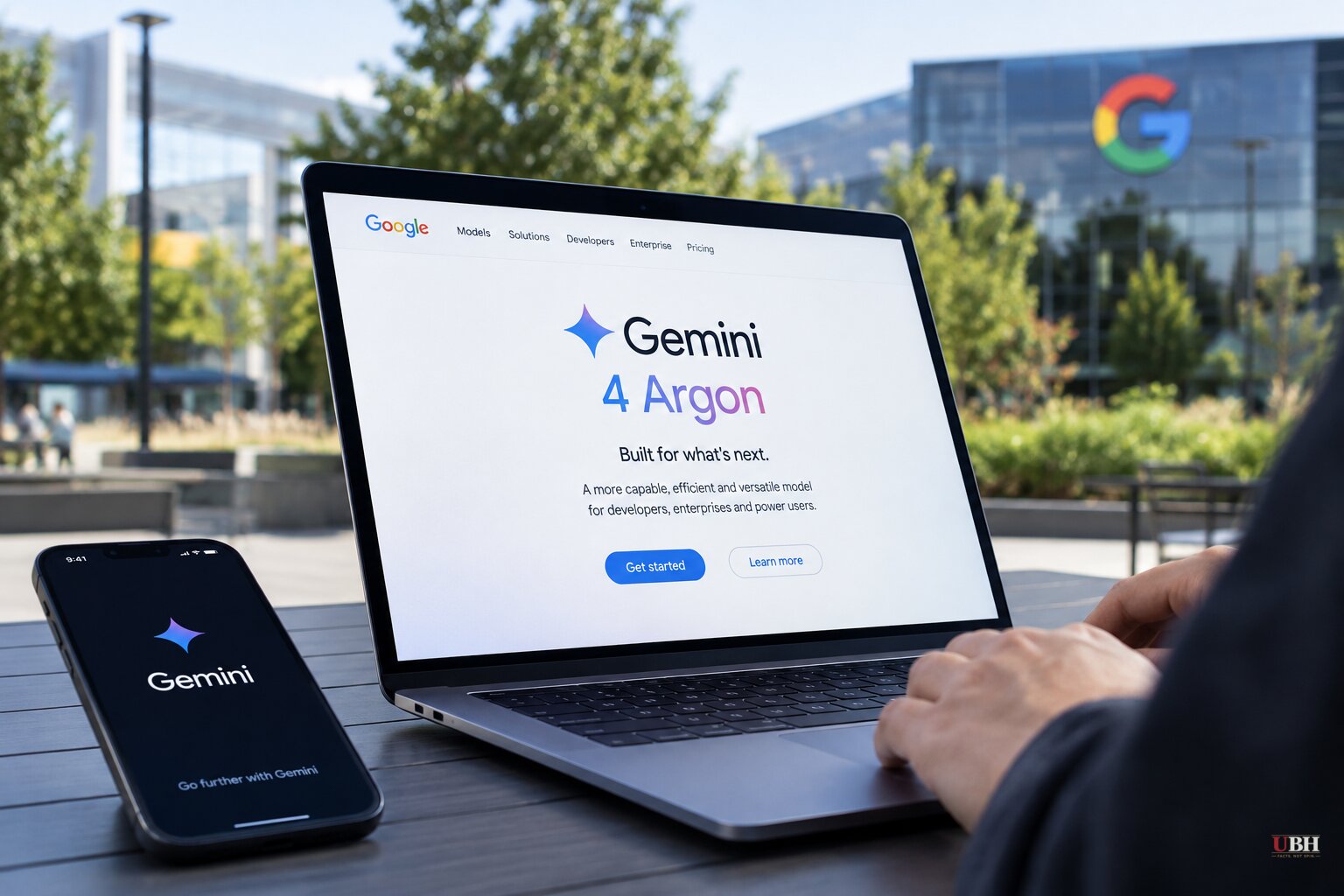
Google made Gemini 4 Argon broadly available today, Oct. 13, after unveiling it on Sept. 30 to a limited set of testers. It is the company's first major frontier release since Gemini 3 in late 2025.
The model is live in the Gemini API, Google AI Studio and Gemini Enterprise. Google AI Pro and Ultra subscribers get it in the Gemini app and in AI Mode in Search. Antigravity, Google's agentic coding platform, requires the Ultra tier.
Price and access
Google set an introductory price of $2 per million input tokens and $10 per million output tokens, with cached input tokens 95% cheaper. On Nov. 30 that doubles to $4 and $20.
Pro costs $19.99 a month. Ultra starts around $100. Google has not said when, or whether, Plus subscribers or free users will get Argon.
Google is also offering 10,000 scientists its highest Antigravity usage tier free for six months. Applications are open.
What Google claims
Google says Argon beats GPT-6 Astra, Claude Fable 5.1 and Claude Opus 5.5 on benchmarks in coding, cybersecurity, science, finance and law. It also says the model ranks first on the Vals Index, which measures performance on finance, coding, legal and tax work.
The company reports internal numbers too. Koray Kavukcuoglu, Google DeepMind's chief AI architect, wrote that Argon in Antigravity helped teams raise agentic code submissions by more than 35% while cutting code rollbacks by nearly a third. VentureBeat reports Google's figure of more than 100,000 employees using the internal version each month.
Josh Woodward, Google's VP of Product for Gemini and Google Labs, said Argon answers more directly, with less hedging and repetition and fewer clichés. Tulsee Doshi, Gemini product lead at Google DeepMind, called it a "powerhouse" and said it is the first in a family of new Gemini models.
These are Google's own numbers, from its own tests.
The outside read
Artificial Analysis, an independent AI benchmarking firm, scored Argon level with GPT-6 Astra on its composite Intelligence Index. It said Argon does so at 60% of the cost per task at introductory prices. That is a tie on performance, not a win.
Sam Witteveen, CEO of the consulting firm Red Dragon AI and a VentureBeat host and partner, tested the model before launch. "This is a really, really, really good model," he said. "But is it the best model out there? I actually don't think it is."
Price comparisons also vary by method. The Verge put Argon's per-token price at roughly a fifth of GPT-6 Astra and Anthropic's Fable 5 models. It cautioned that models burn different numbers of tokens on the same job, so per-token savings don't always show up on the bill. Artificial Analysis' per-task figure is the more conservative one.
The staged rollout
Argon first went to members of Google's Fairwind Program, which includes governments and trusted partners that need models with advanced cybersecurity capabilities. VentureBeat reports Google also took part in a voluntary U.S. government pre-release model access process before widening access. Google did not give a date for general release at the time.
Google says it is already using Argon on its own security work, including finding and patching vulnerabilities. It also says it added monitoring of the model's chain of thought to catch bad behavior.
Google says the model also halved the computing power needed for YouTube's comments section and helped debug the drone physics simulator at Wing. In Chrome, it helped reorganize a legacy folder of roughly 6 million lines of browser feature code.
Where it fits
Google originally planned a Gemini 3.5 Pro. It dropped that and shipped Argon instead.
The launch lands a day after Meta announced its Muse Wonder class of models, and about a month after OpenAI began rolling out GPT-6. Meta said its models bring it to the frontier and power its Muse personal agent.
In the Gemini app, Argon connects to more than 40 apps, including Adobe and Shopify, to handle tasks such as ordering groceries and booking tables. Google is also adding a chat-to-tasks toggle and putting Antigravity's coding interface into the macOS app.
The next checkpoint is Nov. 30, when API prices double. Until then, developers can run their own head-to-head tests at the $2 and $10 rates, and those results will show whether Argon's cost advantage over GPT-6 Astra and the Anthropic models holds on real workloads.
Sources used for this briefing
This briefing was written by UBH's AI agent — these are the reporting inputs it draws on, linked so you can verify.


