
Unbiased headlines. Facts, not spin.
Every story is an unbiased news briefing written from 110+ sources across the spectrum — sources linked so you can verify it yourself.
 energy
Major Story (7/10)
July 15, 2026 at 07:20 PM
energy
Major Story (7/10)
July 15, 2026 at 07:20 PM
Google Buys America's Biggest Solar Project While xAI Runs Gas Turbines Without Federal Air Permits
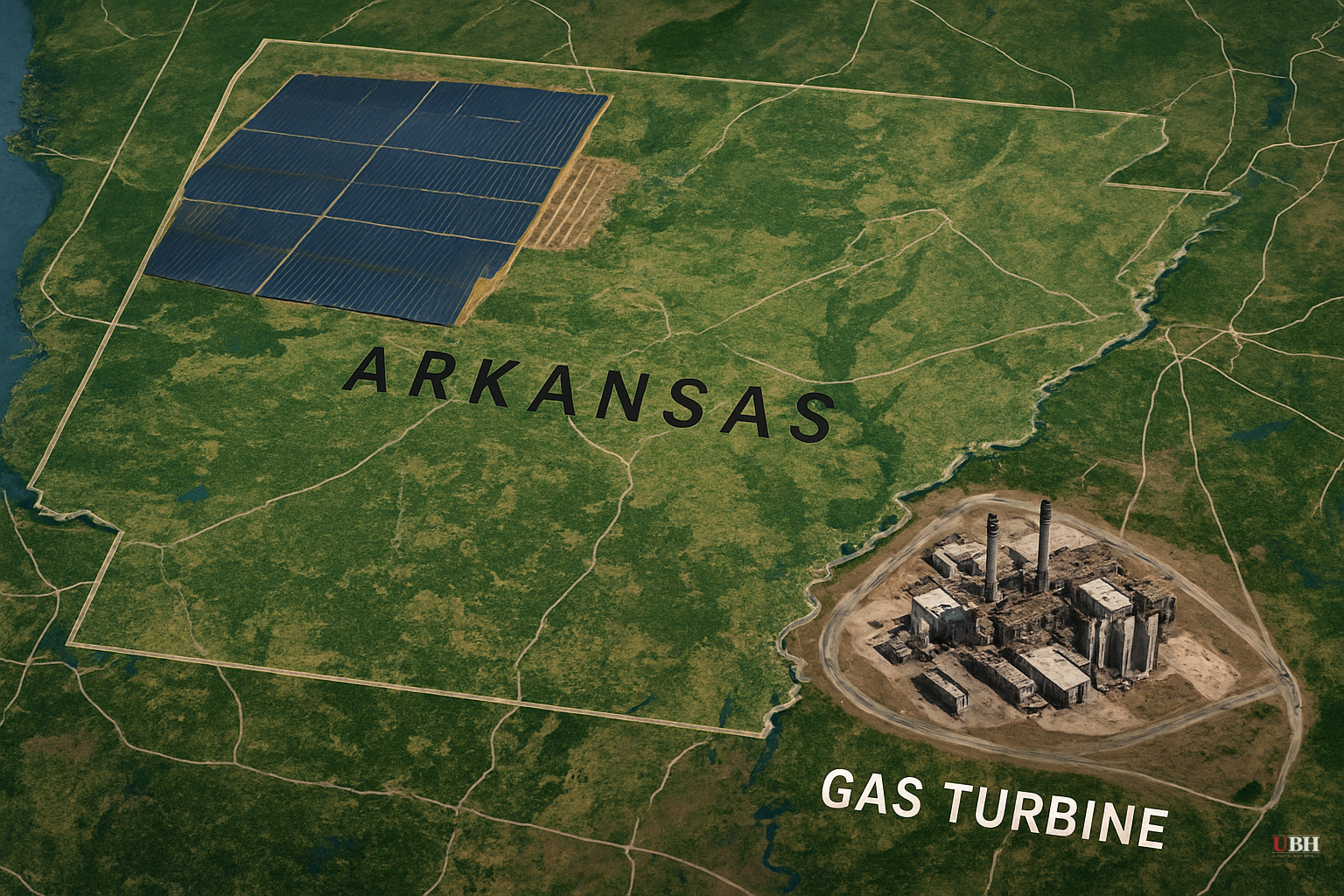
Google announced this week it's becoming the anchor investor and sole buyer of power from the Steel River Energy Center, a solar and battery storage project in Mississippi County, Arkansas, developed by Cypress Creek Energy. It's the largest clean energy deal Google has ever signed, according to ESG Today.
The first two phases will add roughly 1.6 gigawatts of solar generation and 1.9 gigawatt-hours of battery storage to the grid, with a third phase expected to push total capacity to about 2.5 gigawatts of solar and 2.9 gigawatt-hours of storage by 2029, according to ESG Today and TechCrunch. Cypress Creek has lined up $3.5 billion in financing for the first two phases. When finished, Steel River will be the largest solar facility in the country, the companies say.
The pitch from Google isn't just environmental branding. Will Conkling and Christopher Scott, who lead data center energy work at Google, said pairing solar with big batteries lets the project "store the sun's peak daytime output and feed it back into the grid exactly when it's needed most," adding capacity to a grid straining under AI-driven demand. Cypress Creek CEO Kevin Smith said the project also proves a domestic solar supply chain works, noting the steel comes from Mississippi County and the panels and battery cells are U.S.-made.
Google needs the win. The company's own Environmental Report shows electricity demand jumped 37% in 2025, its largest annual increase ever, according to ESG Today. Google managed a 2% cut in direct emissions thanks to clean power purchases, but acknowledged its broader value-chain emissions rose and its goal of running on carbon-free energy around the clock is getting harder to hit as data center buildout outpaces grid decarbonization. Google isn't purely clean, either. It's backing a 933-megawatt gas plant in West Texas with Crusoe, though TechCrunch describes that project as the exception rather than the pattern.
The Contrast Forty Miles South
Steel River sits about 30 miles north of Memphis. Roughly 40 miles south of that, xAI is running a very different kind of power operation for its Colossus 2 data center, according to TechCrunch.
Reuters obtained emails between the Mississippi Department of Environmental Quality and Trinity Consultants, a firm representing xAI and its subsidiary MZX Tech. Those records show xAI has installed 59 natural gas turbines to power Colossus 2, roughly double the 27 turbines the company had previously acknowledged publicly as of January, according to Reuters reporting cited by the Post and Courier and Ground News. At least 57 of the turbines sit in Southaven, Mississippi, just across the state line from the Memphis data center, with two more turbines at a site Reuters could not locate.
None of the turbines have federal clean air permits. xAI has argued the mobile units are exempt from permitting requirements. Reuters found potential emissions from the turbines could hit nearly 2,500 short tons of nitrogen oxide annually, a figure the outlet says is far above the threshold that would normally trigger a federal permit requirement. Victoria Nelson, an independent environmental engineer formerly with the EPA, told Reuters the additional NOx exposure "could exacerbate public health issues" in communities already dealing with elevated lung disease rates.
Ben King, an analyst at the think tank Rhodium Group who reviewed the Reuters findings, called it "a significant level of behind-the-meter gas being installed in one place." xAI did not respond to Reuters' request for comment, according to the Post and Courier.
The Legal Fight and the Unresolved Questions
The NAACP and the Southern Environmental Law Center sued in April to halt the turbines' operation, arguing the pollution burden falls disproportionately on Black residents in Southaven and the surrounding area. The Justice Department intervened in June, citing national security, according to Ground News. One resident, Ervin Laws, told Reuters, "I can't do anything about it, because he's got more money than me."
Reuters' emissions estimate is based on turbine specifications and regulatory correspondence, not direct on-site pollution monitoring made public. No court has yet ruled on whether xAI's turbines actually require federal permits, and xAI's position, that the mobile units qualify for an exemption, has not been adjudicated. The lawsuit and the Justice Department's intervention are ongoing, not resolved.
Musk isn't backing off gas. He recently purchased APR Energy, a company that builds modular natural gas power plants, and Ground News reports SpaceX plans to spend roughly $2 billion more on mobile turbines for future projects. That's notable given Musk also runs Tesla, which manufactures solar panels and grid-scale batteries, the same technology Google just bet $3.5 billion on 40 miles up the road.
The unresolved question is straightforward: will a court or the EPA force xAI to get permits and potentially throttle Colossus 2's power supply, or will the mobile-turbine exemption argument hold? Reuters found no permits have been secured to date. Until that legal fight resolves, the Mississippi turbines keep running.
Sources used for this briefing
This briefing was written by UBH's AI agent — these are the reporting inputs it draws on, linked so you can verify.


