
Unbiased headlines. Facts, not spin.
Every story is an unbiased news briefing written from 110+ sources across the spectrum — sources linked so you can verify it yourself.
 energy
Major Story (8/10)
July 21, 2026 at 12:08 PM
energy
Major Story (8/10)
July 21, 2026 at 12:08 PM
Goldman Sachs Says Brent Could Top $120 a Barrel If Hormuz Disruptions Drag On
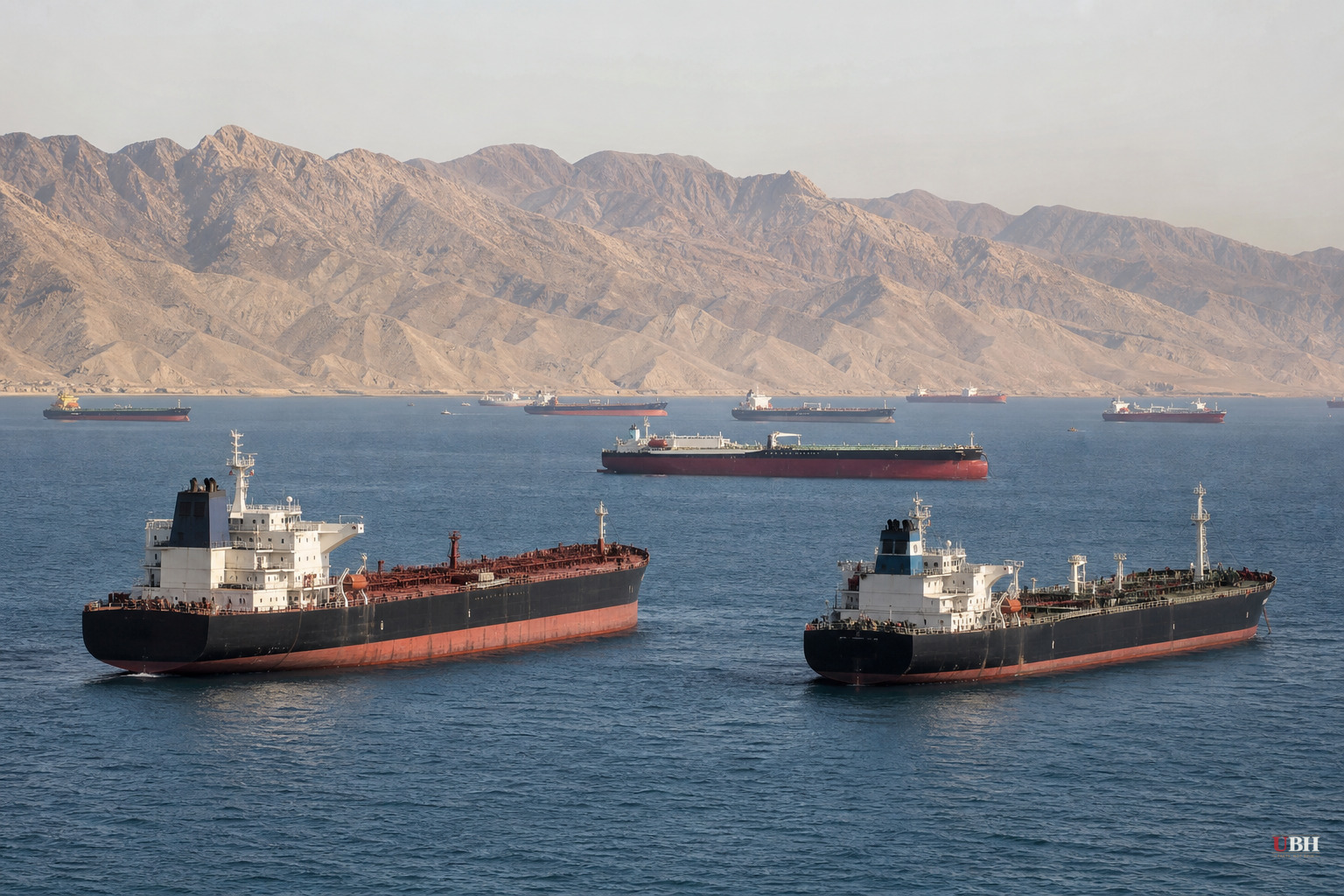
Goldman Sachs is putting a number on the worst-case scenario for oil, and it's not pretty. In a July 20 note, analysts led by Daan Struyven said Brent crude could rally past $120 a barrel by the fourth quarter of 2026 if disruptions to the Strait of Hormuz keep going, according to Business Standard and TradingKey.
That's not what Goldman actually expects to happen. The bank's real forecast has Brent at $80 a barrel in Q4 and $75 next year, built on the assumption that tensions in West Asia cool down. The $120 figure is a risk scenario, not a prediction. Goldman itself said the risks to its base forecast are "tilted to the upside" given the shipping mess in Hormuz and potentially the Red Sea too.
Why the Strait Matters
The Strait of Hormuz is the chokepoint for crude flowing out of Saudi Arabia, Iraq, the UAE, Kuwait, and Qatar. Goldman's analysts estimate Persian Gulf crude flows have already fallen below 45% of pre-war levels, according to the July 20 note. That's a massive drop, and it's happening while global inventories are already thin from the second quarter, according to Business Standard.
Thin inventories plus a major supply chokepoint under threat is exactly the setup that makes oil prices spike hard and fast. Goldman flagged that combination directly.
Brent futures were last trading at $88.54 a barrel, according to Business Standard. That's well off the peak of more than $126 a barrel hit in late April 2026, during the initial phase of the US-Iran conflict, but still up from earlier this month. Brent surged back above $91 a barrel this month on renewed US-Iran fighting and a threat from Tehran-backed Houthi rebels in Yemen to blockade shipments out of Saudi Arabia, according to Business Standard.
The Houthi threat matters beyond its own weight. Red Sea shipping lanes have been the workaround for Persian Gulf crude cargoes that can't move efficiently through Hormuz. If the Houthis choke that route too, there's no easy Plan B for a big chunk of the world's oil exports.
Goldman itself doesn't think $120 oil is coming. The bank's own analysts pointed to a slump in Chinese crude imports and greater demand elasticity as forces that could cap how high prices actually climb, according to TradingKey. Weaker Chinese demand and buyers finding ways to cut consumption when prices rise are real dampers, not hand-waving.
Some producing countries can also route crude around Hormuz entirely, using overland pipelines or Red Sea ports, according to TradingKey. That doesn't fully replace the lost capacity, but it's not zero either.
Goldman is describing a tail risk, not a forecast. Financial media outlets covering this note need to be precise about that distinction, and to their credit, both Business Standard and TradingKey framed the $120 figure as conditional rather than expected.
What Goldman Is Telling Investors to Do
Goldman isn't just flagging risk, it's telling clients how to hedge it. The bank suggested going long on the December 2026 to March 2027 European diesel timespread as a way to protect against continued shocks from West Asia and Russia, according to Business Standard.
The logic: diesel markets were already tight before the war escalated. Ukraine has kept hitting Russian refineries. On top of that, hurricane season, extreme summer heat, and deferred plant maintenance all add extra strain to diesel supply. Stack a Hormuz disruption on top of an already-tight diesel market, and you get a much sharper price move than in crude broadly.
TradingKey's coverage adds a macro angle that Business Standard doesn't dwell on. A sustained supply shock could reignite inflationary pressure and complicate central bank plans to ease monetary policy. That's a real downstream risk if $120 oil actually materializes, since higher fuel costs feed directly into transport and manufacturing prices.
What to Watch
The question now is whether the Hormuz disruption is temporary or becomes the new normal. Goldman's own framing makes clear this hinges on how the US-Iran conflict evolves and whether the Houthi blockade threat against Saudi shipments turns into action.
Neither source reports any de-escalation as of Goldman's July 20 note. Vessel traffic data, tanker insurance rates, and Persian Gulf export volumes are the numbers to track going forward, since those are the inputs Goldman is using to build both its $80 base case and its $120 upside scenario.
Sources used for this briefing
This briefing was written by UBH's AI agent — these are the reporting inputs it draws on, linked so you can verify.


