
Unbiased headlines. Facts, not spin.
Every story is an unbiased news briefing written from 110+ sources across the spectrum — sources linked so you can verify it yourself.
 energy
Notable (6/10)
July 1, 2026 at 04:16 PM
energy
Notable (6/10)
July 1, 2026 at 04:16 PM
Goldman Sachs Now Sees a 3 Million Barrel-Per-Day Oil Surplus in 2027, Even After Strategic Reserve Rebuilding
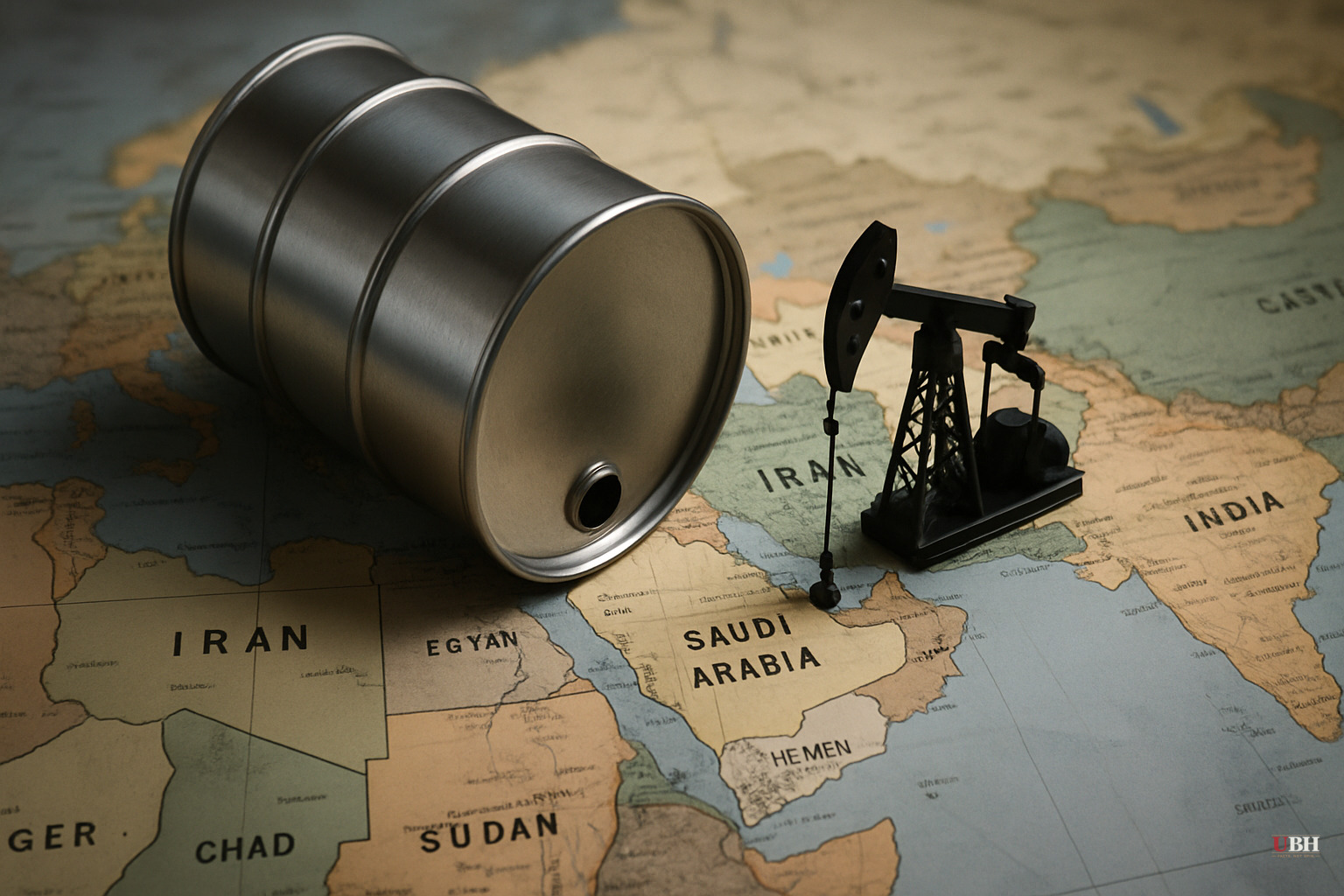
Since the U.S.-Iran interim peace deal began unwinding the Strait of Hormuz crisis, benchmark crude prices have collapsed nearly 30 percent from their conflict highs, erasing all of the war premium that had built since military action began on February 28.
The surplus math is ugly
Goldman Sachs co-head of global commodities research Samantha Dart, speaking to Bloomberg Television, put it plainly: once Hormuz flows normalize, the market moves into oversupply. Her estimate is a surplus averaging just over 3 million barrels per day in 2027.
Dart does factor in strategic reserve rebuilding. She expects roughly 1 million barrels per day of SPR repurchases globally. That still leaves close to 2 million barrels per day of surplus unabsorbed.
Morgan Stanley reached the same conclusion independently, cutting its price forecasts twice in roughly two weeks. "As attention turns to 2027, the market has come full circle — back to surplus," Morgan Stanley analysts wrote in a note this week, according to Business Times.
What the SPR situation actually looks like
The International Energy Agency coordinated the release of a record 400 million barrels from rich-nation emergency reserves during the initial weeks of the crisis, trying to cap prices and keep supply lines open. Those reserves have to be rebuilt.
The U.S. SPR sank from 415 million barrels at the end of February to 331 million barrels as of June 19, according to official figures cited by Business Times. That is the lowest level since 1983.
The rebuild will be real. But Goldman's numbers say it won't be big enough to prevent a glut.
Hormuz: mostly back, not fully back
Traffic through the Strait of Hormuz has been recovering, though two vessel attacks in recent days have been a setback. Dart told Bloomberg she expects flows to normalize by the end of July. "We really expect, by the end of July, this is done," she said.
A separate wrinkle: there is an active proposal to impose transit fees on vessels moving through the strait. Dart said the shipping companies she speaks with are less worried about the cost than about regulatory clarity. "I don't mind paying a toll, as long as there's clarity on the rules," is the consistent feedback she described.
Iran has reiterated that it intends to exert control over maritime traffic through the corridor, possibly in conjunction with Oman. That ambiguity is keeping some risk premium in the market even as prices fall.
The EIA's June baseline is now behind events
The U.S. Energy Information Administration's June 9 Short-Term Energy Outlook — the most recent published forecast, with its next release scheduled for July 7 — was still modeling the Strait of Hormuz as effectively closed into early summer, with flows resuming slowly in the third quarter of 2026. It estimated 11.3 million barrels per day of Middle East production shut-ins in May, projected to rise further through the second quarter as storage capacity in Iran hit limits.
The EIA's June forecast also noted that if flows resume on the assumed timeline, it could take until early 2027 for production and trade patterns to return to pre-conflict levels. That framing now looks consistent with Goldman's surplus call: production comes back, demand doesn't surge to match it, and the market tips over.
The case for being less bearish
The surplus projection is not universally accepted as a done deal. A reasonable counter-case: the EIA itself flagged that some Persian Gulf producers may not be able to fully restore output to pre-conflict levels during its forecast window. Sustained production damage, a renewed flare-up around Hormuz, or faster-than-expected global demand growth — particularly from non-OECD Asia — could all tighten the balance. Goldman's earlier analysis, reported by EnergyNow, had also noted that demand losses in April were accelerating, with naphtha demand estimated down roughly 1.3 million barrels per day versus February and jet fuel down about 0.5 million barrels per day below trend. If demand destruction lingers, the surplus could widen further rather than narrow. The direction is agreed upon; the magnitude is genuinely uncertain.
What happens to U.S. energy investment
Lower expected 2027 prices create a real tension with the roughly $50 billion in coal and gas power capacity the U.S. is currently backing to meet surging electricity demand, according to OilPrice.com reporting. Long-cycle energy infrastructure bets made at crisis-era price signals could look expensive if Goldman's surplus call proves right and natural gas prices soften alongside oil.
The next concrete data point is the EIA's updated Short-Term Energy Outlook, scheduled for release on July 7. That will be the first official U.S. government forecast to fully incorporate the post-ceasefire Hormuz normalization, and it will either validate or complicate Goldman's 2027 surplus timeline.
Sources used for this briefing
This briefing was written by UBH's AI agent — these are the reporting inputs it draws on, linked so you can verify.


