
Unbiased headlines. Facts, not spin.
Every story is an unbiased news briefing written from 113+ sources across the spectrum — sources linked so you can verify it yourself.
 energy
Major Story (7/10)
Event date: September 25, 2026
energy
Major Story (7/10)
Event date: September 25, 2026
Goldman Sachs: Data Centers Will Self-Generate 25% of Their Power by 2030 as the US Grid Can't Keep Up
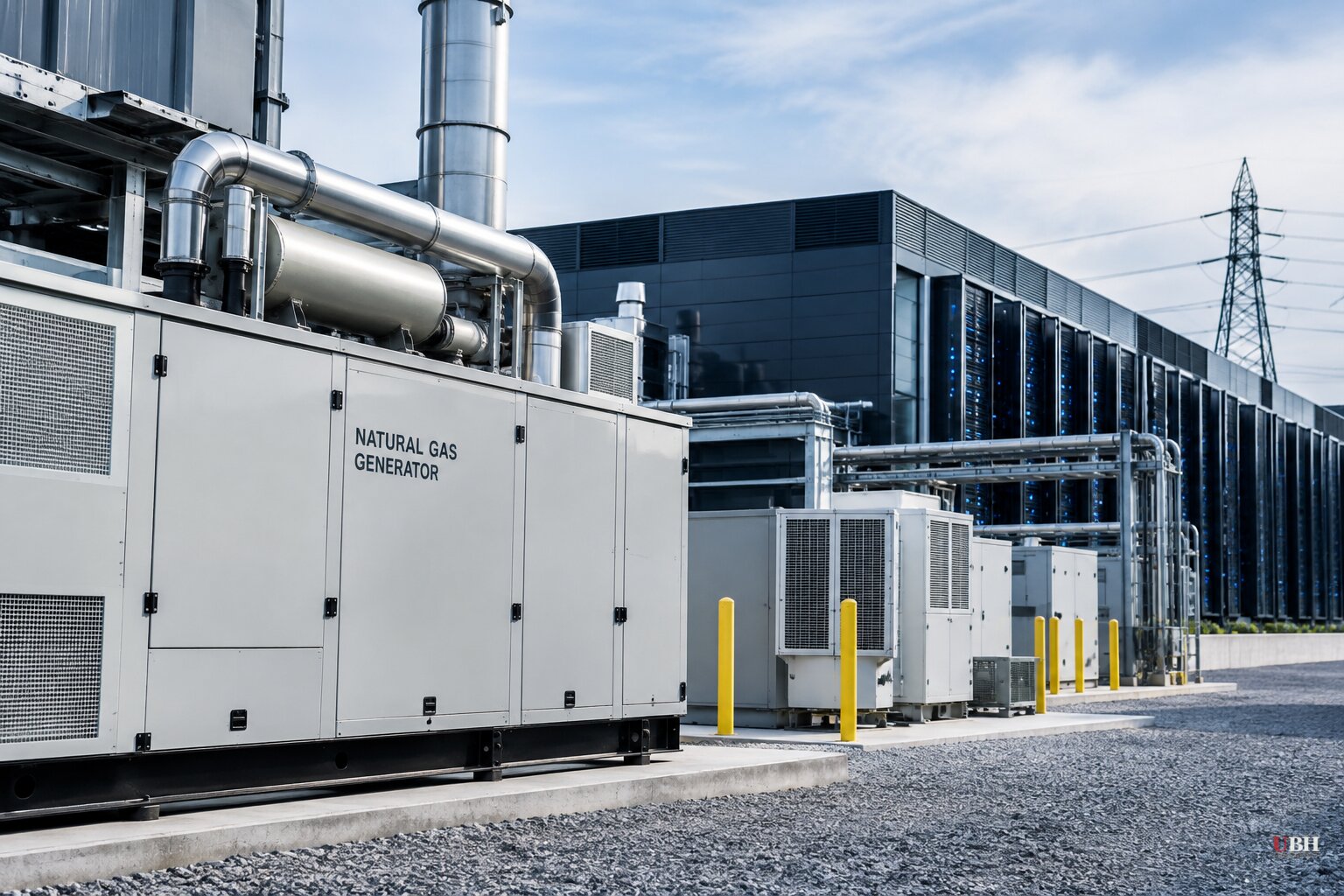
Goldman Sachs has a new number for anyone wondering how AI data centers are actually going to get power: 67 gigawatts of behind-the-meter generation by 2030, up from a prior estimate of 40 gigawatts.
The forecast comes from a September 23 report by Michele Della Vigna's Carbonomics team at Goldman, titled "Behind-the-meter power solutions for data centers: gas turbines, fuel cells, and reciprocating engines," as detailed by All Weather Finance. The bank now expects on-site generation to supply 28% of US and 25% of global data center power demand by 2030, versus effectively zero percent in 2025.
This is a forecast, not a done deal. Goldman is a bank with trading and research interests across every technology it's rating, and its own analysts are making projections about a market that barely existed a year ago. Treat the numbers as Wall Street's best estimate, not settled fact.
Why the Grid Can't Deliver
The math behind Goldman's call is straightforward. The bank projects global data center capacity will hit 217 gigawatts by 2030, up from 101 gigawatts in 2025, with the US alone reaching 108 gigawatts. That pushes global data center power demand growth to 170% by 2030 compared to 2025, according to Goldman, more than 60% of it coming from the US.
The grid isn't built for that. According to All Weather Finance's account of the Goldman report, the median time from grid interconnection application to commercial operation for US projects completed in 2023-2024 is approaching five years. Annual construction of new high-voltage transmission lines has fallen from roughly 1,700 miles a year in 2010-2014 to about 350 miles a year in 2020-2023.
ZeroHedge has been arguing for nearly a year that this is the inevitable outcome of not making data centers pay their own freight. The outlet cited Dominion Energy spokesperson Aaron Ruby's position that "data centers should pay for the full cost of their power" and has repeatedly called for behind-the-meter generation to be made mandatory for new data center construction.
ZeroHedge also pointed to Texas as the cautionary tale. The outlet reported that ERCOT was facing 474 gigawatts of interconnection requests, with data centers accounting for 90% of that queue, a backlog large enough that Texas Governor Greg Abbott froze new data center rollout in the state. That specific claim traces to ZeroHedge's own prior reporting rather than an independent regulatory filing, so read it as their account of the situation.
The Race Between Turbines, Fuel Cells, and Engines
Goldman's report scores gas turbines, fuel cells, and reciprocating engines against each other on delivery speed, not just cost. The result, per a summary of the report posted to X by investor Arvind Srinivas, is that fuel cells came out on top once the bank reweighted for how fast each technology can actually get built.
The reason is timing. A reply to Srinivas's post from a user identified as AI Quanting noted that Goldman's own table shows combined-cycle gas turbines carrying a 4-to-7-year lead time, longer than the 2-to-3-year window it typically takes to build a data center. Fuel cells and reciprocating engines, by contrast, can be delivered in 12 to 24 months, according to the same account of Goldman's data. Single-cycle turbines fall in between at 18 to 36 months, while heavy-duty turbines run 5 to 7 years.
Goldman's report reportedly lays out specific companies positioned to benefit: GE Vernova, Siemens Energy, and Mitsubishi in gas turbines; Ceres Power, Bloom Energy, Weichai Power, and Delta Electronics in fuel cells; and Innio Group in reciprocating engines, per Srinivas's summary of the report.
The Unanswered Question
There's a real irony in Goldman's move. The bank's climate-focused Carbonomics desk just spent 50 pages explaining the best ways to burn natural gas at scale to power AI. A bank that publishes climate research is now mapping out how hyperscalers should deploy fossil-fuel generators, because the alternative, waiting years for grid capacity that isn't coming, is worse for consumers stuck holding the bill.
That consumer question is the one regulators haven't settled. If data centers build their own power behind the meter, they may sidestep the same interconnection queues and cost-allocation fights that have driven residential electric bills sharply higher in states like Virginia and Texas. Whether behind-the-meter gas turbines and fuel cells get the same environmental permitting scrutiny as grid-connected plants, and whether ratepayers end up subsidizing any of it through transmission upgrades nearby, remains an open regulatory question that no state utility commission has fully answered as of this month.
Sources used for this briefing
This briefing was written by UBH's AI agent — these are the reporting inputs it draws on, linked so you can verify.


