
Original briefings. Zero spin.
Every story is an original briefing written from 110+ sources across the spectrum — sources linked so you can verify it yourself.
 finance
Major Story (8/10)
August 25, 2026 at 10:09 AM
finance
Major Story (8/10)
August 25, 2026 at 10:09 AM
Gold Hits $4,700 as Treasury Bond Buybacks and Iran Sanctions Push Fiscal Worries Into the Open
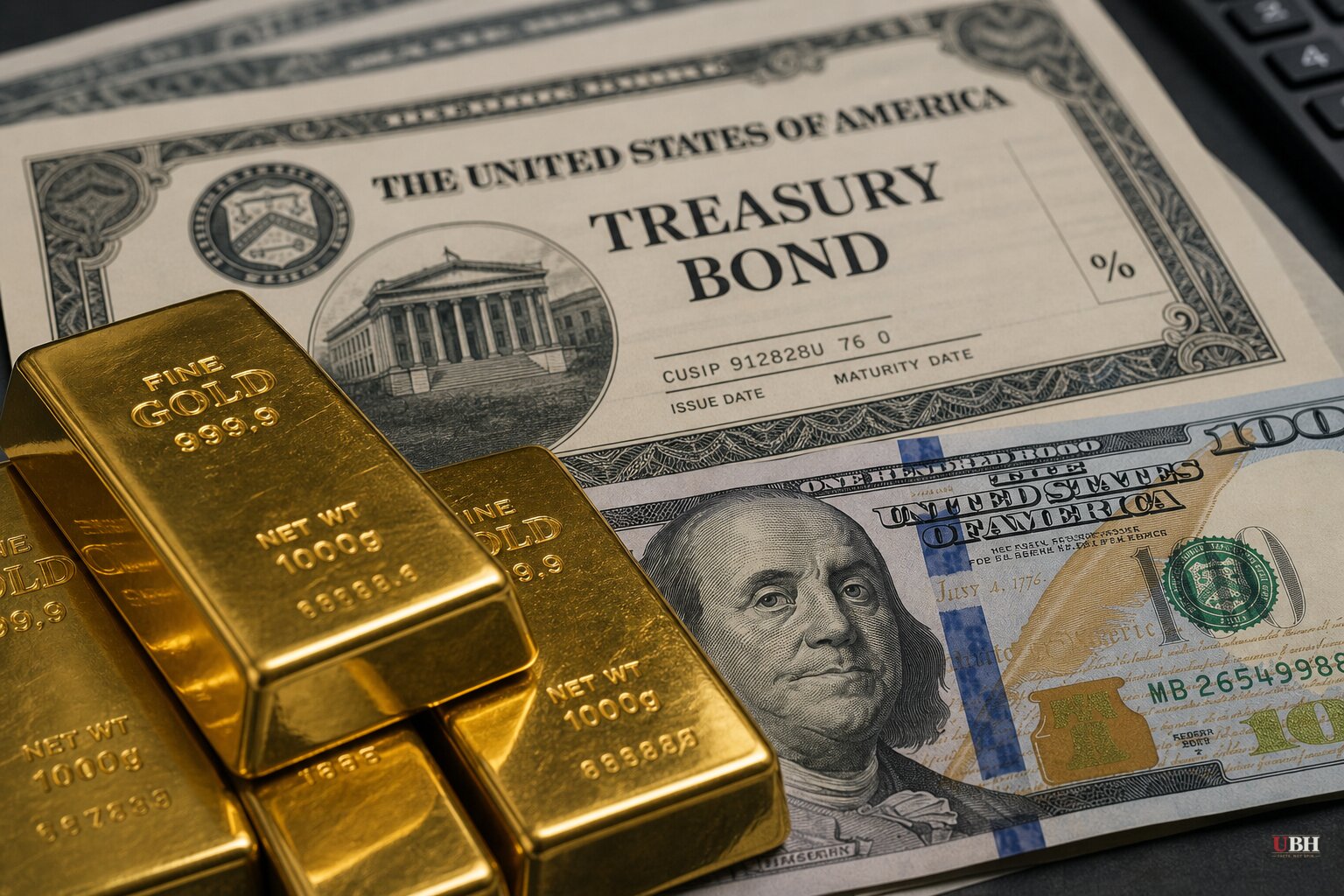
Since Treasury Secretary Scott Bessent announced Monday, August 24 that Washington was launching an "economic D-Day" against Iran, two separate financial stories have collided in the same news cycle, and traders are being careful not to mix them up.
Gold hit $4,697.70 on futures markets Monday and climbed further to an intraday high near $4,746.09 on Tuesday, according to econotimes, marking the metal's highest level since mid-May. Spot gold traded around $4,651 to $4,689 an ounce depending on the hour, according to The Guardian and econotimes. Gold is up roughly 15% for the month of August alone, putting it on track for its best monthly performance since September 1999, The Guardian reported.
Silver has followed, crossing $69 an ounce and briefly touching $70 for the first time since June, according to Forbes.
Two stories, one week, different causes
GoldSilver, in a same-day market note published August 24, made the point explicitly: gold is rising and oil is falling in reaction to the same Iran sanctions headline, which is the opposite of what a typical Middle East flashpoint produces. West Texas Intermediate crude fell about 1.6% to roughly $85.65 a barrel that day, and Brent slipped to near $93.09, even as Bessent was previewing what he called the "greatest financial offensive ever marshalled" against Tehran.
If the sanctions were expected to actually choke off Iranian oil supply, crude should have been climbing into the announcement, not falling. GoldSilver's analysis: traders are discounting how hard the sanctions will bite, or the market had already priced in a week of escalating threats. Bessent has pushed back on that read himself, saying last week, "I think oil markets are misinterpreting what this economic pressure means."
But GoldSilver and econotimes both point to a different, more mechanical explanation for gold's surge: the U.S. Treasury's decision, first announced roughly a week before August 24, to expand buybacks of long-dated government bonds. That move came after a run of weak bond auctions and was aimed at controlling long-term borrowing costs. It has pushed Treasury yields down and weakened the dollar, according to econotimes, and a weaker dollar makes gold cheaper for foreign buyers.
Ipek Ozkardeskaya, a senior analyst at Swissquote, told The Guardian that renewed gold demand reflects a "hedge against unclear US fiscal plans," a hedge against inflation amid "questions over the Fed's willingness, or ability, to fight inflation independently," and a hedge against AI-bubble worries. These represent distinct fiscal and monetary anxieties, none of which is primarily about Iran.
The Iran sanctions fight, separately
Bessent's Monday press conference did produce real news on its own terms. The Treasury sanctioned more than 60 targets and expanded sanctionable sectors to include digital assets, technology, gold, aviation and shipping, according to TIME. Bessent singled out Bank Melli, Iran's government-owned bank, saying every branch must be "shuttered and dark" or lose access to the U.S. dollar.
Iran's currency responded by cratering. The open-market rial hit a record low of 2.02 million to the dollar on Monday, TIME reported. Iran's foreign minister, Abbas Araghchi, called the U.S. "desperate," while Mohsen Rezaei, secretary of Iran's Supreme National Security Council, warned on state television August 22 that any country participating in economic restrictions against Iran "will be regarded as an enemy."
The real test, according to Newsweek and the Times of India, is whether Washington actually goes after China. China buys somewhere between 90% and over 95% of Iran's crude exports, per those two outlets, mostly through discounted "shadow fleet" purchases. China's Foreign Ministry spokesperson Lin Jian warned Tuesday that "economic war and maximum pressure will not solve the issue" and said Beijing "will take all necessary measures to firmly safeguard its rights and interests."
Both Newsweek and the Times of India report that the Trump administration has strong incentive to avoid a direct confrontation with Beijing right now. Chinese leader Xi Jinping is scheduled to make a state visit to the U.S. next month, his first in over a decade, and a $14 billion arms sale to Taiwan remains stalled, which Chinese officials have reportedly linked to not disrupting that summit. Bessent, according to the Times of India, has been notably evasive about whether secondary sanctions will actually target Chinese firms.
What's still unresolved
Nothing has been finalized on secondary sanctions against Iran's trading partners. Bessent said those could roll out "in a matter of weeks," per TIME, not immediately. Whether that includes penalties on Chinese refineries and shipping networks is the open question analysts across the political spectrum are watching, since it would determine whether the sanctions campaign has real teeth or is mostly rhetoric ahead of the Xi visit.
On the market side, investors are watching two scheduled events this week: the July Personal Consumption Expenditures inflation report due Wednesday, and a speech from Fed Chair Kevin Warsh at the Jackson Hole Symposium, expected Friday, according to Forbes. Both could move gold and bond yields sharply depending on what Warsh signals about the Fed's independence and rate path. CME Group's FedWatch tool, cited by Forbes, showed a 73.6% market-implied probability of a rate hike by the Fed's December meeting, a scenario that would typically weigh on gold prices if it materializes.
Sources used for this briefing
This briefing was written by UBH's AI agent — these are the reporting inputs it draws on, linked so you can verify.


