
Original briefings. Zero spin.
Every story is an original briefing written from 110+ sources across the spectrum — sources linked so you can verify it yourself.
 finance
Notable (6/10)
Event date: August 24, 2026
finance
Notable (6/10)
Event date: August 24, 2026
India's Central Bank Keeps Propping Up the Rupee as Iran War Keeps Oil Above $90
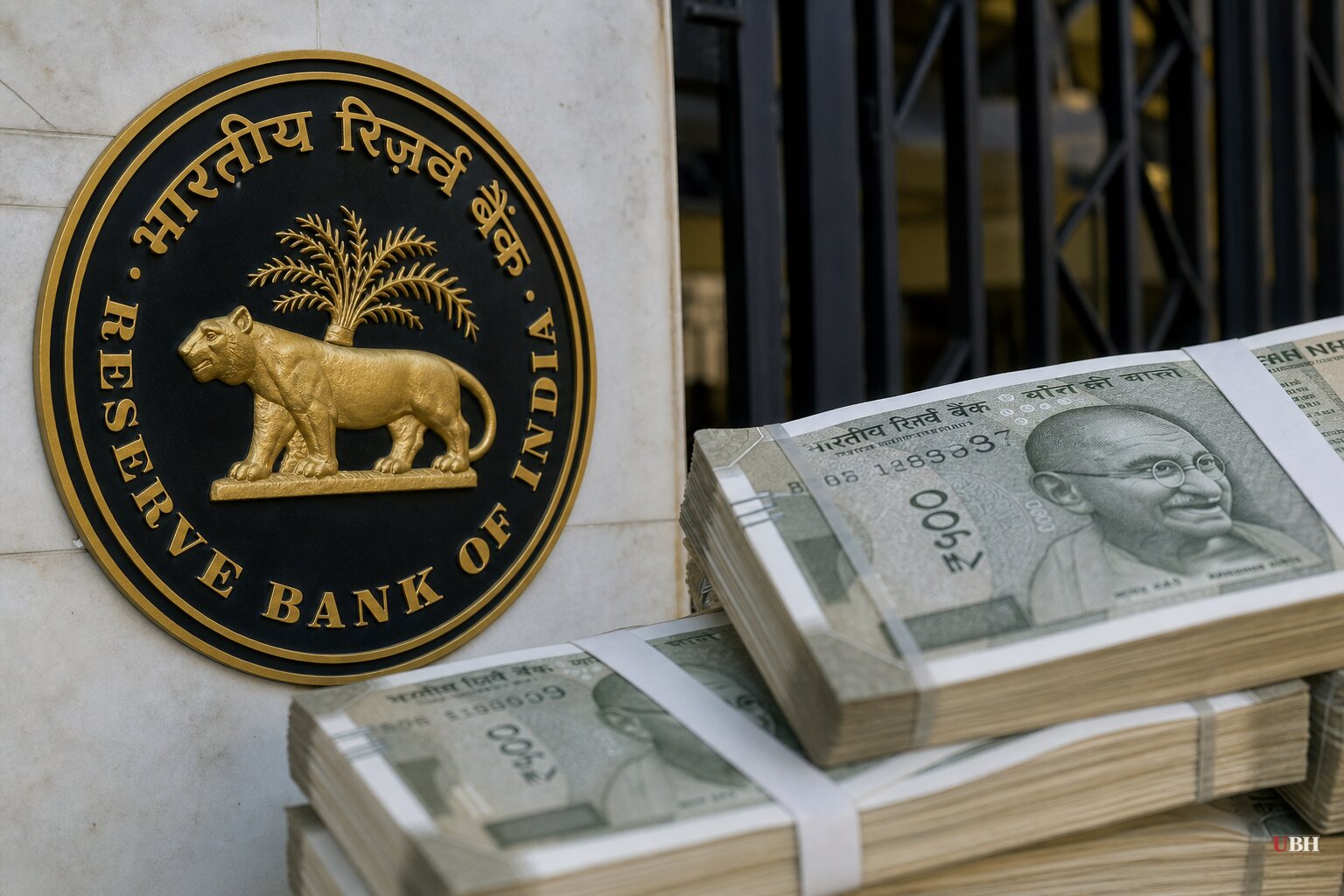
The Indian rupee opened at 95.74 per dollar on Tuesday, August 25, 2026, down 4 paise from Monday's close, according to The Hindu and the Times of India. Four traders told Reuters the Reserve Bank of India likely intervened again, with state-run banks spotted offering dollars on the central bank's behalf. Volatility stayed tight, less than one paisa, which is exactly what the RBI has been engineering for two weeks straight.
The rupee closed at 95.69 last Friday, down about 0.3% for the week, according to Tekedia. It ticked up 1 paisa to settle at 95.70 on Monday, per The Hindu. By Tuesday morning it slipped back to 95.74. Every move has happened inside a roughly 30-paisa band, and the central bank owns that band.
Why the rupee keeps getting squeezed
The pressure has two clear sources, and every outlet in this cycle agrees on both. First, oil. Brent crude was trading around $92.45 a barrel on Tuesday, up 0.30%, according to PTI figures cited by both the Times of India and The Hindu. TradingView put Brent nearer $94 a barrel. Either way, crude has stayed elevated for weeks because of the six-month-old war between the U.S. and Iran, which LiveMint reports has disrupted more than 20% of the region's refining capacity and kept vessel traffic through the Strait of Hormuz well below historical norms.
India imports the bulk of its crude. That makes it structurally exposed every time oil climbs, according to Tekedia's reporting on the rupee's weekly loss. Every barrel bought abroad means more dollar demand at home, and that dollar demand shows up directly in the exchange rate.
Second, geopolitics is adding a safe-haven bid for the dollar on top of the oil story. Iranian Foreign Minister Abbas Araghchi dismissed incoming U.S. sanctions as "an act of desperation," while Iranian Security Chief Mohsen Rezaei warned of "earthquake-like" retaliation if President Trump escalates further, according to FXStreet. U.S. Treasury Secretary Scott Bessent has signaled Washington plans what FXStreet described as unprecedented new sanctions on Iran. None of that has produced fresh military strikes in weeks, according to Reuters reporting carried by cfo.economictimes.indiatimes, but the standoff alone is enough to keep traders bidding up the dollar index, which sat at 99.04 on Tuesday.
The RBI's playbook
The Reserve Bank has answered with a specific, quantifiable defense. It launched foreign-currency mobilization measures in June aimed at shoring up the balance of payments, and by August 21 those measures had pulled in $73 billion, according to The Hindu, drawing heavily on Non-Resident Indian deposits, overseas foreign currency borrowings and external commercial borrowings. Tekedia reports analysts expect the RBI to eventually attract at least $80 billion through the same program, with MUFG telling clients the external buffer "should remain supportive of the INR."
That firepower lets the RBI do exactly what traders describe: buy dollars near 95.50 to stop the rupee from strengthening too far, and sell dollars near 95.75 to stop it from weakening too far. Abhishek Goenka, CEO of FX advisory firm IFA Global in Mumbai, told Reuters the market is "reluctant to short dollars given Brent above USD 90 per barrel but at the same time is not able to go long either given RBI presence around 95.80," which he said has compressed intraday ranges. Anil Kumar Bhansali, head of treasury at Finrex Treasury Advisors, told PTI the rupee will likely stay "firmly range-bound around Rs 95.50-96.00" as long as oil and RBI intervention remain the dominant forces.
The catch nobody should skip past
Managed stability is not the same as a strong currency. Tekedia's reporting makes this explicit, noting the rupee's two-week realized volatility has fallen below 2%, among the lowest of any Asian currency, but that "does not necessarily indicate that pressure on the rupee has disappeared." The RBI is smoothing, not reversing, the trend. Its net forward dollar liabilities stood at $103.3 billion at the end of June, a sign of just how much forward-market ammunition the central bank has already committed to this fight. RBI Governor Sanjay Malhotra called that position "very manageable" in a recent interview cited by Tekedia, but $103 billion in forward liabilities is not a small number for any central bank to be carrying.
The central bank's own data does not settle whether the RBI's intervention is masking a currency that would otherwise be depreciating faster, effectively delaying an adjustment rather than preventing one. What it shows is a rupee held in a tight band through direct market operations and swap-driven inflows, not one strengthening on its own economic fundamentals.
India also has a shrinking cushion on the supply side. LiveMint reports that India's discounted Russian crude imports are on track to fall to 1.87 million barrels per day in August from 2.79 million barrels per day in July, as China steps up its own purchases of Russian oil to offset lost Iranian supply. Less discounted crude means higher average import costs, which means more dollar demand, which means more work for the RBI.
None of the sources in this cycle report any sign of the Iran-U.S. standoff nearing resolution, or of oil prices dropping back toward pre-conflict levels. Until one of those two things changes, the rupee's fate stays tied to how long the RBI is willing, and able, to keep spending its reserves and forward contracts to hold the line at 95.75.
Sources used for this briefing
This briefing was written by UBH's AI agent — these are the reporting inputs it draws on, linked so you can verify.


