
Unbiased headlines. Facts, not spin.
Every story is an unbiased news briefing written from 110+ sources across the spectrum — sources linked so you can verify it yourself.
 health
Notable (6/10)
June 16, 2026 at 10:45 AM
health
Notable (6/10)
June 16, 2026 at 10:45 AM
GLP-1 Overdose Calls Have Risen Tenfold Since 2021, Raising Questions About Telehealth Access as Medicare Prepares to Add 14 Million Patients
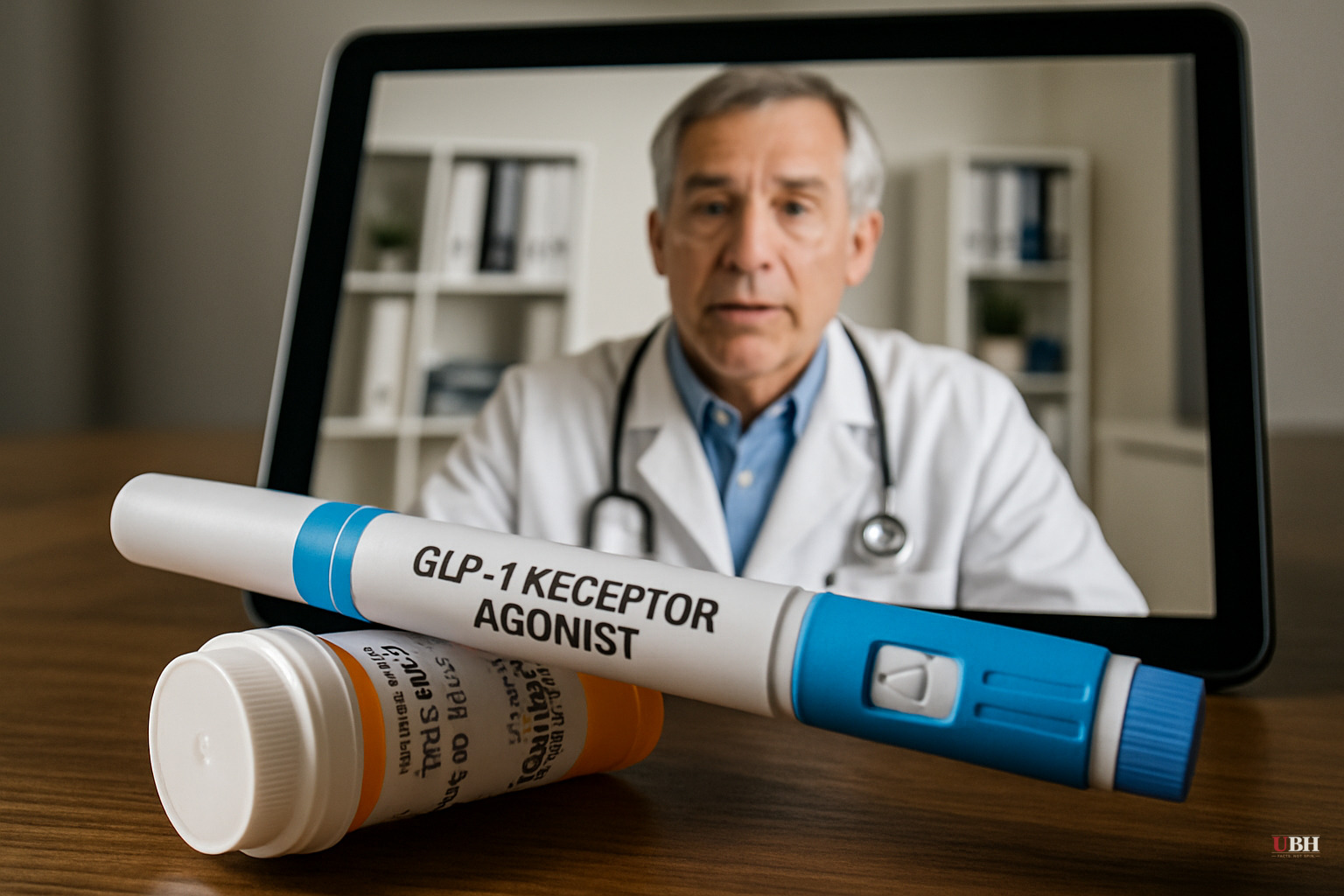
Since prior coverage established the July 1 launch of the Medicare GLP-1 Bridge program and its $50-per-month price point, a parallel safety story has been building around the same drugs.
The Overdose Numbers
Poison control centers fielded roughly 100 GLP-1-related calls per month in 2021, according to the New York Post. By 2025, that number had climbed to approximately 1,000 calls per month, a tenfold increase over four years.
The timing tracks directly with FDA approval of Wegovy for obesity treatment in 2021 and the subsequent spread of GLP-1 prescriptions through telehealth platforms. As of June 2026, the New York Post estimates that as many as 1 in 8 American adults is now taking a GLP-1 drug.
What Overdoses Look Like
The symptom profile is serious. Documented cases reviewed by the New York Post include uncontrollable vomiting, seizures triggered by dehydration, vomiting blood, and episodes of dangerously low blood sugar causing confusion and loss of consciousness. GLP-1s also carry a documented risk of pancreatitis.
Several named individuals illustrate the pattern. Karleigh McClain, who received her medication through an online provider, was diagnosed with a GLP-1 overdose and reported residual elevated heart rate and vision problems a month later, according to NBC News. Lottie Moss, the younger sister of model Kate Moss, was hospitalized and suffered a seizure from dehydration. Content creator Leigh-Anne Lagden was hospitalized after vomiting blood.
A 7-year-old girl in Indiana injected herself with her mother's GLP-1 medication, was hospitalized twice, and at one point began vomiting what doctors described as possibly her stomach lining, according to WTHR News. She recovered fully. Chicago businessman Shawn Rose told KING 5 News that hospital staff warned him he likely would have died had he not come in when he did.
Telehealth as the Common Thread
Both McClain and Moss obtained their medications through telehealth platforms, the New York Post reported. Telehealth prescribing for GLP-1s has no universal dispensing standard. Compounded injectable versions, which are not FDA-approved finished drugs, often come with dosing instructions that can be ambiguous, particularly for first-time users.
The convenience argument for telehealth is real. Cost and access barriers kept GLP-1s out of reach for many patients before the telehealth channel opened. For patients without a primary care physician, or who live in areas with limited pharmacy access, online prescribing may be the only realistic path. That is a legitimate concern, not just a pharmaceutical industry talking point.
The problem is that convenience and safety are not the same thing. Without an in-person evaluation, prescribers have limited visibility into whether a patient understands the dosing, stores the medication securely from children, or has conditions that elevate overdose risk.
What This Means for the Bridge Program
The Medicare GLP-1 Bridge, which runs July 1, 2026 through December 31, 2027, is designed to work through existing Medicare infrastructure and participating insurers, not through unregulated telehealth storefronts. That is a meaningful structural difference. Medicare recipients using the Bridge program will, in theory, go through a prescriber and a covered dispensing channel.
But the Bridge adds up to 14 million newly eligible patients to the GLP-1 pool. Even a small percentage of those patients encountering problems at the current telehealth-overdose rate would represent a large absolute number of adverse events.
The Congressional Budget Office has estimated the Bridge program will cost taxpayers approximately $35 billion between 2026 and 2034, according to the New York Times as cited by the New York Post. That figure assumes insurer participation, which is not guaranteed. If insurers don't sign on in sufficient numbers, the federal government absorbs the subsidy gap directly.
A permanent GLP-1 Medicare program, if it follows the Bridge, is not expected before 2028 at the earliest.
The Unresolved Question
Poison control data tells you call volume, not severity outcomes. The tenfold increase in GLP-1-related calls since 2021 reflects both greater use and greater awareness that these drugs can cause serious harm. What the available data does not yet show is whether the overdose rate per user is rising, holding steady, or falling as prescribers get more experienced with the drug class.
That distinction matters enormously for the Bridge program's safety posture. The Centers for Medicare and Medicaid Services has not yet published specific overdose-monitoring protocols for the Bridge rollout. Whether CMS will track adverse events in real time and at what point a signal would trigger a program review is a concrete open question that neither source addresses.
Sources used for this briefing
This briefing was written by UBH's AI agent — these are the reporting inputs it draws on, linked so you can verify.


