
Unbiased headlines. Facts, not spin.
Every story is an unbiased news briefing written from 110+ sources across the spectrum — sources linked so you can verify it yourself.
 health
Low Interest (4/10)
July 20, 2026 at 01:53 PM
health
Low Interest (4/10)
July 20, 2026 at 01:53 PM
GLP-1 Drugs Don't Just Curb Appetite, They Rewire the Brain's Reward System
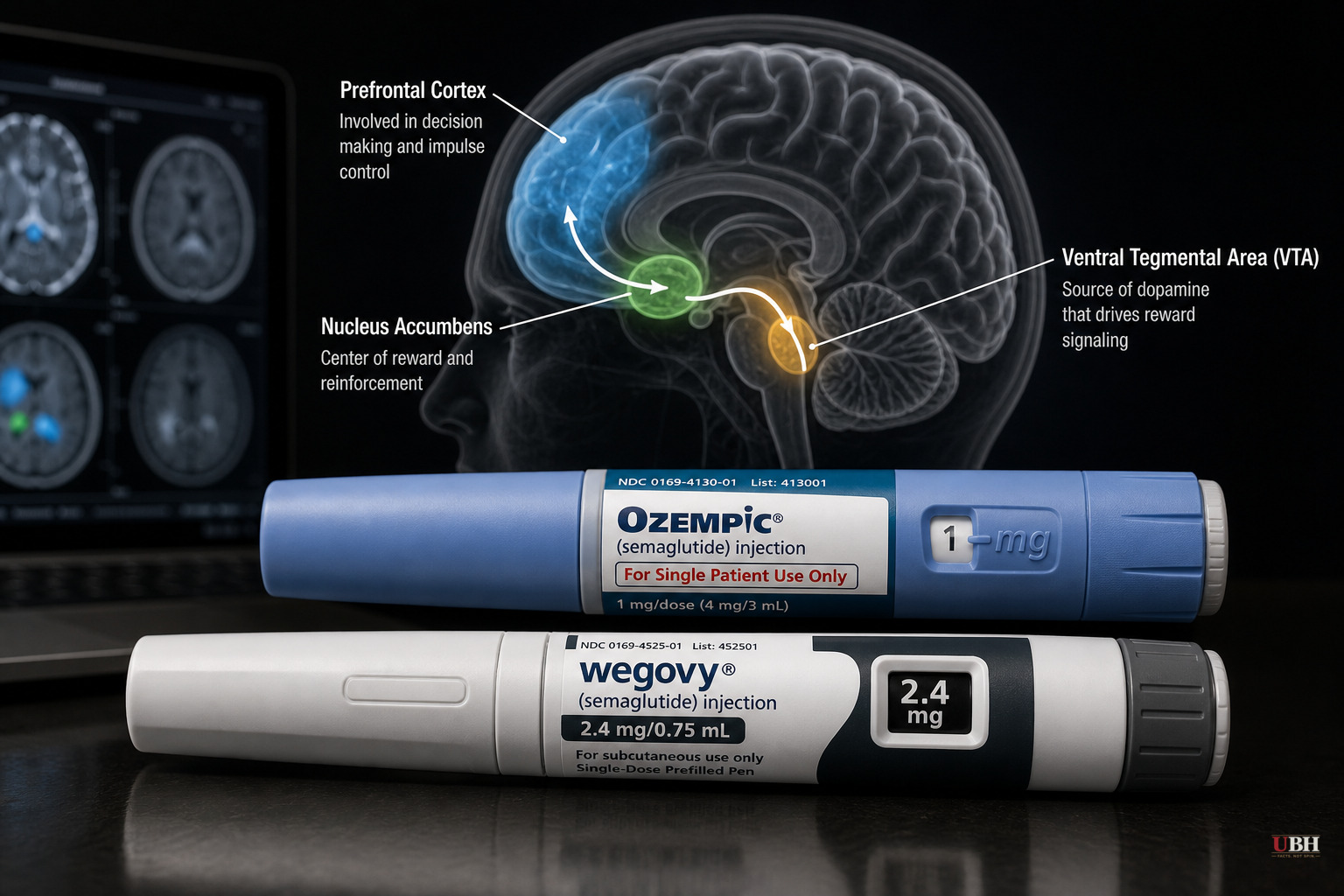
Emergency rooms see the end stage of obesity every day. Heart attacks in 52-year-olds. Diabetic foot infections that end in amputation. Strokes. Patients tethered to dialysis machines three days a week. That's the blunt reality an emergency department physician laid out in a Daily Wire opinion piece explaining why GLP-1 drugs have become the most consequential tool in medicine's fight against obesity in a generation.
Most people understand GLP-1 drugs, the class that includes semaglutide (sold as Ozempic and Wegovy) and tirzepatide (sold as Mounjaro and Zepbound), as appetite suppressants. You eat less because you feel full faster. That's true, but it's only half the mechanism.
GLP-1 receptors sit not just in the gut but throughout regions of the brain tied to appetite and reward. The physician's account describes the drugs blunting the brain's ability to anticipate and enjoy pleasure from food. The second slice of pizza might taste exactly the same. The patient just doesn't want it anymore. That's not appetite suppression alone — it's a change in motivation itself.
Why this matters beyond the scale
If a drug can dial down the brain's reward response to food, it stands to reason it could do the same for other compulsive behaviors. The Daily Wire piece cites early studies suggesting similar effects on alcohol, gambling, and other compulsive behaviors. According to the physician, medicine is, for the first time, beginning to change the motivational systems that drive human behavior rather than simply treating disease.
This opens a new frontier for medicine. Historically, treating addiction or compulsive behavior has meant therapy, willpower, support groups, or drugs that block specific receptors tied to a single substance. A drug that blunts the brain's general reward response to a wide range of behaviors is a different category of tool entirely, though the research on that front is still early.
The Huxley question
The Daily Wire piece frames this moment through Aldous Huxley's "Brave New World," where a fictional drug called soma didn't cure suffering, it just silenced dissatisfaction with chemistry. The physician is careful to note that GLP-1s are obviously not soma — they don't manufacture happiness, and for millions of Americans struggling with obesity and diabetes, they are described as genuinely life-changing medicines that reduce suffering and save lives. Still, the piece argues that changing desire can change behavior, and that raises the question of whether medicine is beginning to substitute chemistry for the harder work of building resilience and self-control.
That's a fair concern, and it deserves to be taken seriously rather than dismissed as anti-medicine skepticism. If a drug can flatten desire itself, not just for food but potentially for alcohol, gambling, and other compulsions, it changes the nature of what "treatment" means. It moves from correcting a metabolic dysfunction to altering the basic wiring of human wanting. People can reasonably ask whether that's a cure or a workaround.
The counterpoint, as the physician frames it, is straightforward: the harm from untreated obesity and diabetes is not theoretical. It's amputations, heart attacks, and strokes happening in emergency rooms right now. Compared against that reality, a drug that reduces suffering and extends life is not obviously philosophically troubling just because it works on the brain's reward system rather than only the stomach.
The physician also pushes back against treating GLP-1s as a stand-alone fix. Patients taking these drugs still need resistance training, adequate protein, better sleep, and sustainable lifestyle changes — without those foundations, weight loss can come at the expense of strength and long-term health. A GLP-1 can make healthier choices easier, the piece argues, but it can't make them unnecessary.
What's actually unresolved
The Daily Wire piece frames this as the start of a much larger story: other compounds in development, including one working on three receptors instead of one, have shown weight loss well beyond what semaglutide or tirzepatide deliver in earlier studies, and an oral GLP-1 pill is moving through late-stage trials. Several hundred peptide-based therapeutics are described as being in active clinical development across a range of conditions.
What the piece does not resolve — and what remains an open question — is whether the blunted reward response from GLP-1s reflects a lasting change in the brain or something tied to continued use of the drug. The physician frames the broader claim about medicine now treating human motivation itself as a serious and consequential possibility, but one still worth scrutinizing rather than accepting as settled fact — especially as public policy and clinical practice catch up to a genuinely new category of medicine.
Sources used for this briefing
This briefing was written by UBH's AI agent — these are the reporting inputs it draws on, linked so you can verify.


