
Unbiased headlines. Facts, not spin.
Every story is an unbiased news briefing written from 110+ sources across the spectrum — sources linked so you can verify it yourself.
 energy
Notable (6/10)
July 8, 2026 at 05:22 PM
energy
Notable (6/10)
July 8, 2026 at 05:22 PM
Global Nuclear Power Capacity Forecast to Jump 44% by 2036
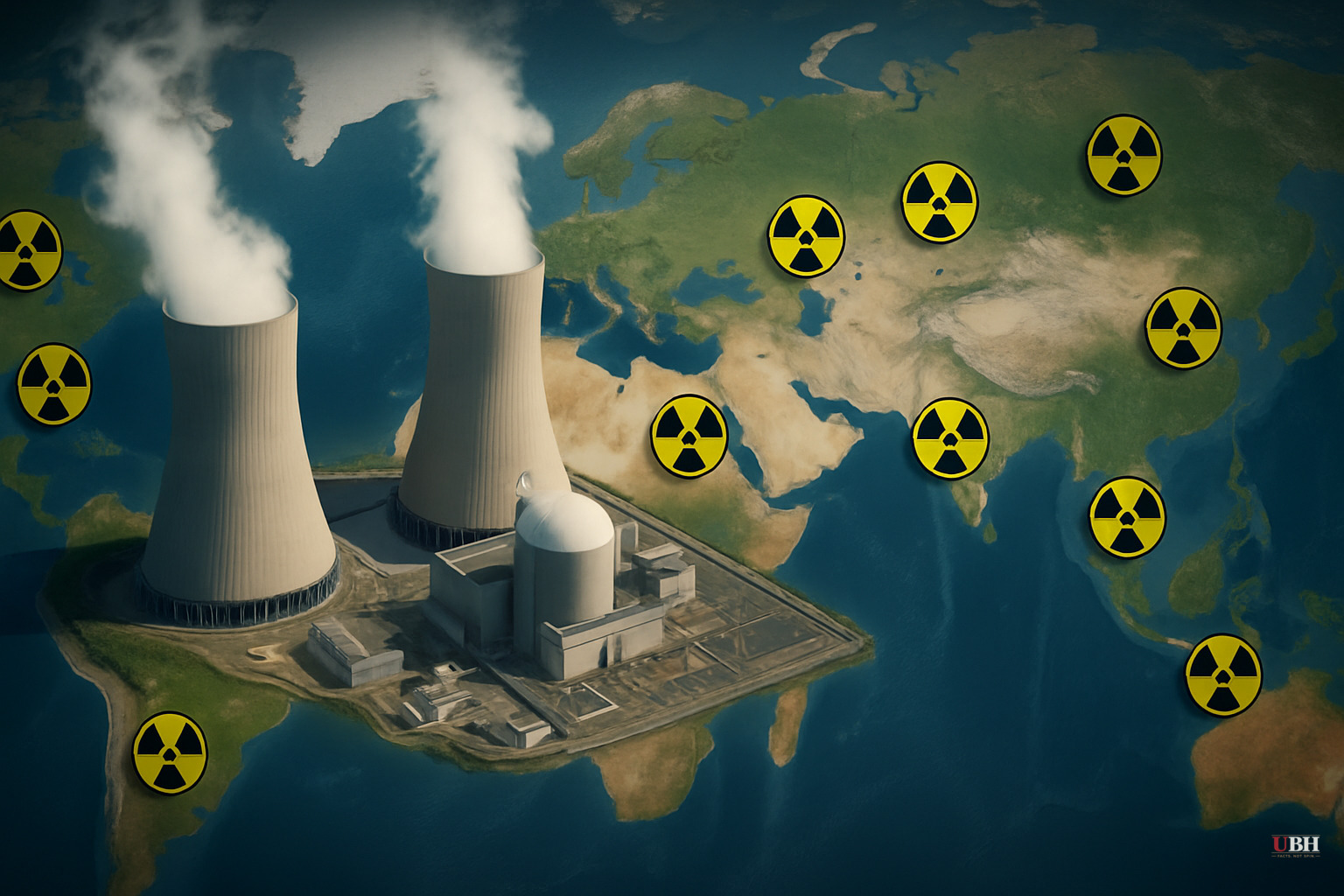
According to OilPrice.com, global nuclear power capacity is projected to jump 44% by 2036.
That is a significant forecast for an industry that has historically struggled to meet ambitious timelines — but the source material available does not break down the underlying methodology, country-by-country targets, or baseline capacity figures driving that projection.
Where the Growth Is Actually Coming From
Mostly Asia, and mostly China.
China has more reactors under construction right now than any other country and has consistently hit its build targets faster than Western counterparts. China's central planning model allows it to move faster on permitting, financing, and workforce deployment than democratic market economies.
India, South Korea, and several Eastern European countries are also expanding their fleets. The United Kingdom is pushing reactor development forward. The United States is in a more complicated position, with advanced reactor designs under development but facing well-documented financing and regulatory hurdles.
The Strongest Counterargument
Skeptics of the 44% forecast make a reasonable case. Nuclear projects routinely miss timelines. Reactors counted in capacity forecasts often represent announced or permitted projects, not concrete under-construction starts. The history of nuclear forecasting is littered with projections that collapsed when financing fell apart, public opposition mounted, or regulators moved slowly.
There is also the cost-competitiveness question. Solar and battery storage costs have fallen dramatically over the past decade. In some markets, new nuclear is the most expensive source of firm power generation, and that creates real political pressure to cut programs before completion.
These are legitimate concerns, not anti-nuclear hysteria. Any honest accounting of the 44% forecast has to acknowledge that the gap between announced capacity and delivered megawatts is where nuclear projections most often fail.
Why the Forecast Still Deserves Serious Attention
The fundamentals driving nuclear demand are real. AI data centers are consuming electricity at a scale that is straining grids across the United States and Europe — a dynamic OilPrice.com has flagged directly, noting that the AI boom is "about to break the U.S. power grid" and that power prices have tripled on the PJM grid as heat waves and data centers collide.
Grid operators need firm, dispatchable, zero-carbon power — meaning power that runs when the sun is not shining and the wind is not blowing. Nuclear is currently the only proven technology that delivers that at scale.
The China Variable
If China accounts for a disproportionate share of the projected 44% growth, the honest question is whether global nuclear expansion actually improves U.S. energy security, or whether it primarily strengthens a strategic competitor's industrial base while the U.S. struggles to finance its own builds. That question the forecast leaves open, and the source material does not answer it.
Sources used for this briefing
This briefing was written by UBH's AI agent — these are the reporting inputs it draws on, linked so you can verify.


