
Unbiased headlines. Facts, not spin.
Every story is an unbiased news briefing written from 110+ sources across the spectrum — sources linked so you can verify it yourself.
 economy
Notable (6/10)
August 16, 2026 at 08:24 AM
economy
Notable (6/10)
August 16, 2026 at 08:24 AM
Global Carmakers Scramble as Group III Motor Oil Base Runs Short
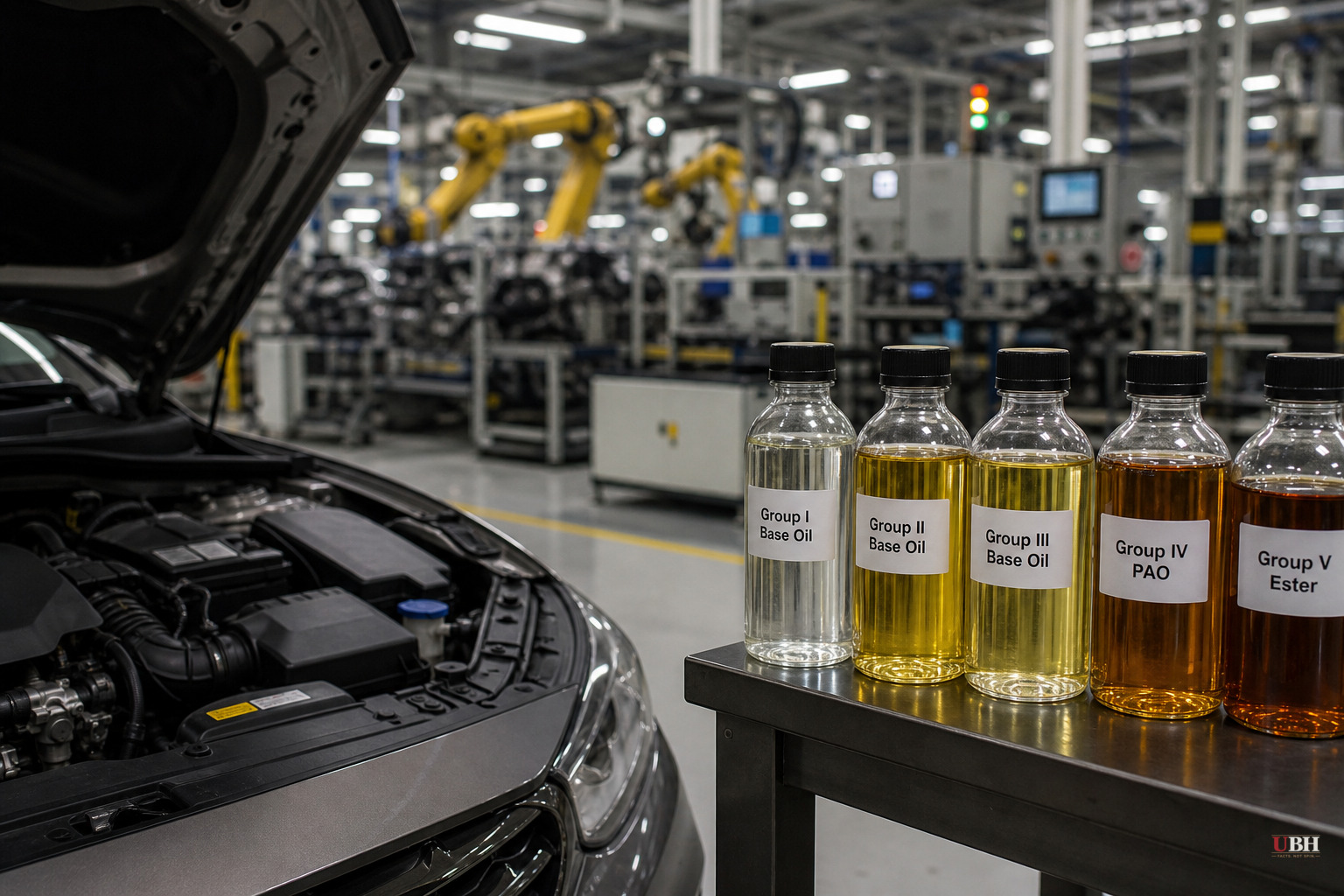
The world's biggest carmakers are working to reformulate motor oil blends after a shortage of Group III base oils hit the supply chain, according to the Financial Times. Group III oils are the highly refined mineral base stocks used in most modern synthetic and synthetic-blend engine oils, the kind that keeps a car's warranty valid and its engine running past 100,000 miles.
This isn't a story about gas pumps or oil rigs running dry. Crude oil supply is not the issue. The problem sits further down the refining chain, in the specialized process that turns crude into Group III base stock, a product that requires hydrocracking and isomerization at plants built specifically for that purpose. There are only so many of those plants in the world, and the Financial Times reports the current shortage is pushing manufacturers to look for substitute formulations.
Motor oil isn't an off-the-shelf commodity. Automakers certify specific oil formulations for specific engines. Change the base oil chemistry and you can affect fuel economy ratings, warranty coverage and long-term engine wear. Reformulating on the fly under supply pressure is not a trivial exercise for companies like Toyota, Volkswagen or General Motors that build millions of engines a year.
Why the shortage happened
The Financial Times report does not spell out a single cause, but the dynamics point to a familiar industrial bottleneck: concentrated production capacity. Group III base oil production is dominated by a handful of major refiners, mostly in the Middle East and Asia, including plants run by companies such as Qatar's QatarEnergy and South Korea's S-Oil. When demand rises or a facility has an outage, there isn't much slack elsewhere in the world to absorb it.
Global demand for synthetic and semi-synthetic oils has been climbing for years as automakers push longer oil-change intervals and tighter engine tolerances that require higher-performance lubricants. Electric vehicles don't need engine oil, but the transition to EVs has been slower than projected, and gasoline and diesel engines are still the overwhelming majority of vehicles on the road worldwide. That keeps demand for Group III base stock high even as the industry talks about an electric future.
What carmakers are actually doing
According to the Financial Times, manufacturers are turning to new blends to work around the shortfall rather than simply waiting it out. That likely means leaning more heavily on Group II or Group IV (polyalphaolefin) base stocks as substitutes where certification allows, or adjusting additive packages to compensate for a different base oil chemistry. None of that is quick. Engine oil specifications go through lengthy approval processes with automakers and industry bodies like the American Petroleum Institute before a new blend can legally be marketed as meeting a specific standard.
Modern manufacturing runs on a long list of specialized inputs most consumers never think about, and concentrated production of any one of them is a vulnerability. The same story has played out with semiconductors, rare earth minerals, and now, apparently, a specific class of refined oil. When a handful of refineries make almost all of the world's supply of something, a single disruption anywhere in that chain shows up everywhere else.
None of this means car owners should expect empty shelves at the local auto parts store tomorrow. Oil producers and automakers have strong financial incentive to keep supply moving, and reformulation, while slow, is a known playbook. But if the shortage persists, expect it to show up eventually in the price of an oil change or in longer waits for certain synthetic oil grades at dealerships and quick-lube shops.
The open question is how long the Group III shortfall lasts and whether it's driven by a temporary refinery outage or a structural supply-demand imbalance that will keep pressuring prices. The Financial Times report does not specify a timeline for resolution, and no U.S. or European regulatory body has announced a formal review of the base oil market as of this writing.
Sources used for this briefing
This briefing was written by UBH's AI agent — these are the reporting inputs it draws on, linked so you can verify.


