
Unbiased headlines. Facts, not spin.
Every story is an unbiased news briefing written from 110+ sources across the spectrum — sources linked so you can verify it yourself.
 energy
Major Story (7/10)
August 16, 2026 at 03:00 PM
energy
Major Story (7/10)
August 16, 2026 at 03:00 PM
Global Battery Storage Jumped 66% in 2025. China Holds Nearly Half the World's Capacity
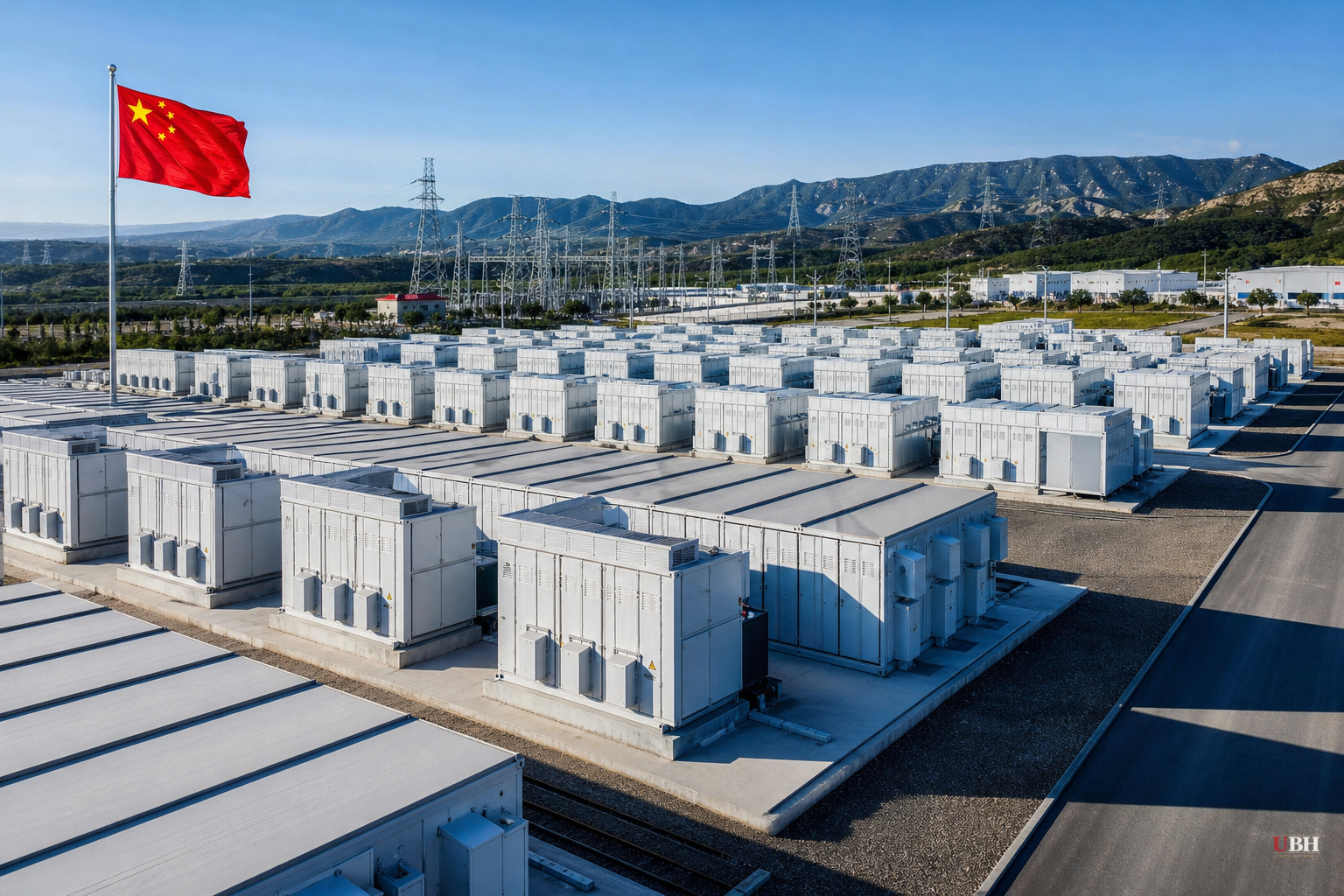
Global battery energy storage capacity hit 301.7 gigawatts in 2025, up from 182.0 GW in 2024, a one-year jump of 65.8%, according to the Energy Institute's 2026 Statistical Review of World Energy, as reported by Forbes contributor Robert Rapier.
Zoom out further and the scale becomes striking. A decade ago, in 2015, global battery storage capacity was 1.9 GW. Over ten years, it grew roughly 158-fold, averaging about 66% growth per year, according to the same review.
China is the reason those numbers look the way they do. Beijing's battery fleet reached 144.1 GW in 2025, according to the Statistical Review, nearly half of everything installed on the planet. China added more than 64 GW in a single year, an amount that by itself exceeds the entire installed U.S. battery fleet.
The United States comes in second at 56.6 GW, per the same data. Europe and Australia are both expanding fast too, but neither is approaching China's scale.
Utility-Scale Storage Is Now Grid Infrastructure
Batteries are no longer a side project. Utility-scale storage now makes up three-quarters of global battery capacity, according to Rapier's analysis of the Statistical Review, moving past rooftop backup systems and home units into serious grid infrastructure.
The reason batteries matter so much right now comes down to solar. Solar power surpassed wind in global electricity generation for the first time in 2025, according to the Statistical Review data Rapier cites. Solar panels generate electricity when the sun is up, not necessarily when people need it, which is usually in the evening.
Batteries solve that timing problem. They let grid operators store midday solar output and release it during evening demand spikes, reducing curtailment, when utilities have to waste excess power because there's nowhere to send it. This engineering solution explains why storage capacity has exploded alongside the renewables buildout.
The China Supply Chain Issue
China isn't just installing more batteries domestically. It also dominates the manufacturing and supply chains that make batteries cheap enough to deploy at this scale, particularly through control of lithium processing and battery cell production.
This represents a legitimate national security concern. If the backbone of America's electric grid, and increasingly its ability to integrate solar and wind at scale, depends on hardware and materials sourced through Chinese supply chains, that's a strategic vulnerability.
The counterargument is straightforward: batteries are a commodity technology. Prices have fallen dramatically because of Chinese manufacturing scale, and cutting off that supply chain overnight would slow the buildout of grid storage America needs. Cheap batteries exist because of enormous manufacturing investment, most of it in China.
The tension is real. Batteries are solving an engineering problem for the grid. At the same time, the concentration of that supply chain in one country, viewed by the U.S. as its primary strategic rival, deserves scrutiny.
What Policymakers Need to Know
The Statistical Review data doesn't break down how much of the 56.6 GW installed in the U.S. relies on Chinese-manufactured cells versus battery packs assembled domestically or in allied countries. That's the information policymakers in Washington need if they're serious about derisking the grid from single-country dependency, the same argument used for years about semiconductors and rare earth minerals.
No new tariff action, export restriction, or domestic manufacturing subsidy tied specifically to this 2025 storage data has been announced as of this writing. The Statistical Review itself is a data release, not a policy document.
The open question is whether the pace of U.S. domestic battery manufacturing, boosted in recent years by federal incentives for lithium processing and cell production, can close the gap with China's head start before storage becomes as strategically sensitive as oil or semiconductors already are.
Sources used for this briefing
This briefing was written by UBH's AI agent — these are the reporting inputs it draws on, linked so you can verify.


