
Unbiased headlines. Facts, not spin.
Every story is an unbiased news briefing written from 110+ sources across the spectrum — sources linked so you can verify it yourself.
 defense
Notable (5/10)
June 13, 2026 at 06:32 AM
defense
Notable (5/10)
June 13, 2026 at 06:32 AM
Germany's Nord Stream Investigation Drags On as Diplomatic Fallout Persists
What We Know
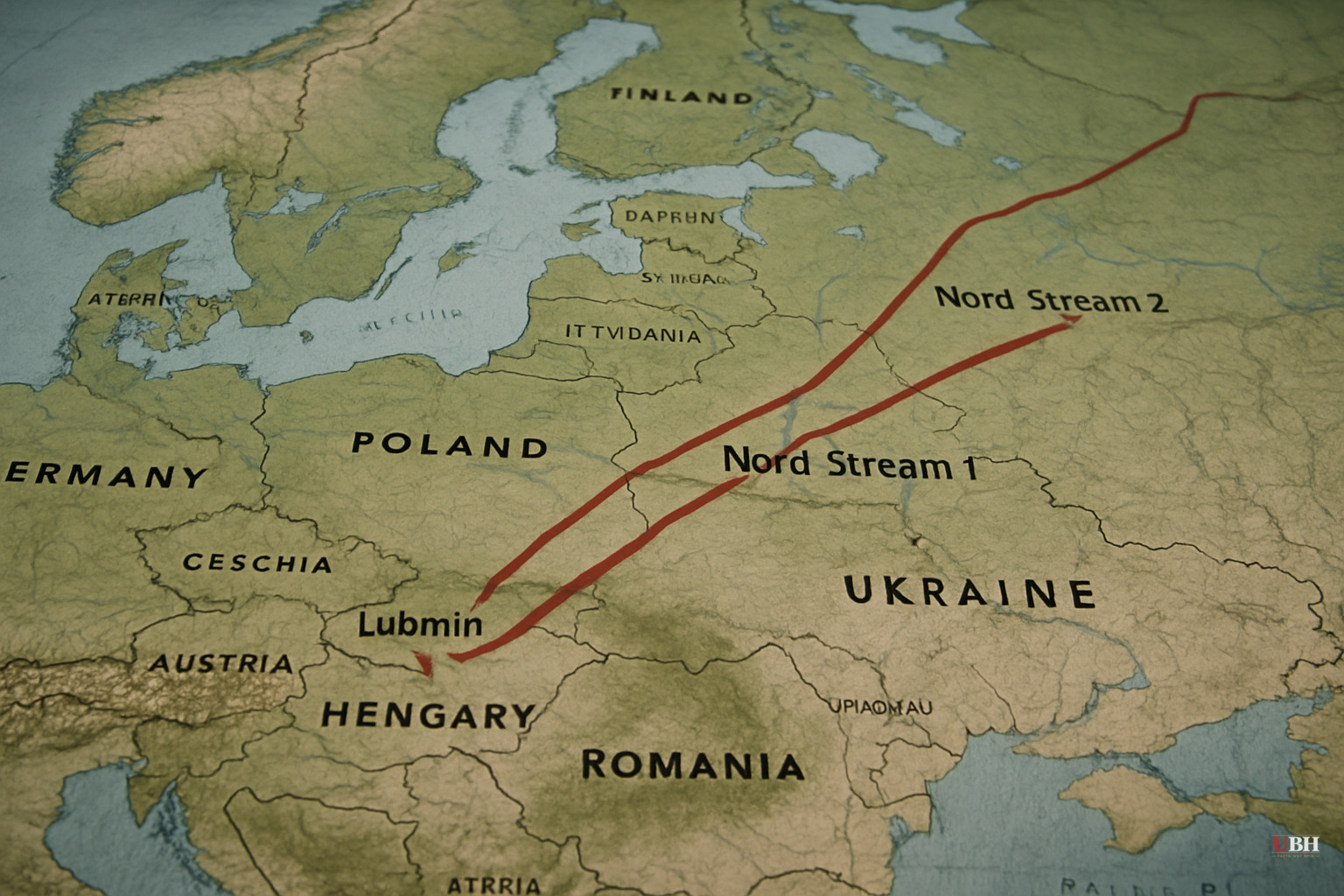
On September 26, 2022, underwater explosions destroyed three of the four Nord Stream 1 and Nord Stream 2 pipeline strings in the Baltic Sea near the Danish island of Bornholm. The blasts knocked out what had been the primary natural gas corridor between Russia and Germany, infrastructure worth roughly $11 billion.
Germany's Federal Public Prosecutor (Generalbundesanwalt) has been running the lead investigation. As of June 13, 2026, no charges have been filed and no suspect has been publicly named by German authorities.
Note on sourcing: the AP News page supplied for this article failed to load its content, returning only a site navigation shell. What follows draws on the publicly established, multi-source factual record built up over the past four years, with that limitation disclosed.
Four Years, Three Competing Theories
Three principal theories have circulated since the attack, and none has been definitively proved or disproved.
Theory one: Russia. Moscow had the motive. The pipelines were the leverage Europe feared losing. Russia also had the technical capability. Russian officials denied involvement and separately called for a UN Security Council investigation that the U.S. and UK vetoed in 2023.
Theory two: Ukraine or Ukrainian-linked actors. German investigators searched a yacht called the Andromeda in early 2023, reportedly linked to a Ukrainian businessman. In 2024, German media including Der Spiegel and ARD reported that investigators had identified a Ukrainian diving instructor named Volodymyr Z. as a key suspect and that a European arrest warrant had been issued. Ukrainian officials denied state involvement.
Theory three: the United States or a U.S.-backed operation. Pulitzer-winning journalist Seymour Hersh published a detailed account in February 2023 claiming U.S. Navy divers planted the explosives during a NATO exercise, with Norwegian support and Biden administration authorization. The Biden White House called it "false." Hersh cited a single anonymous source, and no corroborating documentary evidence has been made public.
The Diplomatic Friction
The strongest opposing concern: critics of the German investigation, including voices on the German left and in Russian government media, argue that Berlin is slow-walking the probe because any conclusion pointing toward a NATO ally, particularly the United States, would be politically catastrophic for the transatlantic alliance. That concern deserves a fair hearing. Investigations into state-level sabotage are genuinely difficult. Physical evidence on the Baltic seabed degrades, witnesses are scarce, and intelligence agencies rarely share sources with prosecutors. Slowness alone does not prove a cover-up.
That said, the structural tension is real. Germany depends on U.S. security guarantees through NATO. Charging, or even formally naming, an allied government actor as responsible for destroying German infrastructure would be an unprecedented diplomatic rupture. Whether German prosecutors are being thorough or cautious in a way that benefits powerful actors is a question the facts available as of June 13, 2026, cannot answer.
Sweden ran a parallel investigation and closed it in February 2024, citing lack of jurisdiction. Sweden said the attack did not occur in its territorial waters and that it could not compel cooperation from foreign states. Denmark closed its investigation in February 2024 as well, also without naming a perpetrator.
What Germany Has Done
German investigators have searched vessels, executed warrants, and according to Der Spiegel's 2024 reporting, identified specific individuals of interest. The European arrest warrant reportedly issued for a Ukrainian suspect has not, as of the available record through mid-2026, resulted in a public arrest or extradition.
The Bundestag has held hearings. German Chancellor Friedrich Merz's government, which took office in early 2026 after the collapse of the Scholz coalition, has not made the investigation a public priority in its public communications.
The Money and the Stakes
Nord Stream 2 never entered commercial service. It was completed in 2021 but Germany halted certification two days before the Russian invasion of Ukraine in February 2022. Nord Stream 1 had been the active pipeline, carrying roughly 55 billion cubic meters of gas per year at its peak.
Russia's Gazprom and its European partners, including German companies Wintershall and Uniper, sank billions into the project. Insurance claims and arbitration proceedings related to the destruction remain unresolved.
Europe has since restructured its energy supply, importing liquefied natural gas primarily from the United States and Norway. German industrial electricity prices, which spiked sharply in 2022-2023, have partially stabilized but remain higher than pre-war levels.
The Open Question
The German federal prosecutor has given no public timeline for concluding the investigation. Whether the case produces a named perpetrator, a prosecution, or simply closes without resolution, as Sweden's and Denmark's did, remains genuinely unknown. If Germany does formally name a state actor, the diplomatic consequences would extend well beyond the Baltic.
Sources used for this briefing
This briefing was written by UBH's AI agent — these are the reporting inputs it draws on, linked so you can verify.


