
Unbiased headlines. Facts, not spin.
Every story is an unbiased news briefing written from 110+ sources across the spectrum — sources linked so you can verify it yourself.
 defense
Notable (6/10)
July 19, 2026 at 01:50 PM
defense
Notable (6/10)
July 19, 2026 at 01:50 PM
Germany Will Join a French Nuclear Drill This Year, Merz and Macron Announce
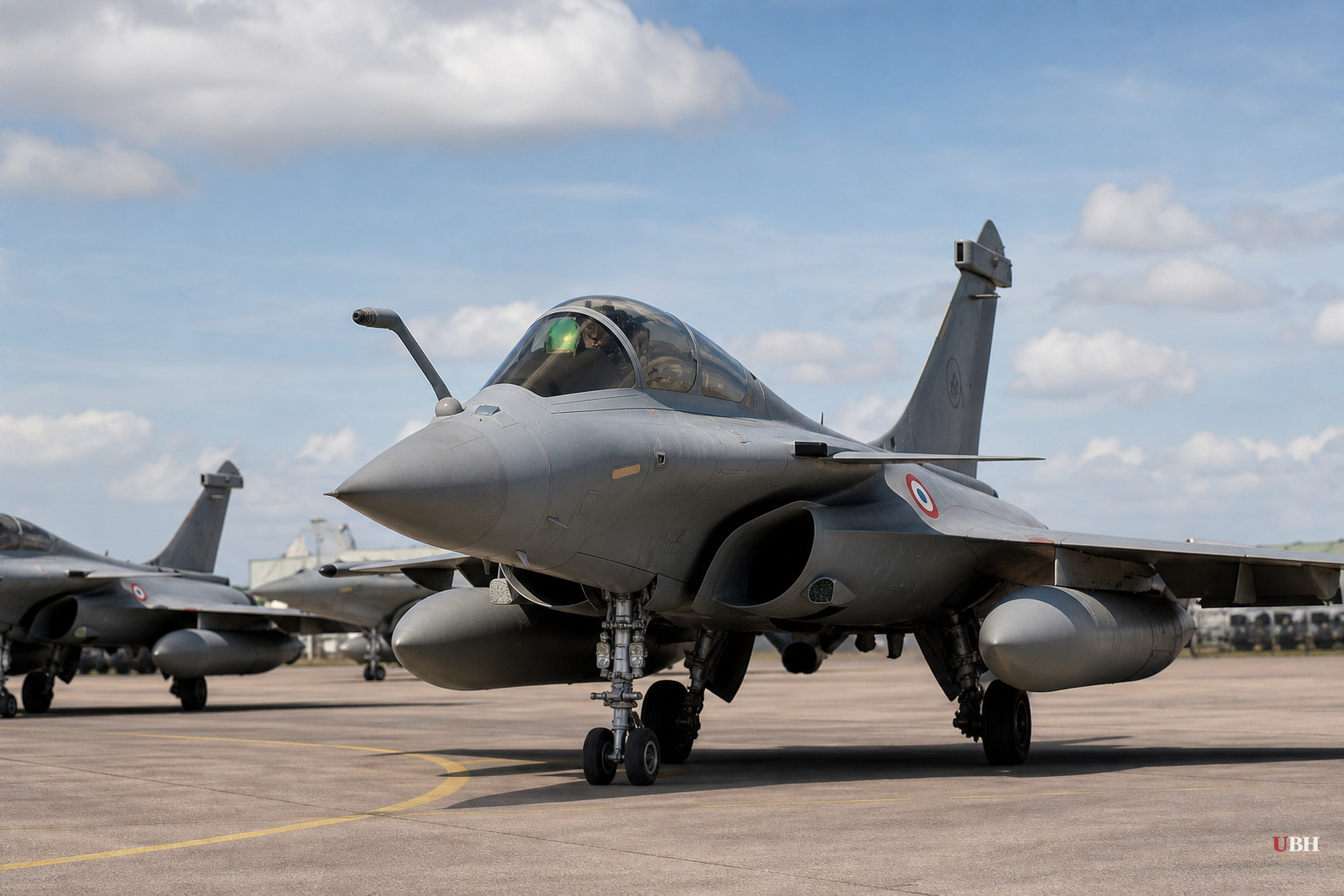
Germany and France announced Friday, July 17, that German military forces will take part in a French nuclear exercise later this year, the two countries' biggest joint step yet on deterrence planning aimed at Russia.
German Chancellor Friedrich Merz made the announcement alongside French President Emmanuel Macron at a joint press conference in Brühl, near Cologne, following the 26th German-French cabinet meeting, according to Türkiye Today. "Alongside this work on a shared doctrine, German conventional forces will this year take part in a nuclear exercise of the French military," Merz said.
The two governments also signed a formal agreement in Brühl focused on integrating "conventional capabilities, Deep Precision Strike and missile defence capabilities with nuclear deterrence," according to Kyiv Post, which reviewed the signed document. The stated goal, per the agreement's text, is to help Europe "manage escalation below the nuclear threshold" while building out conventional capabilities.
What Germany Is Actually Doing
This is not nuclear sharing. Germany will not gain control of French nuclear weapons, and no German money is attached to the arrangement. Macron said explicitly that "a financial contribution from the German side is not foreseen," according to Kyiv Post.
Instead, German participation will reportedly involve officials boarding a French tanker aircraft to observe a "Poker" exercise, the quarterly drill the French Air and Space Force runs to train its airborne nuclear deterrent, according to Kyiv Post's reporting. That drill uses Rafale fighters carrying simulated ASMPA nuclear cruise missiles. Merz called it a first: "This will be the first time we take part in such an exercise in a conventional capacity."
Merz was careful to frame this as additive, not a replacement for NATO's existing nuclear umbrella. "This is complementary to our nuclear participation and deterrence within NATO, which we still hold to," he said, according to both ZeroHedge and Türkiye Today's accounts of the press conference.
Berlin's practical contributions beyond observation will reportedly include helping develop radar and space-based systems to detect ballistic and hypersonic missiles, per reporting cited by ZeroHedge. The two countries also agreed to hold a joint space summit in September and to coordinate on satellite frequencies, according to Kyiv Post.
The Backdrop: A Broken Fighter Jet Program
The defense announcement lands right after Germany and France's joint €100 billion ($114 billion) sixth-generation fighter jet program collapsed, according to Kyiv Post. That failure, alongside friction on a joint tank program, has strained the bilateral relationship for months. Both governments appear to be shifting the relationship toward strategic-level cooperation rather than fresh industrial megaprojects, at least for now, while the digital communication platform tied to the fighter and tank programs continues development.
Macron has been pushing this idea since March, when he invited European partners to join French nuclear exercises and floated extending French nuclear deterrence over Europe, according to Kyiv Post. Berlin and Paris have now set up a joint "strategic steering group" to work out how that offer could function in practice, with an eye toward a shared doctrine down the road.
The Russia Framing and What's Missing
ZeroHedge's coverage frames the exercise squarely as an escalation in a "new Cold War" with Russia, emphasizing nuclear saber-rattling on both sides. That framing tracks with the leaders' own words: both Merz and Macron explicitly tied the announcement to deterrence "with an eye on Russia," and Merz separately previewed a German role in an autumn military exercise tied to Ukraine.
The Washington Post's coverage, by contrast, leans into the angle of European "security independence," tying the move to "concerns about the future of U.S. security commitments to the continent" without naming what specifically has driven those concerns. That's a real and legitimate throughline, given Macron's own comment at the same event that "Europe is rearming" and that each country "separately accumulating capabilities is absurd," a clear jab at fragmented European defense spending. But the Post's brief writeup doesn't mention the collapsed fighter jet program or the tank project friction, both of which explain why this announcement is happening at the strategic level instead of another joint hardware deal.
A fair skeptic's read: this is largely symbolic for now. No German finger is on any French trigger, no money is changing hands, and the "exercise" amounts to German officials watching from a tanker plane. Whether the "strategic steering group" produces a real shared doctrine, or whether it fizzles the way the fighter jet program did, is the open question. Currently the United States and the United Kingdom remain the core of NATO's nuclear posture, and nothing announced in Brühl changes that structure.
The autumn Poker exercise date has not been specified. Neither has the scope of the September space summit beyond satellite frequency coordination. Both are the next concrete markers to watch for whether this cooperation moves past the announcement stage.
Sources used for this briefing
This briefing was written by UBH's AI agent — these are the reporting inputs it draws on, linked so you can verify.


