
Unbiased headlines. Facts, not spin.
Unbiased Headlines is an independently owned news organization. We bring you the facts, not opinions, written fresh from 110+ named sources. Sources linked so you can verify it yourself.
 economy
Major Story (8/10)
Event date: October 9, 2026 ·
economy
Major Story (8/10)
Event date: October 9, 2026 ·
Germany to Seek EU Import Caps on More Chinese Goods as Deficit Hits Record $34.8 Billion, People Familiar Say
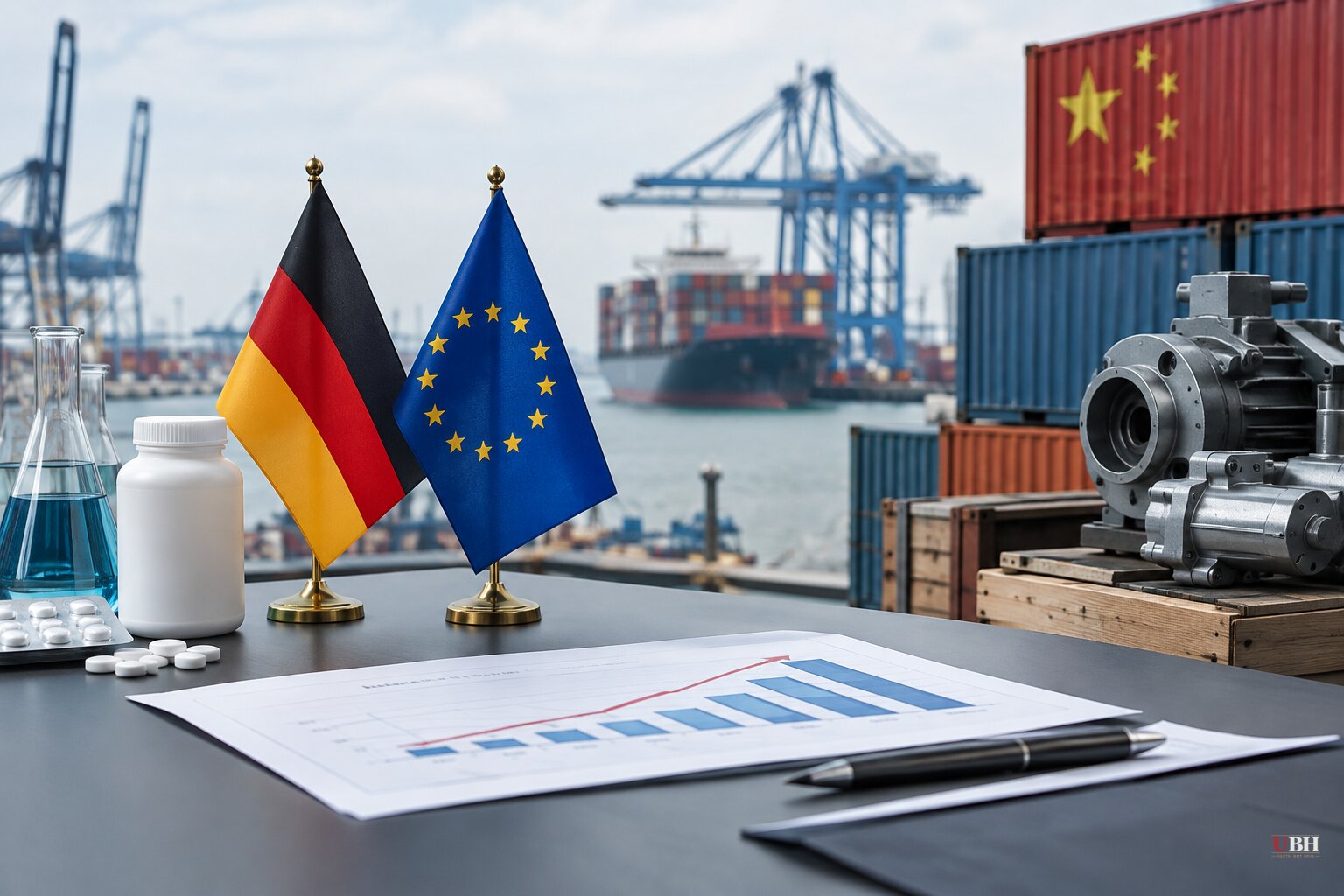
The European Union's trade deficit with China hit a record US$34.8 billion in September. Germany, long the bloc's most cautious voice on Beijing, now wants quotas on far more than cars.
Germany will press the EU to impose safeguard measures on additional sectors, including chemicals, mechanical engineering and potentially pharmaceuticals, according to people familiar with the matter who spoke on condition of anonymity. Those people said Berlin will ask the European Commission, which handles trade for the bloc, to come up with proposals by the end of the year. The German chancellery did not immediately respond to a request for comment.
Safeguard measures let the EU restrict products from a sector when imports surge.
A deadline and a summit
EU leaders are scheduled to meet in Brussels to discuss the deficit and how to stop China from flooding the continent with subsidised, low-cost goods. Last June, the EU gave itself and China until October to work out ways to fix the imbalance, as commentator Milton Ezrati of the Epoch Times has noted. That deadline has arrived.
Talks between Beijing and Brussels last week produced a 16-point agreement covering trade and investment, export controls and intellectual property rights. As part of it, the EU said it would cap Chinese hybrid vehicles entering the bloc at 350,000. Germany's government welcomed the deal as a step in the right direction, according to officials, but sees it as a first step on the wider deficit.
EU economics chief Valdis Dombrovskis said the hybrid cap was only a first step because trade asymmetry goes far beyond cars. "It's clear that those economic and trade imbalances are not limited to automotive," he said, adding that the work needs to continue across other sectors.
The numbers driving Berlin
China's General Administration of Customs reports that Chinese exports jumped 36% in September from a year earlier. China's trade surplus is already US$938 billion for the year to date, almost 8% above the first nine months of last year. It is on track to beat the US$1.2 trillion record set in 2025.
Ezrati argues in his commentary that the surge traces partly to Washington. President Donald Trump raised tariffs, especially on Chinese goods, about 18 months ago, and he writes that China-based sales in the United States fell by roughly half between January 2025 and January 2026. Needing new markets, Chinese producers turned to Europe. Ezrati says Chinese exports to the EU rose more than 10% from the last quarter of 2024 to the second quarter of 2026, with growth concentrated in high-value products long associated with European production.
European officials have been blunt about the damage. A French government report from February was titled "The Chinese Steamroller" and warned the trade threatened "the very core of Europe's production system." European Central Bank President Christine Lagarde has said China now competes directly in about 40% of the areas where EU members hold a competitive advantage, up from 25% in the early 2000s. An ECB report singled out autos and semiconductors.
European complaints center on two practices: a yuan the People's Bank of China keeps low, and Beijing's subsidies to favored industries.
Germany's reversal
Chancellor Friedrich Merz has accused China of keeping the yuan artificially weak. Earlier this year he said, "we underestimated China's power and economic strength."
That is a sharp turn for an export-driven economy with deep commercial ties to Beijing. Noah Barkin, a senior adviser at the Rhodium Group, pointed to two drivers: "the mounting worries of German industry, especially the carmakers, and the emerging consensus elsewhere in Europe, led by Brussels and Paris, that bolder action is needed."
Barkin told Euronews that Europeans are now "far more united" on a tougher line than they have been in years.
He also cautioned that the risks are real. "The fear of Chinese retaliation is still there," he said. Beijing has "retaliation dominance in the short term," in his words. The EU's leverage, he said, is access to its single market, and he said Europeans believe China also wants to avoid escalation.
Merz and French President Emmanuel Macron are pushing for a political agreement among all EU leaders to give the Commission a mandate to come up with proposals for stricter trade measures.
What comes next
The hybrid cap is the template Germany wants to copy. Berlin's stated timeline is Commission proposals by the end of the year, and the outcome of the leaders' summit will show how much support the push has for quotas on chemicals and machinery.
Sources used for this briefing
7 links from 6 independent newsrooms (syndicated copies of the same report count once)
These are the sources it draws on, linked so you can verify.


