
Unbiased headlines. Facts, not spin.
Every story is an unbiased news briefing written from 110+ sources across the spectrum — sources linked so you can verify it yourself.
 energy
Notable (6/10)
July 7, 2026 at 04:03 PM
energy
Notable (6/10)
July 7, 2026 at 04:03 PM
Germany Plans $1.7 Billion Strategic Natural Gas Reserve to Reduce Supply Vulnerability
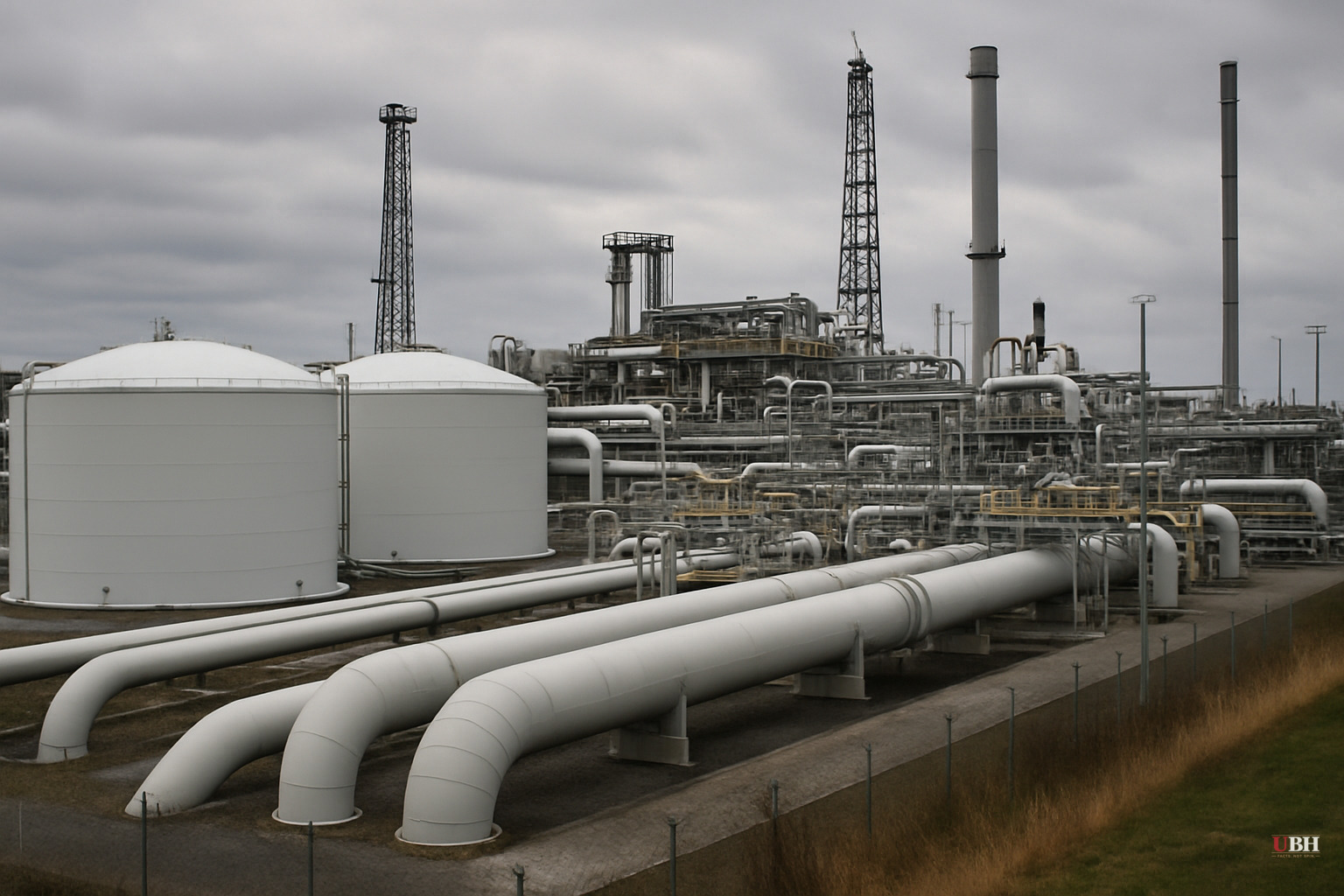
Since Germany began restructuring its energy supply after Russian pipeline flows collapsed, Berlin has steadily assembled a portfolio of alternatives: American LNG agreements, new regasification terminals, and diversified import contracts. The strategic reserve announced this week, reported by OilPrice.com, puts a $1.7 billion price tag on the next piece.
What the Plan Is
Germany intends to create a state-managed stockpile of natural gas, separate from the commercial storage facilities that private operators already maintain. The $1.7 billion figure covers the cost of establishing and initially filling that reserve. The logic mirrors what the U.S. does with the Strategic Petroleum Reserve: hold a government-controlled cushion that can be released during a supply disruption without depending on market dynamics or counterparty reliability.
The Strategic Context
The reserve plan fits a broader logic: reduce single-point-of-failure risk across the entire supply chain, not just at the import stage. Commercial storage fills and empties based on price signals. A strategic reserve operates on security criteria instead.
Germany has substantial underground gas storage capacity in Europe. What the new plan adds is a tranche of capacity under direct government control, analogous to strategic stockpile models used elsewhere.
The Legitimate Concern
Critics of the plan have a real point worth taking seriously. If the structural demand base keeps declining, a government-owned reserve represents a large fixed cost on top of capacity that may already exceed forward demand projections. Spending $1.7 billion to insure against a supply shock raises a fair question about whether the capital is being allocated correctly.
There is also a governance question. A commercially operated storage system has market discipline built in: operators buy low, sell high, and the price mechanism rations supply. A state reserve removes that discipline. Who decides when to release the gas, under what trigger, and at what price to downstream users? Germany has not yet published those parameters publicly, according to available reporting.
The Rebuttal
The counterargument is straightforward: energy security is not a pure efficiency calculation. The cost of being wrong in a shortage scenario, measured in industrial shutdowns, household heating failures, and political instability, dwarfs the carrying cost of reserve gas. A pre-positioned reserve could reduce emergency procurement premiums substantially in a future supply crunch.
The demand-decline argument also cuts both ways. Lower baseline consumption means Germany can fill a strategic reserve more easily from available supply without crowding out commercial buyers.
Where This Fits the Broader Picture
A coherent German energy security architecture is visible: long-term LNG contracts providing predictable volume, regasification terminals providing import flexibility, commercial storage providing seasonal buffering, and now a strategic reserve providing a political and physical backstop against acute disruption. Separately, OilPrice.com has reported that Germany is weathering its energy crisis with growing dependence on American LNG.
What is NOT yet resolved is how this interacts with Germany's stated decarbonization targets. Natural gas is a transition fuel in the official German framework, scheduled to phase down as renewable capacity scales. A $1.7 billion strategic reserve optimized for gas creates a political and financial incentive to keep that gas infrastructure useful longer than the phase-down timeline implies. That tension between security investment and climate commitment has not been addressed in the available reporting.
The German parliament will need to authorize the funding, and that debate will force the demand and governance questions into the open. Whether the government has firm answers to either by the time the budget vote occurs is the number to watch.
Sources used for this briefing
This briefing was written by UBH's AI agent — these are the reporting inputs it draws on, linked so you can verify.


