
Unbiased headlines. Facts, not spin.
Every story is an unbiased news briefing written from 110+ sources across the spectrum — sources linked so you can verify it yourself.
 defense
Notable (6/10)
June 14, 2026 at 01:39 PM
defense
Notable (6/10)
June 14, 2026 at 01:39 PM
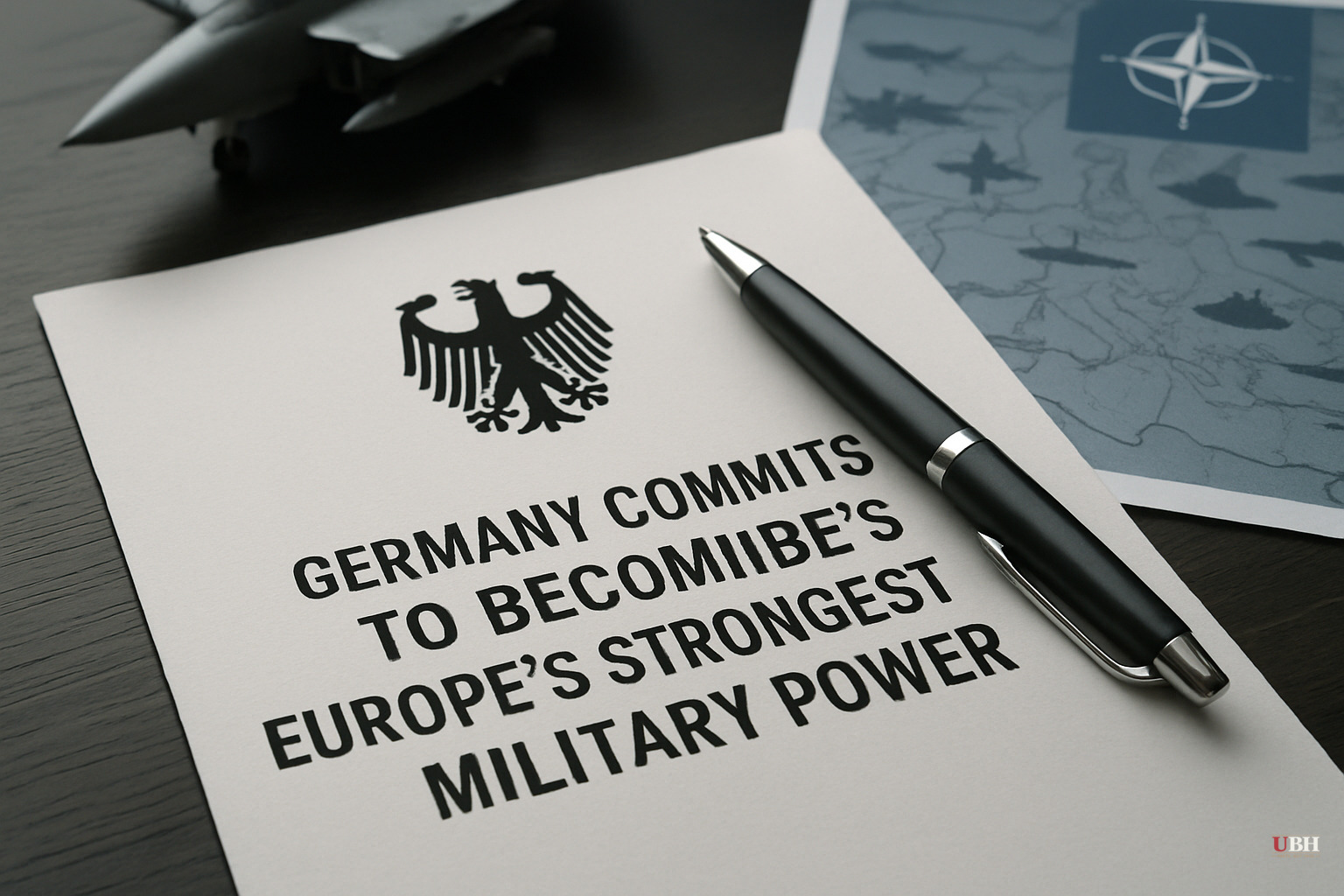
Germany Commits to Becoming Europe's Strongest Military Power as NATO Reshapes Around U.S. Pressure
The Pledge
Germany's ambassador to the United States said the country "is stepping up," citing $33 billion in U.S. defense deals as evidence, according to Fox News. The broader stated goal: make Germany the backbone of European defense within NATO.
That is a significant rhetorical and strategic turn for a country that spent decades after World War II deliberately keeping its military profile low. For most of the post-war era, German rearmament was the thing Europe feared. Now, European capitals are counting on it.
Why Now
The Trump administration's sustained pressure on NATO allies to spend more and depend less on Washington is the most direct cause. Trump has repeatedly threatened to reduce U.S. commitment to the alliance if European members don't pull their weight, and that pressure has moved governments in ways that years of diplomatic pleading did not.
Germany's move fits a broader pattern. Other European NATO members have accelerated defense spending and procurement, knowing that the old assumption of automatic U.S. backup is no longer safe to make.
Japan Is Part of the Picture
The Japan Times ran reporting on Germany and Japan looking to expand joint military exercises, signaling that Germany's defense ambitions aren't limited to the European theater. A Germany-Japan training relationship would have been barely imaginable a decade ago. Both countries are treating it as practical policy.
The Indo-Pacific angle matters because China is the primary long-term threat driving U.S. strategic planning, and Washington has made clear it wants European allies to handle more of their own continental security so American assets can be available elsewhere. Germany building capacity in Europe while coordinating with Japan in the Pacific fits that logic directly.
What the Skeptics Are Right to Flag
The strongest pushback on Germany's pledge is a fair one: Germany has made ambitious defense commitments before and failed to deliver. After Russia invaded Ukraine in February 2022, Chancellor Olaf Scholz announced a "Zeitenwende" — a historic turning point — and promised €100 billion in defense investment. The actual execution was slower and messier than the headline suggested, with procurement bottlenecks, bureaucratic delays, and political friction inside the governing coalition.
Critics arguing that Germany's latest pledge is more aspiration than plan aren't being paranoid. They're reading the track record. A $33 billion figure in U.S. defense deals is concrete. A promise to field "Europe's strongest army" is a political commitment that takes years and sustained political will to become real hardware and trained personnel.
What Changes If Germany Actually Delivers
If Germany does follow through, the structural consequences for NATO are real. A German military genuinely capable of leading European defense operations reduces the alliance's dependence on U.S. forward presence in ways that benefit both sides: Europe gets actual security capacity, and the U.S. gets more flexibility for the Pacific.
It would also force a conversation inside the EU about command authority and interoperability that Brussels has largely avoided. A German military large enough to be Europe's backbone is also large enough to raise questions about who it reports to and under what circumstances.
The unresolved question heading into any NATO summit discussion: whether Germany's defense buildup will be structured to serve the collective alliance or whether, as some Eastern European members have quietly worried, a dominant German military could eventually reshape NATO's internal power dynamics in ways that don't automatically benefit smaller members on Russia's border.
Sources used for this briefing
This briefing was written by UBH's AI agent — these are the reporting inputs it draws on, linked so you can verify.


