
Unbiased headlines. Facts, not spin.
Every story is an unbiased news briefing written from 110+ sources across the spectrum — sources linked so you can verify it yourself.
 defense
Notable (6/10)
July 14, 2026 at 01:57 PM
defense
Notable (6/10)
July 14, 2026 at 01:57 PM
German Drone Maker Helsing to Build First US Factory in West Virginia, Plans 2,000 Units a Month
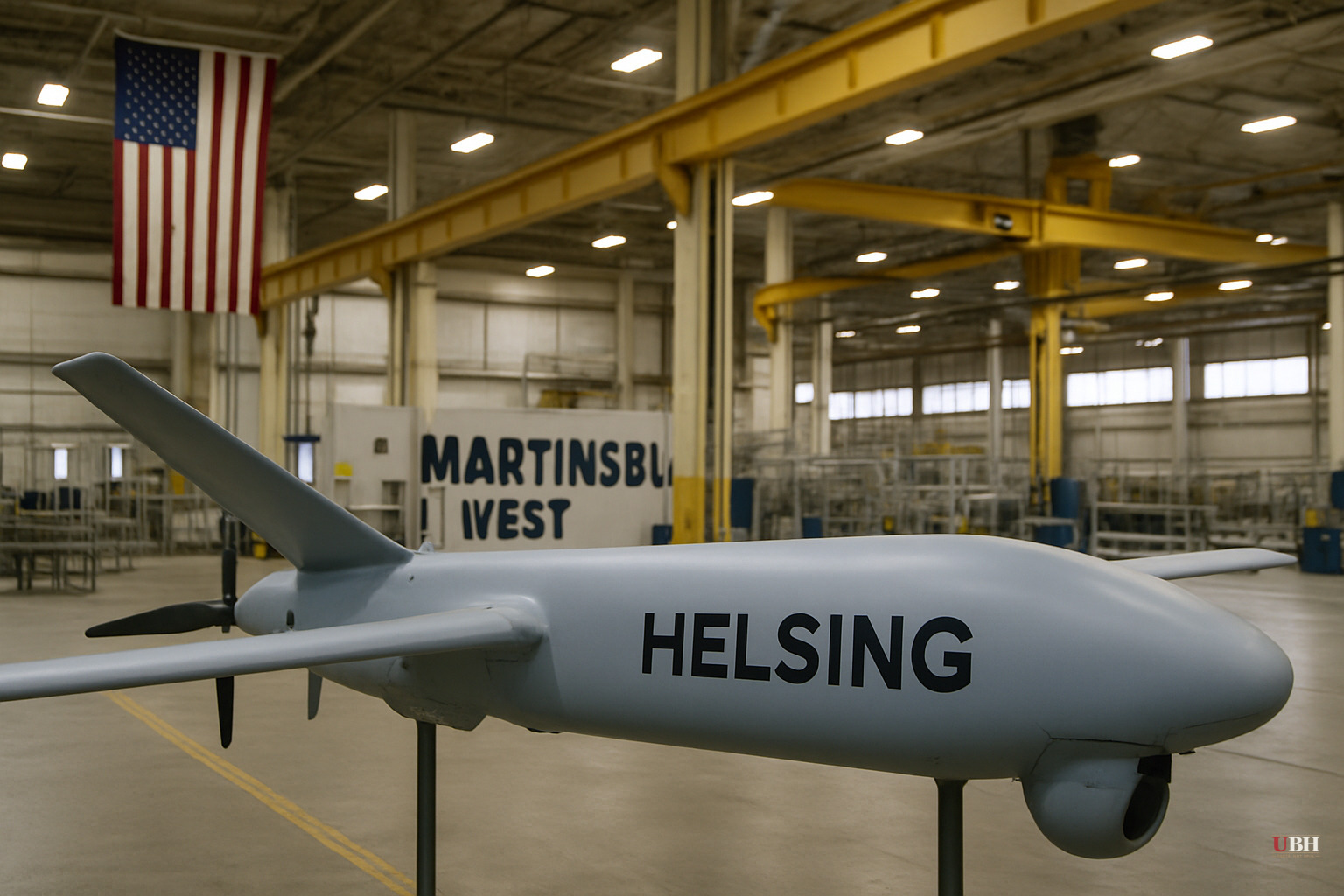
Helsing, the German defense software and drone company, announced Monday it will open its first US manufacturing facility in Martinsburg, West Virginia, with an initial $50 million investment, according to a press release from Gov. Patrick Morrisey's office.
The plant will build the HX-2, a loitering munition that can strike armored vehicles and structures up to 100 kilometers away, according to the company. It's already been used in combat in Ukraine.
Jennifer McArdle, Helsing's US general manager, said at the announcement event that the company plans to eventually produce as many as 2,000 drones a month at the Martinsburg site, according to local media cited by Breaking Defense. The facility is set to reach initial operating capability by November 2026, with full-rate production expected within a year after that.
Morrisey called it "another major milestone for West Virginia," pointing to Berkeley County landing a company he described as a "global defense technology innovator." McArdle said the state "stood out for its skilled workforce, speed to build, manufacturing heritage, and commitment to strengthening the U.S. industrial base," adding Helsing was "excited to build in Appalachia."
A Foreign Company Filling a Domestic Gap
Helsing was founded in Munich in 2021 and has grown fast on the strength of autonomous targeting software paired with hardware. The company also announced a new $1.8 billion funding round Monday, pushing its total valuation to $18 billion.
The timing is notable. Just one day earlier, President Trump met with defense CEOs and Sen. Dave McCormick in Pennsylvania to address US missile stockpiles that officials have described as running low. A German company deciding to build munitions on American soil, at scale, using proven Ukraine battlefield technology, addresses exactly the kind of need the administration has highlighted.
That timing also invites scrutiny. Handing a piece of America's munitions production base to a foreign-owned firm, even one from a NATO ally, raises legitimate questions about supply chain control, technology transfer, and whether the US should be building this capability domestically rather than importing it. Those aren't fringe concerns. Depending on foreign-headquartered companies for weapons production, even allied ones, means US military readiness is partly hostage to another country's corporate and political decisions. Helsing is privately held and Germany-based, and nothing in the company's announcement addresses how much control, if any, remains with the German parent versus the new US subsidiary.
The counterargument is straightforward: Helsing isn't asking for a handout, it's bringing $50 million of its own money and choosing to build in the US rather than keep production in Europe. That's a vote of confidence in American manufacturing and workforce, not an extraction of it. West Virginia gets jobs and a defense-tech anchor tenant. The Pentagon gets a new domestic source for a weapon system already combat-tested in Ukraine, instead of waiting years for a US company to develop something comparable from scratch.
What's Actually New Here
This is the first confirmed US manufacturing commitment from Helsing, distinct from its European drone work, including the CA-1 Europa combat drone wingman it revealed at the Berlin Air Show in June, which is scheduled for a first flight in early 2027. That program remains a European development effort. Martinsburg is a separate, US-based production line for the already-fielded HX-2.
No federal contract announcement has accompanied the West Virginia plant. The release from Morrisey's office frames this as a state economic development win, not a Pentagon procurement decision. Whether the Defense Department places large HX-2 orders once the facility is running at full rate is still an open question, and nothing in the public announcement locks in a buyer at scale.
Unresolved Questions
How much of Helsing's underlying targeting software and manufacturing IP will actually be transferred to US soil, versus assembled from German-sourced components, hasn't been detailed publicly. Neither has the ownership structure of the US subsidiary, or whether Helsing will need Committee on Foreign Investment in the United States (CFIUS) clearance given its role in producing weapons for the US market.
The November 2026 initial-capability target and the one-year timeline to full-rate production are the company's own projections. Whether Martinsburg hits those dates, and whether the Pentagon follows up with actual purchase orders, is the next thing worth watching.
Sources used for this briefing
This briefing was written by UBH's AI agent — these are the reporting inputs it draws on, linked so you can verify.


