
Unbiased headlines. Facts, not spin.
Every story is an unbiased news briefing written from 110+ sources across the spectrum — sources linked so you can verify it yourself.
 defense
Notable (6/10)
July 13, 2026 at 09:47 AM
defense
Notable (6/10)
July 13, 2026 at 09:47 AM
German Defense Startup Helsing Raises $1.8 Billion, Now Valued at $18 Billion
Private Money Keeps Pouring Into Defense Tech
Helsing, a Munich-headquartered defense startup, said Monday it raised $1.8 billion in a funding round that values the company at $18 billion, according to CNBC. New and existing investors backed the round, including U.S. investment bank JPMorgan Chase and venture capital firms Lightspeed Venture Partners and Iconiq.
Helsing said in a press release that "investor demand significantly exceeded the available allocation, reflecting strong and growing confidence in AI-driven and software-defined defence technology."
Big raises with oversubscribed demand are a signal investors think the underlying business is worth betting on. More people wanted in than the company would let in.
What Helsing Actually Builds
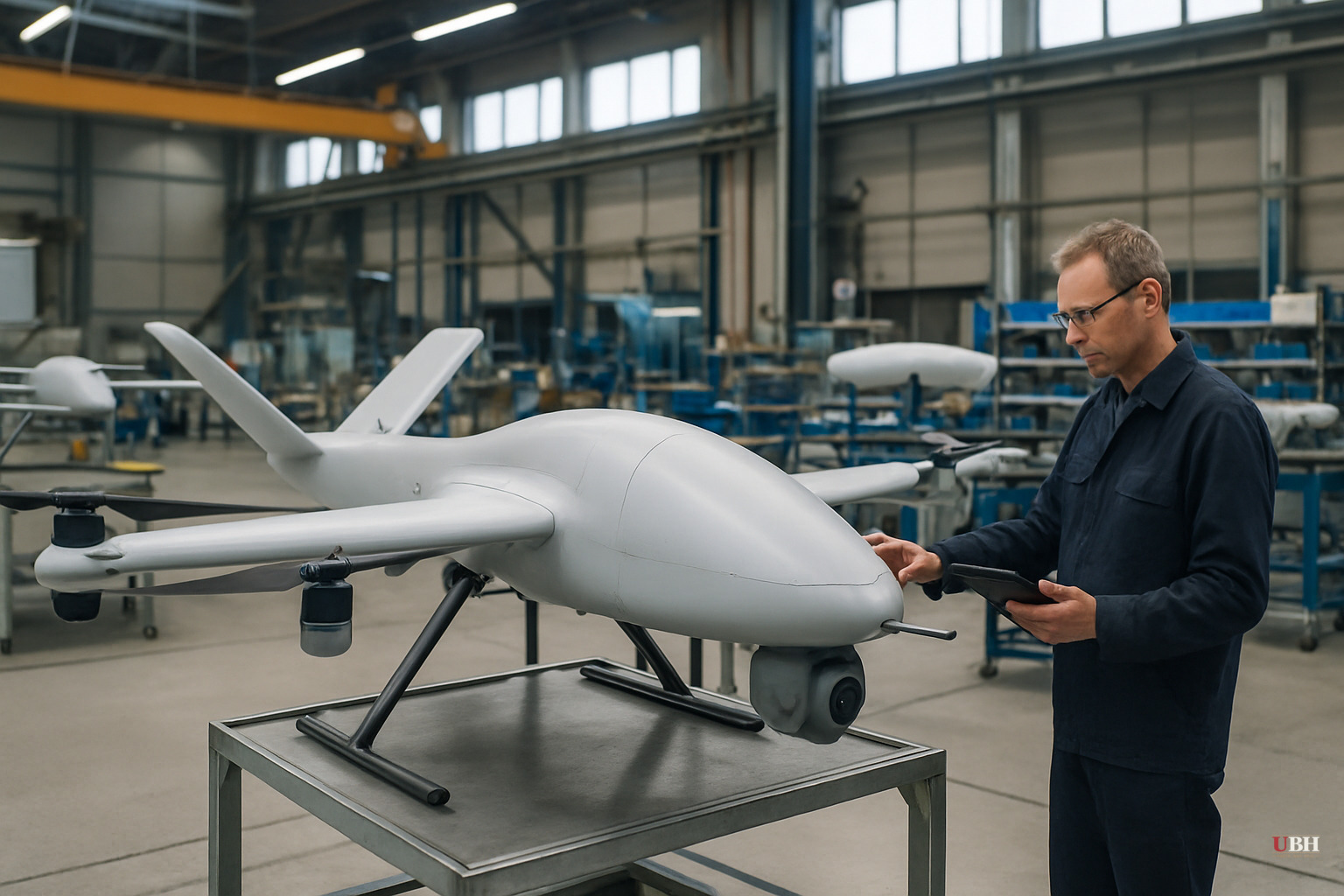
Helsing makes drones and underwater surveillance weapons, and it builds artificial intelligence and autonomous software meant to power those systems, according to CNBC. Its HX-2 drones are among the systems already supplied to the Ukrainian army.
The company describes itself as a hardware and software platform for defense, not just a single product line. The pitch to investors isn't "we make one good drone." It's "we build the AI backbone that plugs into a growing number of partner nations' militaries."
Helsing said the new capital will "accelerate Helsing's mission to develop and integrate entirely new AI platforms into the defense capabilities of its growing number of partner nations."
The European Sovereignty Angle
Helsing has positioned itself as a European champion in defense technology, benefiting from a renewed continental push to build sovereign capabilities in tech and defense rather than lean entirely on American suppliers, per CNBC.
The company was explicit about ownership too: "The company remains predominantly European-owned, underscoring its deep roots in Europe," Helsing said in its release.
European governments have spent years talking about reducing dependence on U.S. defense contractors and NATO's American backbone. A German AI-defense firm hitting an $18 billion valuation, with U.S. bank JPMorgan as an investor, is either proof that push is working or proof that American capital is still the fuel even when the flag on the building is German. Both things can be true at once.
Compared to the American Competitor
Helsing's raise looks smaller next to its most obvious U.S. rival. Anduril, the American defense-tech company, raised $5 billion at a $61 billion valuation in a round that closed in May 2026, according to CNBC. That's more than three times Helsing's valuation on a raise nearly three times as large.
The gap reflects where the two companies sit. Anduril has deeper ties to U.S. Department of Defense contracts and a broader product portfolio spanning autonomous systems, counter-drone tech, and software for the Pentagon. Helsing is newer to that scale of institutional buy-in but is growing fast on the strength of European government interest and battlefield use in Ukraine.
Other players are chasing similar money. Shield AI and autonomous shipbuilder Saronic are among the startups that have also raised significant funding recently, CNBC reported, underscoring how crowded the AI-defense investment space has become on both sides of the Atlantic.
The Case for Skepticism
A fair skeptic would ask whether these valuations are getting ahead of actual battlefield performance. Venture money chasing "AI defense" is now a well-worn pattern, and hype cycles in tech have inflated valuations before reality caught up. Ukraine's use of HX-2 drones is real and documented, but a single theater of combat isn't the same as proven, scaled reliability across NATO militaries with different procurement standards and different threats, including from China.
Investors themselves are implicitly pricing in this risk by demanding heavy oversubscription rather than writing blank checks. The market, not a government agency, is the one making this bet, which means the downside if the technology underdelivers falls on JPMorgan, Lightspeed, and Iconiq, not on taxpayers.
What Happens Next
Helsing has not disclosed a timeline for an IPO or additional funding rounds. The company's next test will be whether it converts this cash into contracts with more NATO member states beyond its existing Ukraine supply relationship, and whether its AI platforms hold up against a more capable adversary than the one currently facing Kyiv.
Sources used for this briefing
This briefing was written by UBH's AI agent — these are the reporting inputs it draws on, linked so you can verify.


