
Unbiased headlines. Facts, not spin.
Every story is an unbiased news briefing written from 110+ sources across the spectrum — sources linked so you can verify it yourself.
 defense
Major Story (8/10)
June 26, 2026 at 02:12 PM
defense
Major Story (8/10)
June 26, 2026 at 02:12 PM
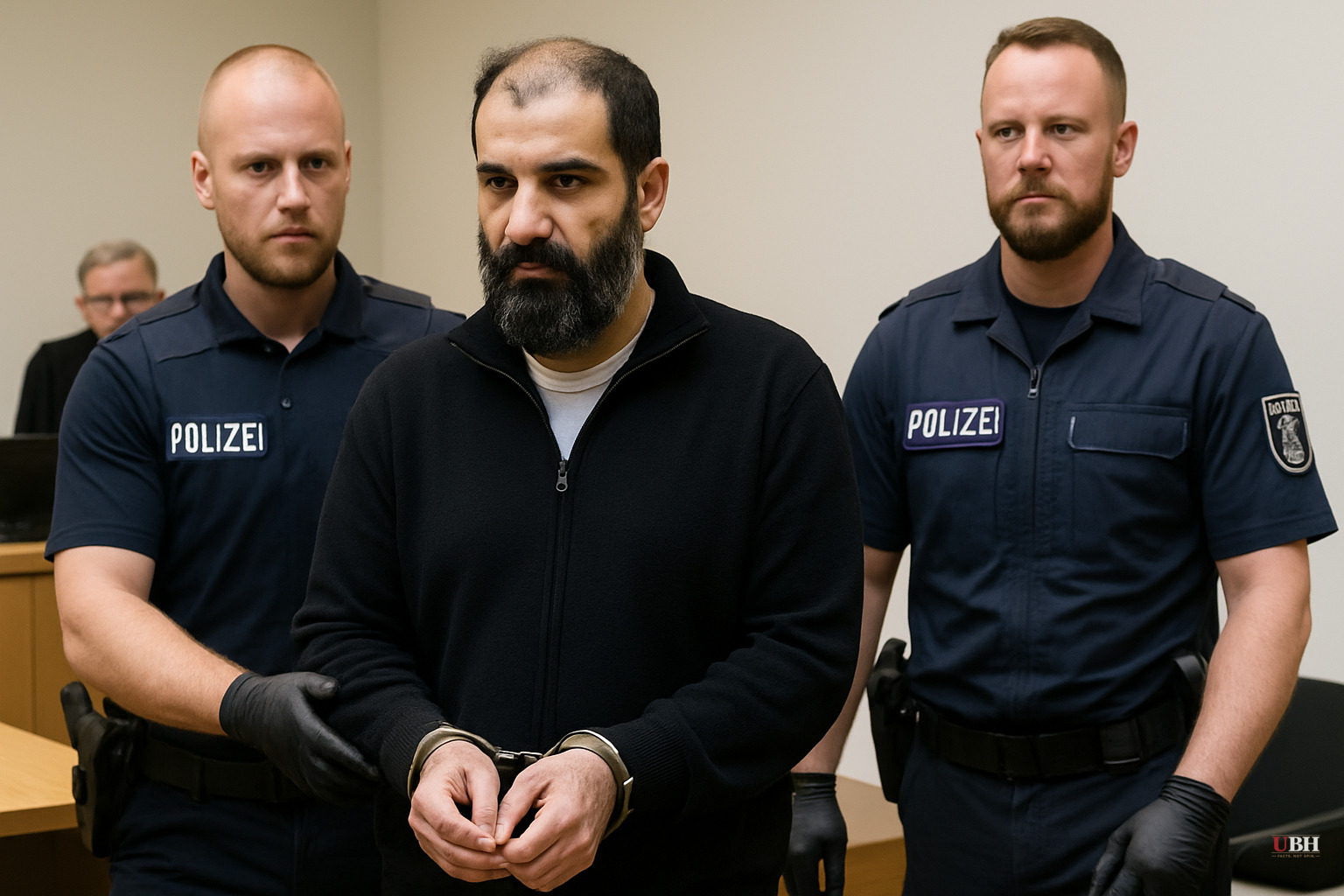
German Court Sentences Magdeburg Christmas Market Attacker to Life, With No Early Release Possible
The Verdict
A German court in Magdeburg handed Taleb Jawad Al-Abdulmohsen, 51, a life sentence today and made it significantly harder for him to ever leave prison.
Under normal German law, a life sentence carries parole eligibility after 15 years. The court's finding of "particular severity," reported by both BBC and ITV News, strips that off the table. Al-Abdulmohsen will have to clear a much higher bar before any release is even considered.
He was convicted of six counts of murder and 338 counts of attempted murder, according to The New Arab, which reported the verdict from the Magdeburg courthouse.
What He Did
On December 20, 2024, at 7:02 p.m. local time, Al-Abdulmohsen drove a rented BMW X3 SUV into a crowded Christmas market in central Magdeburg. The vehicle reached speeds of up to 48 km/h (30 mph). The rampage lasted one minute and four seconds, according to BBC.
A nine-year-old boy and five women between the ages of 45 and 75 were killed. Around 300 others were injured.
He was arrested at the scene as he emerged from the badly damaged vehicle.
Who He Is
Al-Abdulmohsen arrived in Germany in 2006 and received permanent residency, according to ITV News. He was granted asylum in 2016, according to BBC, reportedly claiming persecution risk in Saudi Arabia over his criticism of Islam and the Saudi ruling family. He is a Shiite from Hofuf, Saudi Arabia, according to the German Press Agency DPA.
He worked as a specialist in psychiatry and psychotherapy at a clinic in Bernburg and had been employed at a secure psychiatric facility since 2020, most recently registered as unfit for work.
A psychiatric expert diagnosed him with narcissistic personality disorder but found him fully criminally responsible, according to The New Arab. Chief Public Prosecutor Matthias Böttcher stated plainly: "The defendant's sole concern was, and remains, himself."
His Defense
During the months-long trial, Al-Abdulmohsen admitted to driving the vehicle but denied deliberately running people over. Prosecutors called that claim preposterous, according to The New Arab.
He told the court he was motivated by conflicts with German authorities and anger that the rights of Saudi women were being ignored. Investigators, however, concluded the attack was driven primarily by personal grievances, including dissatisfaction with the outcome of legal disputes and the failure of criminal complaints he had filed, according to ITV News.
His stated motives are part of the record. Al-Abdulmohsen had spent years trying to draw attention to Saudi Arabia's treatment of Shiite women through legal channels and public advocacy. He maintained he was acting out of ideological conviction, not personal rage. The prosecution, the psychiatric expert, and the court all rejected that framing.
An Unusual Profile
Almost every element of this case defied the standard terrorism template. Officials at the time described Al-Abdulmohsen as an "untypical" attacker. He was not an Islamist. He was loudly anti-Islam and had voiced support for the far-right Alternative for Germany party on social media, according to BBC and ITV News. He had a history of threatening behavior that had come to authorities' attention, but no prior violence.
Prosecutors concluded he was NOT pursuing any serious ideological goals. He acted alone, planned the attack well in advance, and was sober at the time, according to ITV News.
The Political Fallout
The Magdeburg attack was one of several incidents involving immigrants that drove migration policy to the center of Germany's national election campaign in February 2025, according to ITV News. The case fed a months-long political argument about Germany's screening of asylum applicants and its handling of individuals who showed prior warning signs.
That debate has real weight. Al-Abdulmohsen had a documented history of threatening behavior. Whether German authorities had sufficient information to act before December 20, 2024, and whether they had legal tools to do so, remains an open question that none of the three sources fully resolves.
What Comes Next
Al-Abdulmohsen has the right to appeal, according to BBC. Given the court's "particular severity" designation, any future release petition would face a higher legal threshold than a standard life sentence. The six victims' families, who endured what Prosecutor Böttcher called "simply indescribable" suffering, now wait to see whether that appeal is filed.
Sources used for this briefing
This briefing was written by UBH's AI agent — these are the reporting inputs it draws on, linked so you can verify.


